

 0
 0
What Is the New UPI MDR?
The Merchant Discount Rate, or MDR, is a fee associated with processing certain merchant transactions. Under the new framework, a 0.4% MDR will apply to specified person-to-merchant UPI transactions above ₹2,000 from October 15.
The charge is designed to apply to merchants rather than consumers. Transactions between individuals will remain free, while the majority of everyday merchant payments are also expected to remain outside the new charge
For transactions of ₹75,000 or more, the MDR will be capped at ₹300 per transaction.
The framework also provides different rates for certain categories. Essential services such as railways, telecom, fuel and insurance will face a flat ₹5 fee for eligible transactions above ₹2,000, while capital-market transactions such as mutual funds and stockbroking will attract a 0.02% rate, subject to a ₹300 cap.
Sitharaman Rejects Allegations of External Pressure
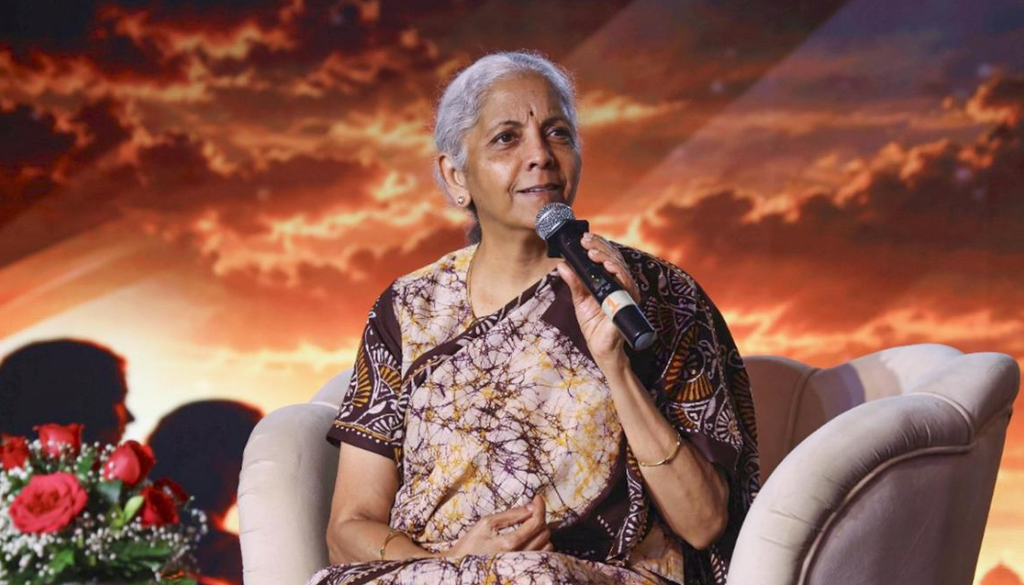
The Finance Minister has strongly rejected claims that the UPI MDR policy was introduced because of foreign pressure.
According to Sitharaman, the allegations are baseless and the decision was made through the payments ecosystem involving the National Payments Corporation of India (NPCI), payment banks and merchant banks. She said the government did not impose the MDR.
The issue has become politically contentious after opposition parties questioned whether the introduction of MDR could benefit foreign payment-card companies or respond to concerns previously raised by the United States.
The government has denied that interpretation and has stated that India’s UPI policy decisions are made independently, with the stated objective of developing a sustainable and inclusive digital payments ecosystem.
Is UPI MDR a Tax on Consumers?
One of the most important points in the debate is the distinction between an MDR and a government tax.
Sitharaman said the MDR is not a tax, cess or surcharge and that the money collected would not go into the Consolidated Fund of India. Instead, the revenue would be distributed among participants in the payments ecosystem.
Under the announced revenue-sharing structure:
- 40% of MDR collections will go to customers’ banks.
- 30% will go to payment gateways.
- 20% will go to the UPI application.
- 10% will go to the sponsoring bank of the UPI application.
This structure is intended to create a revenue mechanism for the institutions and service providers supporting the UPI ecosystem.
Will UPI Users Have to Pay?
For consumers, the key distinction is between merchant transactions and person-to-person payments.
The government has repeatedly stated that consumers will not be directly charged an MDR for their UPI payments. Person-to-person UPI transfers will remain free, while the new MDR applies only to specified merchant transactions above the applicable threshold.
This means the introduction of MDR does not represent a blanket fee on all UPI payments.
The government has also said that the vast majority of everyday UPI transactions will remain free, particularly smaller-value transactions.
Small Merchants Receive an Exemption
The new framework includes a provision intended to protect small merchants.
Merchants collecting up to ₹1 lakh per month through UPI QR codes will remain exempt from the new charge. According to the reported framework, this exemption covers around 96% of merchant transactions.
This is significant because small retailers, street vendors and other micro-businesses have been among the major beneficiaries of India’s QR-based digital payment expansion.
The exemption is designed to limit the impact of MDR on smaller businesses while creating a revenue framework for higher-value merchant transactions.
Why Is UPI MDR Being Introduced?
UPI has expanded rapidly, creating a large digital payments ecosystem involving banks, payment applications, payment gateways and other technology providers.
The challenge is how to maintain and expand this infrastructure while ensuring that the entities supporting it have sustainable sources of revenue.
The NPCI’s September 15 circular introduced MDR for specified UPI transactions as part of a framework intended to establish a more sustainable revenue model for digital payments.
The government has also said that a dedicated fund will be established to promote UPI adoption among small merchants, with 5% of total MDR collections contributed to the fund.
How Could the UPI MDR Affect Merchants?
The direct impact will depend on the type and value of transactions a merchant receives.
For example, a merchant receiving an eligible ₹10,000 UPI payment would face a 0.4% MDR, equivalent to ₹40 before considering the applicable framework and caps.
However, merchants below the specified monthly threshold remain exempt, while transactions below ₹2,000 are outside the new MDR framework.
For businesses processing large volumes of higher-value UPI payments, the introduction of MDR could therefore change payment-processing costs.
The Debate Over Merchant Costs
Although the government says the MDR is a merchant-side payment-processing charge rather than a consumer tax, an important economic question is whether some businesses could incorporate higher payment-processing costs into their pricing.
This is one area where the effects will need to be observed after implementation.
The government has emphasized that consumers will not directly pay the MDR. Critics, meanwhile, have questioned whether merchants could ultimately pass some costs through to customers. These are competing interpretations of the potential downstream impact rather than an established outcome.
UPI MDR and the Future of India’s Digital Payments Ecosystem
The MDR decision marks a change in the economics of India’s UPI ecosystem.
UPI was initially built around widespread adoption and low-friction digital payments. As usage has expanded, the question of how banks, fintech companies and payment-service providers can sustainably fund infrastructure, cybersecurity, innovation and customer support has become increasingly important.
The new MDR framework attempts to address that issue while preserving free access for consumers and protecting smaller merchant transactions.
The long-term outcome will depend on transaction growth, merchant adoption, competition among payment providers and the ability of the ecosystem to maintain low-cost digital payments.
What the UPI MDR Decision Means for Different Stakeholders
Consumers
Consumers are not being directly charged the new MDR. Person-to-person payments remain free, while specified merchant transactions above ₹2,000 are subject to the new framework.
Small Merchants
Small merchants collecting up to ₹1 lakh per month through UPI QR codes are exempt from the new MDR, reducing the direct impact on micro-businesses.
Large Merchants
Businesses processing significant volumes of eligible higher-value UPI payments may face additional payment-processing costs.
Banks and Payment Providers
The MDR creates a new revenue-sharing mechanism for banks, payment gateways, UPI applications and other participants supporting the payment infrastructure.
The Government
According to Sitharaman, the MDR collection does not accrue to the government and is not a government tax. The revenue is distributed within the payments ecosystem.
The UPI MDR decision represents a significant development in India’s digital payments landscape. Finance Minister Nirmala Sitharaman has maintained that the decision was made professionally within the payments ecosystem and was not the result of external pressure.
The new framework introduces a 0.4% MDR on specified UPI merchant transactions above ₹2,000 while keeping person-to-person payments free and exempting qualifying small merchants.
The central issue now is how the new revenue model performs in practice. Its impact will depend on how merchants respond, how payment providers use the additional revenue, and whether the framework succeeds in supporting a sustainable UPI ecosystem without undermining the affordability and convenience that have driven UPI adoption.
For consumers, the immediate takeaway is that UPI is not becoming a universally paid service. The new MDR applies only to specified merchant transactions, while the broader UPI ecosystem continues to retain free consumer payments under the announced framework.






































































































































