0
0
 0
0
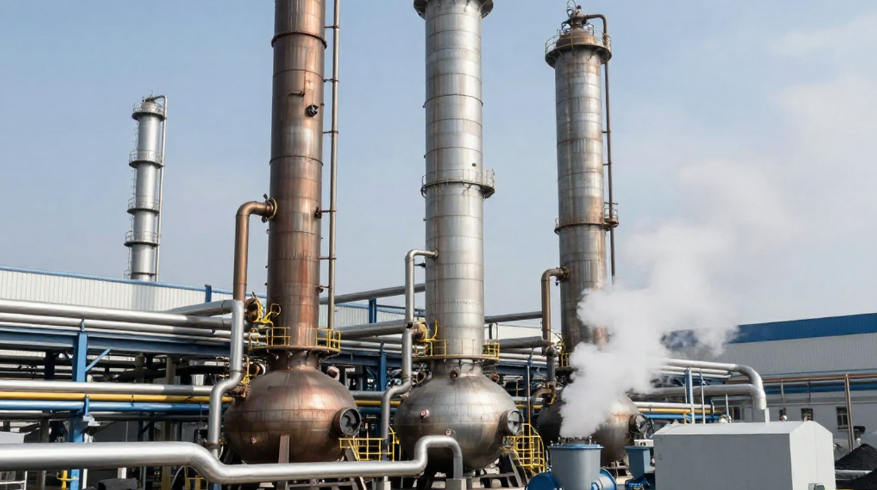
The Ministry of Coal has rejected reports that the Centre’s ₹37,500-crore coal and lignite gasification scheme has received “no takers,” saying the assessment is premature because the first application window is still open.
The ministry confirmed that Talcher Fertilisers Limited (TFL) and NTPC Limited have already submitted applications under the government’s Scheme for Promotion of Surface Coal/Lignite Gasification Projects. The first application window is scheduled to close on September 7, 2026.
Coal Ministry Says ‘No Takers’ Claim Is Factually Incorrect
The Coal Ministry issued its clarification after reports suggested that the ambitious ₹37,500-crore incentive scheme had failed to attract applications from companies.
According to the ministry, such a conclusion does not reflect the current position because the application period has not yet closed. It specifically said that the assertion that the scheme has received “no takers” is factually incorrect.
The ministry also said that other potential applicants are at different stages of preparing their projects and finalising proposals. Therefore, the final level of participation cannot be determined until the first application window closes.
TFL and NTPC Have Already Submitted Applications
The ministry confirmed that Talcher Fertilisers Limited and NTPC Limited have submitted applications through the designated online portal.
The participation of the two major public-sector-linked companies provides an early indication of industry interest in the government’s coal gasification programme, although the ministry expects more proposals as the deadline approaches.
The government has also designed the scheme with additional application rounds, allowing companies that need more time to prepare their projects to participate later.
₹37,500-Crore Coal Gasification Scheme
The Scheme for Promotion of Surface Coal/Lignite Gasification Projects was approved by the Union Cabinet on May 13, 2026, with a total financial outlay of ₹37,500 crore.
The programme aims to accelerate the development of coal and lignite gasification in India and encourage the conversion of domestic coal and lignite into higher-value products.
These products include syngas, methanol, ammonia and urea, which can help reduce India’s dependence on imported feedstock and strengthen domestic energy and industrial security.
Government Wants to Reduce Import Dependence
Coal gasification is viewed by the government as a way to extract greater economic value from India’s domestic coal and lignite resources.
Through gasification, solid coal or lignite can be converted into synthetic gas, or syngas, which can subsequently be used as a feedstock for producing chemicals, fertilisers, fuels and other industrial products.
The policy is therefore aimed not only at the coal sector but also at reducing India’s dependence on imported LNG, methanol, ammonia, urea and other products.
Application Process Began After July RFP
The Ministry of Coal issued the Request for Proposal (RFP) on July 7, 2026, following the Cabinet’s approval of the scheme.
An online application portal was subsequently launched, while a pre-application conference was organised on July 20 to address questions from prospective applicants regarding eligibility and the application process.
The ministry had also conducted industry outreach through roadshows in New Delhi, Hyderabad and Mumbai to encourage participation from potential project developers, technology providers, investors, financial institutions and other stakeholders.
Large Coal Gasification Projects Require Extensive Preparation
The ministry has emphasised that coal and lignite gasification projects are complex and require significant preparation before companies can submit detailed proposals.
Potential applicants need to prepare pre-feasibility reports, assess available technologies, identify suitable coal or lignite feedstock, examine project economics and develop detailed project plans.
Because of these requirements, the government argues that judging the success of the scheme before the first application window closes would be premature.
Rolling Application Rounds to Encourage More Participation
Another important feature of the scheme is its rolling application mechanism.
The government plans to open another application round immediately after the current window closes. The subsequent window will remain open for two months, providing additional time for companies that are still preparing their projects.
This structure is intended to prevent companies from being excluded simply because their large-scale gasification proposals were not ready for the first round.
The ministry believes the rolling mechanism could encourage wider participation as companies complete their technical and financial assessments.
Scheme Could Attract Up to ₹3 Lakh Crore Investment
The government has set ambitious expectations for the coal gasification programme.
According to the Coal Ministry, the scheme could catalyse investments of approximately ₹2.5 lakh crore to ₹3 lakh crore across nearly 25 projects.
It is also expected to generate around 50,000 direct and indirect employment opportunities while supporting India’s broader goal of establishing 100 million tonnes of coal gasification capacity by 2030.
These targets underline the government’s intention to use coal gasification as a major component of its strategy to create value-added products from domestic resources.
What the Coal Ministry Says About the Scheme’s Outlook
The ministry has maintained that the programme is still at an early stage and that industry participation should be evaluated after the completion of the application process rather than through an interim assessment.
With TFL and NTPC already submitting applications and other companies reportedly preparing proposals, the government expects participation to expand during subsequent application rounds.
The September 7 deadline will provide the first clearer indication of the level of interest in the scheme, although it will not be the final opportunity for companies to apply.
The Coal Ministry’s rejection of the “no takers” claim highlights the government’s confidence in its ₹37,500-crore coal gasification initiative.
With TFL and NTPC already applying, the ministry says the programme has attracted initial participation and that additional companies are still preparing proposals. The government has also built flexibility into the scheme through rolling application rounds.
The larger objective is to promote domestic coal and lignite gasification, produce higher-value commodities such as syngas, methanol, ammonia and urea, reduce import dependence and attract billions of dollars in investment.
As the first application window closes on September 7, attention will now turn to the number and quality of proposals submitted and whether the programme can translate the government’s ambitious gasification targets into commercially viable projects.