

 0
 0
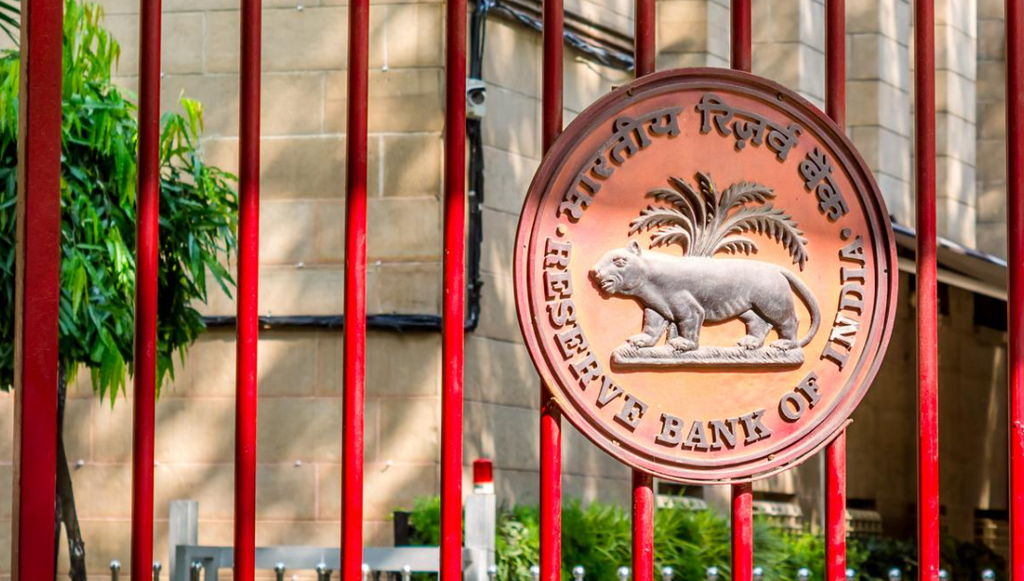
The Reserve Bank of India (RBI) is widely expected to raise its benchmark repo rate by 25 basis points to 5.50% at its October monetary policy meeting, as rising inflationary pressures and higher global energy prices increase concerns over the domestic price outlook.
According to a recent poll of economists and bankers, a majority of experts expect the RBI to tighten monetary policy during its October 5–7 meeting. Such a move would mark a significant shift after the central bank’s rate-cutting cycle in 2025 and its subsequent decision to keep the policy rate unchanged.
The RBI’s current repo rate stands at 5.25%. The central bank last increased the policy rate in February 2023, when it raised the repo rate by 25 basis points to 6.50%.
Inflation Becomes a Key Concern for RBI
One of the main factors behind expectations of an RBI rate hike is the renewed increase in inflationary pressure.
India’s retail inflation rose to around 4.8% in August, moving above the RBI’s medium-term inflation target of 4% for the third consecutive month. Higher energy and food prices have contributed significantly to the acceleration in consumer prices.
Economists are particularly concerned about the potential impact of elevated crude oil prices. Crude prices have moved above $100 per barrel, increasing the possibility of higher domestic fuel prices and broader cost pressures across the economy.
Aditi Nayar, chief economist and head of research and outreach at ICRA, said higher crude prices could push up petrol and diesel prices and contribute to a broader increase in inflationary pressures.
West Asia Conflict Adds to Inflation Risks
The renewed escalation of the West Asia conflict is another important factor influencing the RBI’s policy outlook.
Any prolonged disruption in global energy markets could keep crude oil prices elevated, creating additional pressure on India’s import bill and domestic inflation. Since India remains heavily dependent on imported crude oil, a sustained rise in global oil prices can quickly affect transportation, manufacturing and consumer prices.
Economists therefore believe the RBI may prefer a pre-emptive rate increase rather than wait for inflationary pressures to become more entrenched.
Dipti Deshpande, principal economist at CRISIL, noted that inflationary pressures have increased since the previous policy meeting, particularly because of renewed geopolitical tensions and higher energy and commodity prices.
Global Rate Hikes Could Influence RBI’s Decision
The RBI is also facing pressure from the global monetary environment.
Several major central banks have shifted toward tighter monetary policy as energy prices rise and inflation risks increase. The US Federal Reserve is also expected to maintain a relatively restrictive stance, adding to pressure on emerging-market central banks.
A rate increase by the RBI could help maintain India’s interest-rate differential, support the rupee and reduce some of the pressure created by global capital movements.
India’s rupee has already weakened significantly against the US dollar this year, adding another consideration for policymakers.
Strong Economic Growth Gives RBI Room to Tighten
Unlike previous tightening cycles, the RBI is entering this potential rate-hike cycle with relatively strong domestic economic growth.
India’s GDP expanded by 7.8% in the April-June quarter, exceeding the RBI’s earlier projection. Strong economic activity gives policymakers greater room to prioritize inflation control without immediately creating a major threat to economic growth.
Some economists expect the RBI to revise its FY27 growth forecast higher because of resilient domestic activity and strong high-frequency indicators.
This combination of solid growth and rising inflation could make a 25-basis-point rate hike more attractive to the Monetary Policy Committee.
Will RBI Raise Rates Again in December?
The October decision could also determine the direction of monetary policy for the remainder of 2026.
A Reuters poll showed that a slim majority of economists expected another 25-basis-point increase by December, potentially taking the repo rate to 5.75%. The survey suggested that the tightening cycle could remain relatively gradual compared with previous rate-hiking periods.
However, the RBI is unlikely to commit itself to a predetermined series of increases. Future decisions will depend heavily on inflation, crude oil prices, the rupee and global financial conditions.
A hawkish signal in October would therefore be closely watched by financial markets.
What a Repo Rate Hike Means for Consumers
An RBI repo rate increase generally makes borrowing more expensive for banks, which can eventually translate into higher interest rates on loans.
Consumers could therefore face higher borrowing costs for:
- Home loans
- Personal loans
- Vehicle loans
- Business loans
- Other floating-rate credit products
At the same time, higher interest rates can benefit savers through potentially better returns on fixed deposits and other interest-bearing instruments.
For businesses, however, higher borrowing costs could increase financing expenses and potentially moderate investment activity if monetary tightening continues for an extended period.
RBI Faces a Delicate Policy Balancing Act
The RBI’s challenge will be to control inflation without unnecessarily weakening economic momentum.
On one side, higher crude oil prices, food inflation and geopolitical uncertainty argue for tighter monetary policy. On the other, policymakers need to ensure that higher borrowing costs do not undermine investment, consumption and economic growth.
Experts are therefore closely watching not only the size of any rate increase but also the RBI’s policy stance and forward guidance.
A majority of experts surveyed by PTI expect a hawkish tone, although opinions remain divided over whether the formal policy stance will change
Outlook: RBI Could Begin a New Rate-Hiking Cycle
The expected 25-basis-point hike in October would represent a major turning point for India’s monetary policy.
If the RBI raises the repo rate to 5.50%, policymakers will likely emphasize the need to prevent temporary inflationary shocks from becoming more broad-based and persistent.
The bigger question for investors and businesses is whether October will be a one-off adjustment or the beginning of a longer tightening cycle.
For now, economists appear to be leaning toward a cautious but increasingly hawkish RBI, with inflation, crude oil prices, global interest rates and the strength of India’s economy likely to determine the path of monetary policy in the coming months.






































































































































