0
0
 0
0
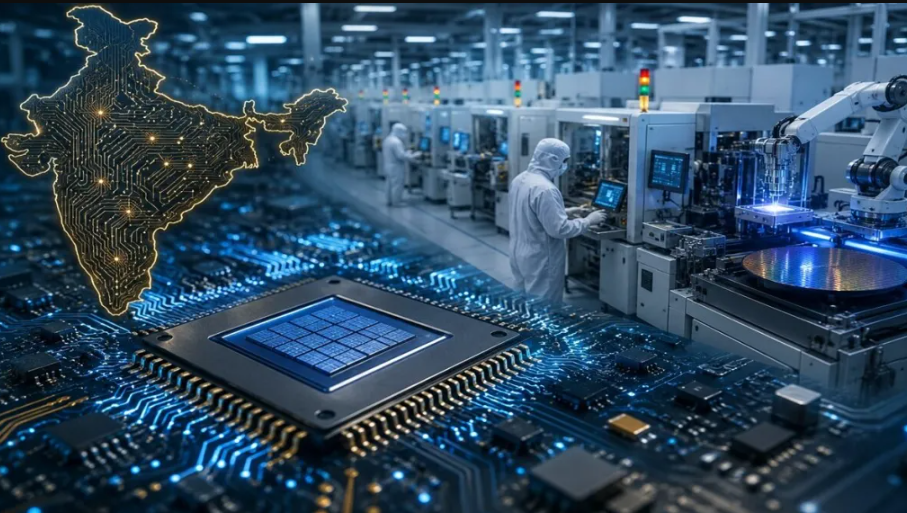
The Securities and Exchange Board of India (SEBI) has introduced an IT Resilience Index (ITRI) to measure the technological resilience of India’s capital-market infrastructure. The initiative comes as stock exchanges, clearing corporations and depositories become increasingly dependent on complex digital systems.
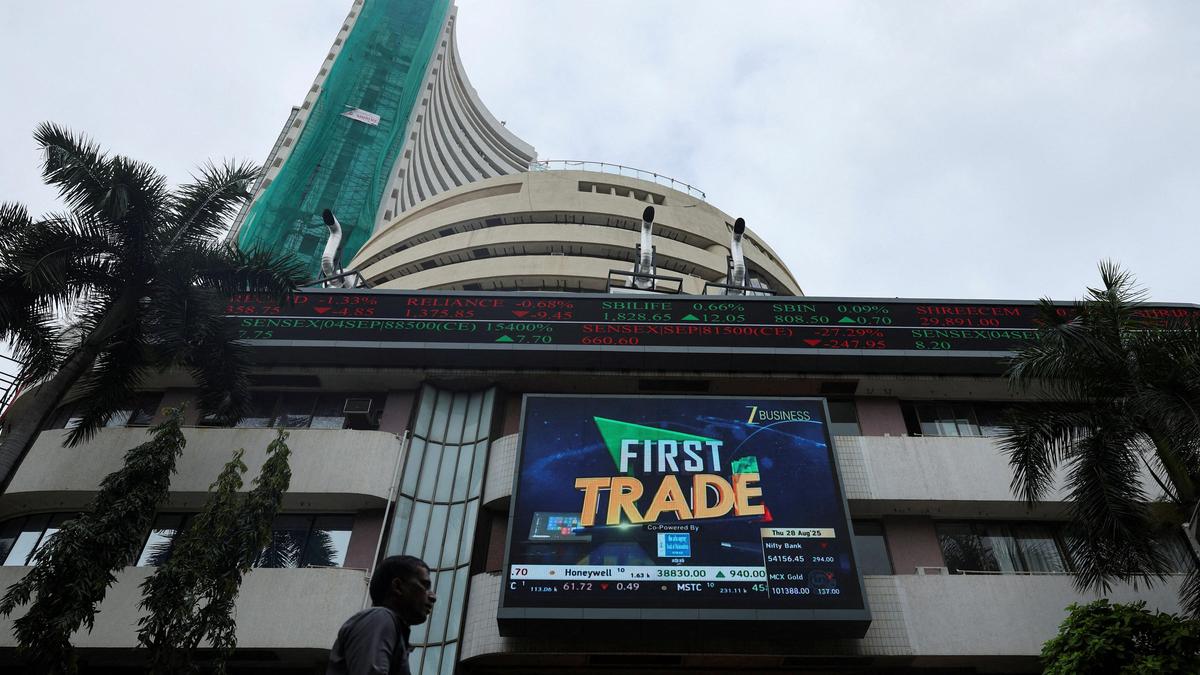
The new framework is designed to move beyond conventional compliance checks by giving regulators and market institutions a measurable way to assess the health of critical IT systems. SEBI’s framework covers Market Infrastructure Institutions (MIIs), which form the backbone of trading, clearing, settlement and securities holding in India.
The move is particularly significant as cyberattacks, software failures, technology outages and sudden surges in trading activity can potentially disrupt financial markets within minutes.
What Is SEBI’s IT Resilience Index?
The IT Resilience Index, or ITRI, is a quantitative framework designed to assess the robustness of critical IT systems operated by MIIs.
These institutions include:
- Stock exchanges
- Clearing corporations
- Depositories
SEBI’s objective is to determine whether the technology infrastructure supporting India’s securities markets can withstand operational disruptions and recover quickly when problems occur.
The framework effectively attempts to turn technological resilience into something that can be measured, compared and monitored, rather than relying solely on periodic audits and compliance reports.
Why Has SEBI Introduced ITRI?
India’s capital markets have undergone rapid digitalisation. Millions of investors now participate in markets through online platforms, while trading, clearing and settlement rely heavily on automated technology.
As technology becomes more central to market operations, the consequences of a major IT failure become increasingly serious.
A disruption at a major market infrastructure institution could potentially affect trading activity, clearing operations and settlement processes simultaneously.
SEBI’s ITRI therefore seeks to identify weaknesses before they become major failures. The framework is intended to strengthen operational resilience and reduce the possibility that a technology incident could spread into a broader financial-market disruption.
Nine Parameters to Measure Technology Resilience
The ITRI framework uses nine weighted parameters to assess the resilience of critical systems.
Among the most heavily weighted areas are availability and security, each carrying a 20% weight. Business continuity and reliability are also important components, while scalability is included to assess the ability of systems to handle changing market volumes.
The framework therefore looks beyond whether a system is functioning normally. It also considers whether the infrastructure can continue operating during stress and recover effectively after disruption.
This distinction is important because a system that works perfectly under normal conditions may still prove vulnerable during an extreme market event or cyberattack.
From Compliance to Quantitative Risk Monitoring
One of the most important aspects of ITRI is the shift from static compliance toward measurable resilience.
Traditional regulatory supervision can establish whether an institution has appropriate policies, controls and procedures. However, those controls do not necessarily guarantee that systems will perform effectively during an actual crisis.
ITRI attempts to address this gap by providing a numerical assessment of technological resilience.
The framework also includes an Early Warning System (EWS) designed to identify deterioration in important parameters before it develops into a major operational failure.
Why Market Infrastructure Institutions Matter
MIIs are considered systemically important because they provide the infrastructure required for India’s securities markets to function.
A stock exchange facilitates trading. Clearing corporations manage the clearing process, while depositories support the holding and transfer of securities.
A failure affecting one of these institutions could therefore have consequences beyond an individual company or investor.
That systemic importance explains why technological resilience has become a regulatory priority.
SEBI’s new approach recognises that financial stability increasingly depends on digital infrastructure, not just on traditional financial indicators.
Cybersecurity Is at the Centre of the Framework
Cybersecurity is one of the biggest challenges facing modern financial markets.
The growing use of artificial intelligence, cloud infrastructure, algorithmic trading and other digital technologies creates new opportunities but also introduces additional vulnerabilities.
A successful cyberattack against critical market infrastructure could disrupt services, compromise sensitive information or undermine investor confidence.
The ITRI framework places security among its most important parameters, reflecting the need to strengthen the digital foundations of India’s capital markets.
ITRI and the Rise of AI and Emerging Technology
The timing of ITRI is also significant because financial-market technology is evolving rapidly.
AI and machine learning are increasingly being used across financial services, while cloud computing, distributed ledger technology and other emerging systems are changing how financial infrastructure operates.
SEBI has also been working on a broader technology roadmap for MIIs covering emerging technologies and future technology risks.
This means resilience cannot be treated as a one-time exercise. Systems and risk-management frameworks will have to evolve alongside the technology they are designed to protect.
A Global Test for India’s Financial Architecture
The ITRI has attracted attention because it represents an attempt to create a quantitative technology-resilience barometer for critical financial-market infrastructure.
International regulators already use various operational-resilience and technology-risk frameworks. The United Kingdom, European Union, United States, Singapore, Hong Kong and Australia have developed regulatory approaches to address technology risks in financial institutions and market infrastructure.
India’s approach is notable because it seeks to express resilience through a measurable index.
That could make ITRI an interesting model for other markets if it succeeds in linking the score to real improvements in operational resilience.
The Real Challenge: Turning Scores Into Resilience
The introduction of an index does not automatically make financial infrastructure safer.
The real test will be whether ITRI encourages institutions to invest in better systems, stronger cybersecurity, redundant infrastructure and faster recovery capabilities.
There is also a challenge in comparing institutions with different technological architectures and functions.
A stock exchange, clearing corporation and depository perform different roles and may have different technology risks. Designing a common framework while accounting for those differences will therefore be important.
Cyber threats also evolve quickly, meaning a framework that works today may require significant changes tomorrow.
Implementation Timeline
SEBI has directed MIIs to implement the ITRI framework and related monitoring mechanisms. The framework is expected to become fully operational by February 28, 2027, according to reports on the regulator’s August 2026 requirements.
MIIs will also be required to calculate the index periodically and submit analysis and corrective actions through their governance structures.
This creates a continuous feedback mechanism in which weaknesses identified through the index can be followed by corrective measures.
What ITRI Means for Investors
For ordinary investors, the ITRI may operate largely behind the scenes, but its potential impact is important.
Investors depend on exchanges, clearing systems and depositories to execute and settle transactions. When these systems operate reliably, investors rarely think about the technology supporting them.
However, when a major outage occurs, the importance of that infrastructure becomes immediately visible.
A stronger resilience framework could therefore contribute to greater confidence in India’s capital markets by reducing the risk and duration of technology-related disruptions.
Can ITRI Become a Global Model?
The long-term success of SEBI’s initiative will depend on implementation.
If the index becomes merely another compliance requirement, its impact could remain limited. But if it encourages institutions to continuously test systems, identify vulnerabilities and invest in recovery capabilities, ITRI could become an important component of India’s financial-market architecture.
Its success could also attract international interest as regulators worldwide face similar challenges from cyber threats, AI, cloud dependency and increasingly interconnected financial systems.
SEBI’s IT Resilience Index represents a significant step toward making India’s financial-market infrastructure more technology-resilient.
By measuring the robustness of critical IT systems at stock exchanges, clearing corporations and depositories, the regulator is attempting to move from traditional compliance toward quantitative, risk-based resilience monitoring.
The introduction of ITRI comes at an important moment. India’s capital markets are becoming increasingly digital, while cyber threats and technology risks are becoming more sophisticated.
Ultimately, the success of the SEBI ITRI framework will not be determined by the score alone. Its real value will be measured by whether India’s financial infrastructure can withstand disruption, recover quickly and continue protecting market stability when technology risks become reality.