0
0
 0
0
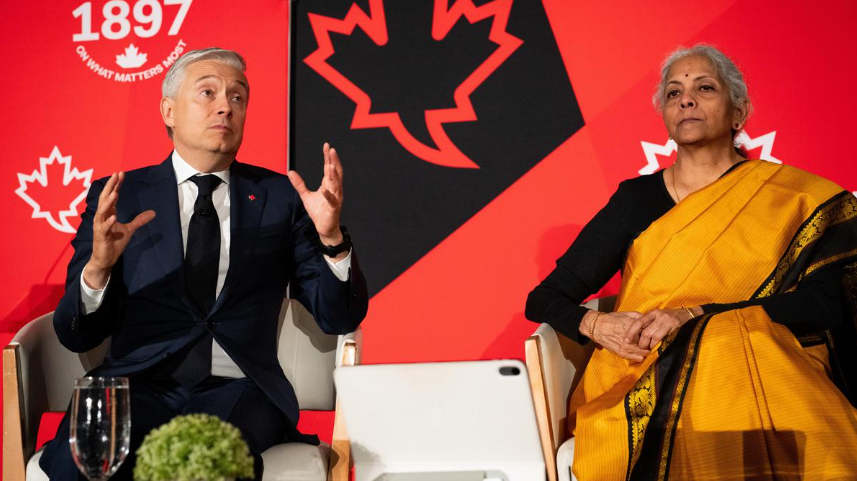
India and Canada have reaffirmed their commitment to conclude negotiations on a Comprehensive Economic Partnership Agreement (CEPA) by the end of 2026, signaling a renewed push to strengthen bilateral trade, investment and financial cooperation.
India and Canada are stepping up efforts to deepen their economic relationship, with both countries reiterating their shared commitment to complete negotiations on a Comprehensive Economic Partnership Agreement (CEPA) by the end of 2026.
The commitment was reaffirmed during the inaugural India-Canada Finance Ministers’ Economic and Financial Dialogue in Toronto, where Indian Finance Minister Nirmala Sitharaman and Canadian Finance Minister and National Revenue Minister François-Philippe Champagne discussed ways to expand economic and financial cooperation.
The two governments said the dialogue builds on the commitment made by Prime Minister Narendra Modi and Canadian Prime Minister Mark Carney during their meeting in New Delhi in March 2026.
The renewed focus on trade comes as both countries seek to broaden economic ties beyond traditional merchandise trade and develop cooperation in investment, financial markets and strategic sectors.
India-Canada Trade Deal Targeted for 2026
The India-Canada trade deal is expected to become a major pillar of the countries’ renewed economic engagement.
Both governments have confirmed their intention to conclude CEPA negotiations by the end of 2026. The agreement is designed to reduce trade barriers and create greater opportunities for businesses in both countries.
Negotiations for the agreement began in March 2026, and officials from both sides have been working to accelerate discussions.
For India, the agreement could provide greater access for Indian exporters to the Canadian market. Canada, meanwhile, could benefit from improved access to India’s large and rapidly expanding consumer and industrial markets.
Bilateral Investment Treaty Talks Also on the Agenda
Trade is not the only area where India and Canada want to deepen cooperation.
India has expressed its readiness to begin negotiations on a Bilateral Investment Treaty (BIT) with Canada at the earliest opportunity. Such an agreement could provide a framework for greater investment flows and stronger protections for investors.
The investment discussions could complement the CEPA negotiations by creating a broader economic framework between the two countries.
Greater certainty for investors could also encourage companies to explore new projects, partnerships and supply-chain opportunities in both markets.
India and Canada Target Higher Bilateral Trade
The renewed economic partnership comes with an ambitious trade objective.
India and Canada are targeting bilateral trade of around CAD 70 billion by 2030, according to recent statements from officials.
The target reflects the two countries’ intention to move beyond conventional trade relations.
Cooperation is expected to cover not only goods and services but also investment, finance, capital markets, regulatory cooperation and emerging areas of economic activity.
Achieving the target would require stronger market access, more efficient trade processes and increased participation from businesses in both countries.
Critical Minerals and Energy Emerging as Key Areas
Critical minerals and energy are expected to play an increasingly important role in the India-Canada economic relationship.
Canada possesses significant resources of critical minerals that are important for high-tech manufacturing, electric vehicles, batteries and clean-energy technologies.
India, meanwhile, is seeking to strengthen and diversify its supply chains for strategic resources as it expands manufacturing and clean-energy capacity.
Recent discussions between the two countries have highlighted critical minerals and energy as important areas for future cooperation.
Greater cooperation in these sectors could help both countries strengthen supply-chain resilience while creating new investment opportunities.
UPI Could Expand Financial Cooperation
Another area attracting attention is India’s Unified Payments Interface (UPI).
The two countries are exploring ways to expand financial cooperation, including the potential wider use of UPI. Such cooperation could support smoother digital payments and strengthen connections between the financial ecosystems of India and Canada.
For India, international expansion of UPI represents an opportunity to promote its digital payments infrastructure globally.
For Canada, closer integration with India’s digital financial ecosystem could provide additional tools for cross-border transactions and economic activity.
A New Phase in India-Canada Economic Relations
The renewed economic dialogue comes after a period in which India-Canada relations faced significant diplomatic challenges.
The latest economic engagement indicates that both governments are seeking to place greater emphasis on trade, investment and financial cooperation.
The inaugural Finance Ministers’ Economic and Financial Dialogue provides a formal platform for the two countries to discuss economic priorities and identify areas of cooperation.
This approach could help create a stronger foundation for the CEPA negotiations and wider bilateral economic engagement.
Why the Trade Deal Matters
A successful India-Canada CEPA could generate benefits for businesses across several sectors.
Indian exporters could gain improved access to the Canadian market, while Canadian companies could benefit from increased opportunities in India’s growing economy.
The agreement could also improve the predictability of trade rules, potentially encouraging companies to increase investment and establish longer-term supply-chain relationships.
For both governments, the agreement is therefore about more than reducing tariffs. It is also part of a broader strategy to strengthen economic resilience and diversify international partnerships.
2026 Deadline Creates Momentum
The commitment to complete the trade negotiations by the end of 2026 creates a clear deadline for both sides.
With negotiations already underway, officials will need to resolve remaining differences and finalize the details of the agreement in the coming months.
The success of the process will depend on the ability of India and Canada to balance domestic priorities with the broader economic benefits of greater market access.
If the two countries manage to meet the deadline, the CEPA could become a major milestone in their economic relationship.
Outlook for India-Canada Trade
The renewed push for a trade agreement comes at a time when global trade is facing considerable uncertainty.
Both countries have an interest in diversifying their economic relationships and strengthening cooperation with reliable international partners.
For India, Canada represents an important market and a potential source of investment, energy and critical minerals. For Canada, India offers access to one of the world’s largest and fastest-growing major economies.
The combination of the proposed CEPA, potential investment treaty talks, critical-mineral cooperation and financial collaboration could therefore significantly broaden the economic relationship.
India and Canada have reaffirmed their commitment to conclude negotiations on a Comprehensive Economic Partnership Agreement by the end of 2026.
The proposed India-Canada trade deal is part of a broader effort to strengthen bilateral economic relations, with both countries also looking at investment, critical minerals, energy, digital payments and financial cooperation.
With a target of increasing bilateral trade to CAD 70 billion by 2030, the CEPA negotiations could become an important turning point in India-Canada economic relations.
The coming months will be crucial as both sides work to resolve outstanding issues and turn their renewed economic commitment into a completed trade agreement.