

 0
 0
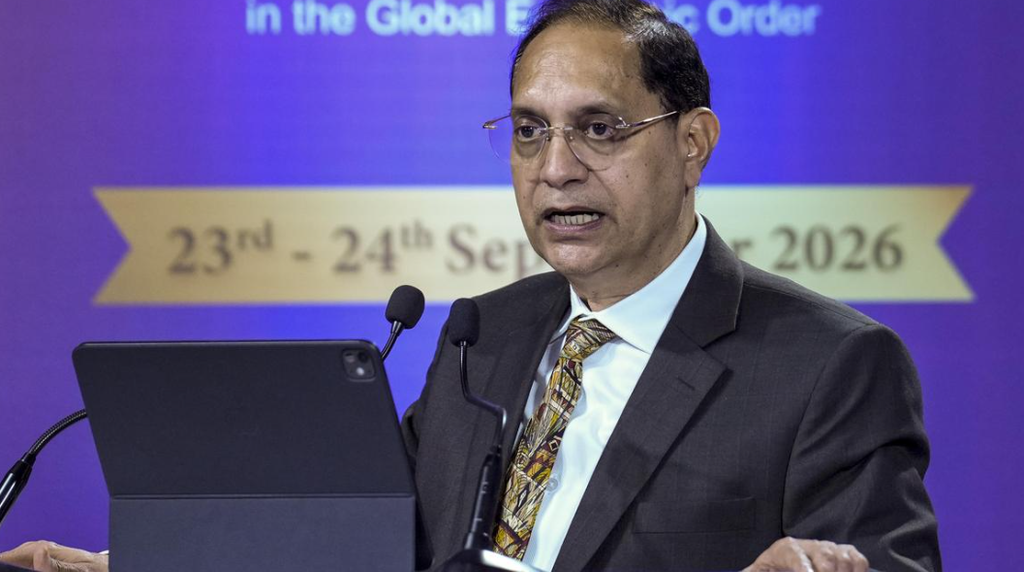
Interconnected Markets Need Unified Vigilance: SEBI
New Delhi — India’s financial markets are becoming increasingly interconnected, creating new opportunities for investors and institutions but also introducing risks that can spread rapidly across market segments.
Against this backdrop, the Securities and Exchange Board of India (SEBI) has emphasized the need for stronger and more coordinated market vigilance. Financial stability, cyber resilience and operational resilience can no longer be viewed entirely through separate institutional or regulatory silos.
The shift reflects a broader transformation in India’s financial ecosystem, where exchanges, clearing corporations, depositories, brokers, investment institutions and technology providers are increasingly linked through common digital and financial infrastructure.
Why Interconnected Financial Markets Need Stronger Oversight
Capital can now move between different financial products and institutions with greater speed than in the past.
A disruption affecting one part of the financial system can therefore have consequences elsewhere. Operational failures, cyber incidents, technology outages or weaknesses in one market infrastructure could potentially create knock-on effects across connected participants.
SEBI already operates an Integrated Surveillance Department, which monitors market activity using market systems, information from different departments and analytical software. The regulator’s organizational framework also includes dedicated functions for investigations, cybersecurity and technology oversight.
The increasingly interconnected nature of the market means these functions need to work together rather than operate as isolated lines of defense.
Cyber Resilience Has Become a Market-Wide Issue
Cybersecurity is one of the clearest examples of why unified vigilance matters.
Stock exchanges, brokers, clearing corporations, depositories and other market infrastructure institutions rely heavily on interconnected technology systems. A serious cyber incident at one institution could potentially affect participants that depend on its services.
SEBI has been strengthening its cybersecurity framework. In August 2026, the regulator issued a circular aligning its Cyber Incident Reporting Portal with the FIRE format, reflecting continued efforts to improve standardized cyber-incident reporting.
SEBI’s technology agenda also includes surveillance, data analytics, artificial intelligence, cybersecurity and IT resilience across market infrastructure.
The objective is not simply to respond to individual cyber incidents, but to strengthen the resilience of the broader securities market.
Common Reporting Can Improve Market Surveillance
Another important development is the expansion of common reporting mechanisms.
On September 17, 2026, SEBI announced that its Samuhik Prativedan Manch, a technology-based common reporting mechanism, had been extended to members of clearing corporations.
A common reporting framework can help reduce fragmentation in regulatory information.
When information is collected in standardized formats, regulators can potentially identify patterns more efficiently and compare data across different institutions.
For an increasingly complex market, the quality and speed of information can be as important as the rules themselves.
Clearing Corporations Are Critical to Market Stability
Clearing corporations play a central role in securities markets because they sit between trading activity and settlement.
Their systems and risk-management processes help ensure that trades can be cleared and obligations settled even when individual participants face difficulties.
That makes operational resilience at clearing corporations particularly important.
SEBI has also been reviewing settlement and risk-management provisions for clearing corporations. In August 2026, the regulator published a consultation paper covering measures related to ease of doing business as well as settlement and risk management.
The broader direction suggests that market resilience increasingly depends on understanding how different institutions function as parts of a connected system.
Operational Resilience Goes Beyond Cybersecurity
Unified vigilance is not limited to preventing cyberattacks.
Operational resilience covers the ability of financial institutions and market infrastructure to continue critical functions during disruptions.
Potential problems can range from technology failures and system outages to third-party service disruptions and operational errors.
For regulators, this means monitoring not only individual institutions but also the dependencies between them.
A brokerage platform, for example, may depend on exchanges, clearing corporations, depositories, banks, technology providers and telecommunications infrastructure. A disruption at one point can therefore create operational consequences elsewhere.
Data Can Help Regulators Detect Risks Earlier
The increasing volume of market data also provides regulators with new tools.
SEBI’s technology framework identifies data analytics and advanced surveillance tools as important components of market oversight.
Real-time or near-real-time analysis can potentially help regulators identify unusual trading patterns, operational anomalies and emerging risks more quickly.
Artificial intelligence and machine-learning technologies may further expand these capabilities, although their effectiveness depends on data quality, appropriate governance and reliable oversight.
Technology, therefore, becomes both part of the solution and part of the risk environment.
Market Infrastructure Institutions Need Coordination
India’s securities market includes multiple market infrastructure institutions, including stock exchanges, clearing corporations and depositories.
SEBI’s official website describes initiatives involving institutions such as NSE, BSE, ICCL, NCL, CDSL and NSDL, highlighting the interconnected nature of India’s market infrastructure.
Coordination among these institutions can help regulators develop a more complete picture of market activity.
It can also improve the ability to respond when a disruption crosses institutional boundaries.
Why Regulatory Silos Can Become a Challenge
Traditional regulatory frameworks often divide responsibilities according to institutions or specific market activities.
That structure can provide clarity about accountability. However, financial markets do not always operate within those same boundaries.
A transaction can involve multiple intermediaries and infrastructure providers. Investors can also have exposure to several market segments simultaneously.
This creates a potential gap between institution-level supervision and system-level risk.
Unified vigilance attempts to address that gap by focusing more closely on connections, dependencies and the potential for risks to spread.
Protecting Investors in a Connected Market
For retail investors, the importance of market resilience is ultimately tied to confidence.
Investors expect exchanges to function properly, transactions to settle on time and their holdings and personal information to remain secure.
Strong surveillance can also help regulators identify potential market abuse and other activities that could undermine market integrity.
SEBI’s stated mandate includes protecting investor interests while promoting the development and regulation of India’s securities market.
As markets become more digital and interconnected, achieving that objective increasingly requires technological as well as regulatory capabilities.
The Road Ahead for India’s Financial Markets
The future of financial-market supervision is likely to involve greater use of shared data, coordinated surveillance and technology-driven risk detection.
For SEBI and other regulators, the challenge will be to strengthen coordination without creating unnecessary compliance complexity for market participants.
At the same time, financial institutions will need to invest in cybersecurity, business continuity, technology resilience and effective risk management.
The regulator’s recent initiatives on common reporting and cyber-incident reporting indicate that information sharing and coordinated oversight are becoming increasingly important elements of India’s financial-market architecture.
India’s increasingly interconnected financial markets require a broader approach to vigilance.
As capital, technology and market infrastructure become more closely linked, risks can potentially move across institutional boundaries. Cyber incidents, operational failures and market disruptions therefore cannot always be addressed effectively through isolated oversight.
SEBI’s focus on integrated surveillance, common reporting, cybersecurity and operational resilience reflects this changing environment.
The central challenge for India’s financial regulators will be to ensure that the country’s increasingly digital financial system remains resilient, transparent and capable of protecting investors as markets continue to evolve.






































































































































