

 0
 0
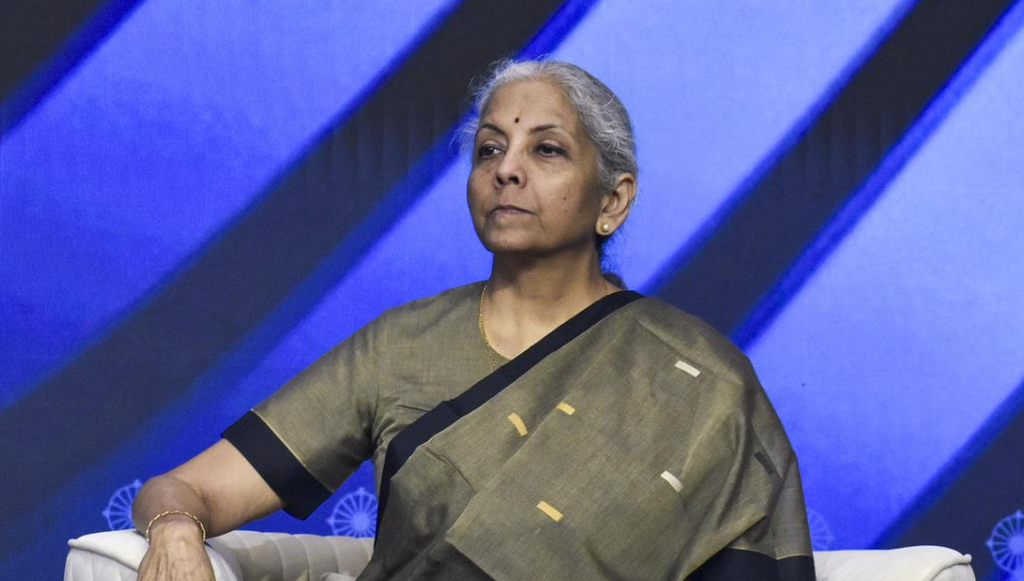
NEW DELHI – Union Finance Minister Nirmala Sitharaman has praised the India-European Union (EU) trade deal as an important example of how India is approaching and finalising major trade agreements.
Speaking at the Munich Leaders Meeting 2026 in New Delhi on October 5, Sitharaman highlighted the scale of the India-EU agreement and the way both sides structured market-access commitments according to their respective economic strengths and sensitivities.
The India-EU Free Trade Agreement negotiations were concluded in January 2026 and were welcomed at the 16th EU-India Summit in New Delhi. European and Indian leaders described the agreement as an important step in strengthening economic ties and supporting a more stable rules-based trading system.
Sitharaman Highlights India-EU Trade Deal
Sitharaman said the India-EU agreement demonstrates how India can negotiate trade deals while protecting its national interests.
Under the agreement, India opened around 92.5% of its tariff lines, representing approximately 97% of trade value. Meanwhile, the EU opened around 97% of tariff lines, covering approximately 99% of trade value, according to Sitharaman’s remarks.
The Finance Minister stressed that market-access commitments were selected by considering the complementarity of the two economies and India’s competitiveness.
The approach reflects India’s effort to expand access to international markets while maintaining protection for sensitive areas of the domestic economy.
India-EU Deal Connects Two Major Economies
The India-EU trade agreement is significant because it brings together two major economic markets with large consumer bases.
Sitharaman said the agreement effectively connects India’s growing economy and middle class with the European Union for the coming decades.
The European Union is one of India’s most important trading partners. According to the European Council, the EU accounted for 11.5% of India’s trade in goods and was India’s second-largest trading partner after China at the time of the January 2026 summit.
The scale of the relationship gives the trade agreement importance beyond tariffs alone.
Trade Agreement Seen as Strategic Partnership
The India-EU trade deal is also being viewed through a broader strategic lens.
European and Indian leaders have emphasized the importance of stronger economic ties amid global uncertainty, disrupted supply chains, and geopolitical tensions.
The European Council said the agreement could support growth, job creation, industrial development, the green transition, and more resilient supply chains.
For India, stronger access to the European market could create additional opportunities for exporters and businesses seeking to expand their international presence.
Sitharaman Says Trade Deals Cannot Follow One Template
While praising the India-EU agreement, Sitharaman cautioned that the deal should not simply be copied as a template for negotiations with every other country.
She said different trading partners have different economic structures, priorities, and strategic interests.
Her comments came as India continues negotiations with the United States over a proposed bilateral trade agreement. Sitharaman described those talks as difficult and highly rigorous, saying the negotiations were still ongoing and appeared to have reached a point where further concessions from either side could become difficult.
The Finance Minister’s remarks underline the increasingly complex environment surrounding India’s trade policy.
India-US Trade Talks Remain Challenging
The discussion at the Munich Leaders Meeting also turned toward India’s ongoing trade negotiations with the United States.
Sitharaman said the trade balance currently favors India, while Washington is seeking to reduce its trade deficit with New Delhi.
She argued that trade imbalances cannot always be addressed simply by demanding further concessions from one side. Instead, negotiations remain an important mechanism for resolving differences between trading partners.
The India-US trade agreement has yet to be finalized, with negotiations continuing as both countries seek terms that they consider mutually beneficial.
Bilateral Trade Agreements Gaining Importance
Sitharaman also discussed the broader shift toward bilateral trade agreements as the global trading system faces increasing pressure.
She noted that multilateral institutions such as the World Trade Organization have weakened in recent years, encouraging countries to pursue more bilateral arrangements.
However, she stressed that multilateralism should not disappear.
The changing global environment means countries increasingly need to balance traditional multilateral trade rules with bilateral agreements designed around specific economic and strategic relationships.
India-EU Agreement Could Boost Market Access
One of the key potential benefits of the India-EU trade agreement is improved market access.
The European Union’s large consumer market provides Indian exporters with opportunities across a range of industries, while European companies can gain greater access to India’s rapidly expanding economy.
The agreement also seeks to strengthen investment and economic cooperation between the two sides.
At the January 2026 EU-India summit, leaders committed to implementing the agreement and increasing bilateral investment to support key value chains.
Sensitive Sectors Remain Important
Despite the broad scope of the agreement, both India and the EU maintained protections for certain sensitive sectors.
Agriculture and other politically and economically important areas require careful consideration in trade negotiations because tariff reductions can have significant effects on domestic producers.
Sitharaman’s comments indicate that India’s negotiating strategy is focused not simply on maximizing tariff reductions but also on ensuring that increased market access does not undermine the competitiveness of sensitive domestic industries.
A Model for India’s Trade Strategy
The India-EU trade agreement has become an important reference point in discussions about India’s evolving trade strategy.
Rather than applying identical terms to every trading partner, India is seeking agreements that reflect the specific characteristics of each economy.
Sitharaman’s remarks at the Munich Leaders Meeting reinforce the idea that trade negotiations increasingly involve more than tariffs.
Supply-chain resilience, investment, strategic interests, domestic competitiveness, and geopolitical considerations are becoming increasingly important elements of modern trade policy.
India Seeks Balanced Trade Partnerships
The India-EU agreement comes at a time when India is simultaneously working to strengthen economic relationships with several major economies.
The government is pursuing trade and investment agreements with multiple partners while seeking to maintain strategic autonomy in an increasingly fragmented global economy.
For India, the challenge is to expand access for its exporters while ensuring that domestic industries can compete effectively.
The approach highlighted by Sitharaman suggests that future trade agreements will continue to be shaped around India’s national interests and the specific characteristics of each trading partner.
India-EU Trade Deal Marks New Economic Chapter
Nirmala Sitharaman’s remarks at the Munich Leaders Meeting highlight the significance of the India-EU trade agreement for India’s broader economic strategy.
With major tariff commitments, increased market access, and stronger economic cooperation, the agreement could play an important role in shaping India-EU commercial relations over the coming years.
At the same time, the Finance Minister’s comments make clear that India does not intend to use a single formula for every trade negotiation.
The India-EU trade deal stands as a major example of India’s effort to expand global market access while protecting domestic interests, as New Delhi continues to navigate an increasingly complex international trade environment.






































































































































