0
0
 0
0
UPI was introduced in 2016 with the objective of making bank-to-bank payments faster, simpler and more accessible. Instead of relying on lengthy bank account details for every transaction, users could make payments through a unified digital interface.
Over the past decade, the platform has expanded significantly, attracting millions of users and businesses across India.
The dramatic growth in transaction volume demonstrates how quickly consumers have adopted digital payments for everyday purchases, bill payments, money transfers and online transactions.
Transaction Volume Rises 13,000-Fold
One of the most striking indicators of UPI’s success is the increase in transaction volume.
Over its 10-year journey, UPI transaction volume has surged around 13,000 times, reflecting the rapid shift from cash-based payments toward digital transactions.
UPI has become particularly popular for small-value payments. Consumers can use their smartphones to pay for groceries, food, transportation, retail purchases and services within seconds.
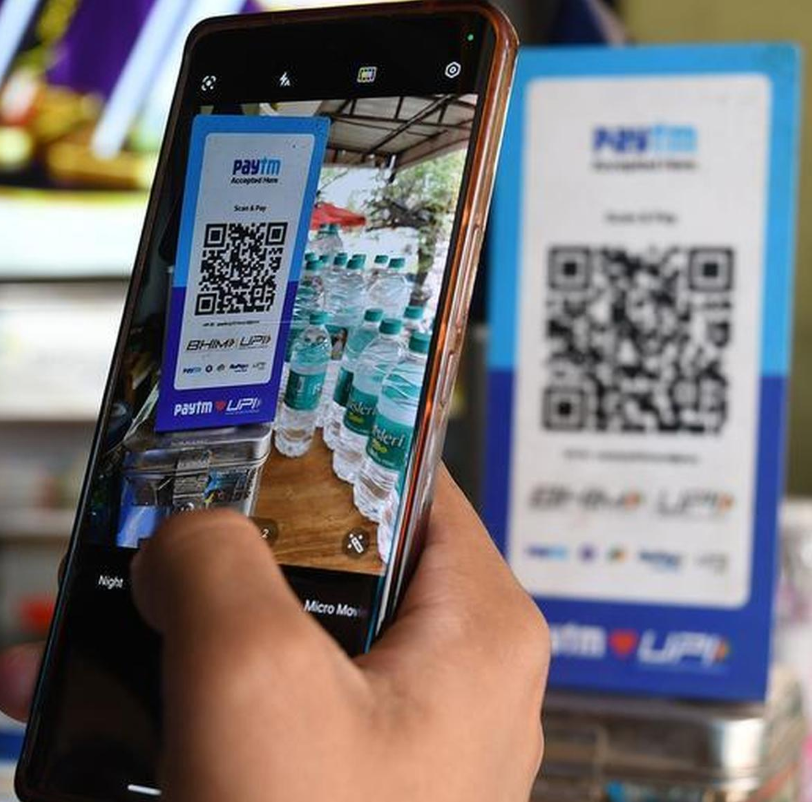
The convenience of scanning a QR code or entering a UPI ID has helped make digital payments accessible to a much broader section of the population.
Transaction Value Climbs 4,000 Times
The growth has not been limited to the number of transactions. The value of transactions processed through UPI has increased around 4,000-fold over the same period.
This growth reflects both the rising number of users and the increasing number of businesses accepting UPI payments.
From street vendors and small retailers to large e-commerce platforms and service providers, digital payments have become an increasingly important part of India’s commercial ecosystem.
UPI Has Changed Everyday Payments in India
Before the rapid expansion of UPI, consumers often depended on cash, cards, bank transfers and mobile wallets for digital transactions.
UPI brought many of these payment capabilities together through an interoperable system that allows customers of participating banks to transfer money directly between accounts.
Its simplicity has been one of the key reasons behind its widespread adoption.
A customer can open a supported payment application, select a recipient or scan a QR code, enter the amount and authorize the payment. The transaction can generally be completed within seconds.
QR Codes Drive Wider Adoption
The widespread use of QR codes has played an important role in the growth of UPI.
For small businesses, accepting digital payments does not necessarily require expensive point-of-sale infrastructure. A printed QR code can allow customers to make payments directly from their bank accounts.
This has helped bring digital payments to businesses that previously relied almost entirely on cash.
From neighborhood shops to roadside vendors, QR-based UPI payments have become a familiar part of India’s retail landscape.
UPI Strengthens Financial Inclusion
Another important impact of UPI is its contribution to financial inclusion.
By enabling instant bank-to-bank transfers through smartphones, UPI has made digital payments more accessible to consumers who may not regularly use traditional banking services such as debit cards or physical bank branches.
The growth of affordable smartphones and internet connectivity has further supported this transition.
As more people gain access to bank accounts and digital financial services, UPI provides a convenient mechanism for transferring and receiving money.
UPI Becomes a Major Part of India’s Digital Economy
The growth of UPI has also supported India’s broader digital economy.
Businesses can receive payments instantly, consumers can transfer money without handling cash, and online platforms can integrate digital payments into their services.
For small businesses, faster digital settlement can also improve cash-flow management and reduce dependence on physical cash handling.
The ecosystem has therefore expanded beyond simple peer-to-peer transfers and now plays a major role in retail, e-commerce, financial services and other sectors.
International Expansion of UPI
UPI’s development has also attracted international attention.
India has increasingly explored partnerships that allow UPI-based payments or UPI-linked systems to be used in other countries. Such initiatives are aimed at making cross-border payments more convenient for Indian travellers and strengthening India’s position in the global digital payments sector.
The international interest in UPI reflects the broader recognition of India’s digital public infrastructure.
The Next Decade Could Bring Further Growth
Completing 10 years is an important milestone, but the evolution of UPI is unlikely to stop here.
The next phase could involve deeper integration with financial services, increased cross-border payment connectivity, stronger fraud prevention systems and greater use of artificial intelligence in payment security.
As transaction volumes continue to rise, maintaining reliability and protecting users from fraud will remain critical priorities.
The challenge for India’s digital payments ecosystem will be to combine rapid innovation with strong consumer protection and system resilience.
UPI’s 10-Year Journey in Perspective
The numbers tell the story of an extraordinary transformation.
A 13,000-fold increase in transaction volume and a 4,000-fold increase in transaction value in just a decade demonstrate how quickly UPI has moved from a new payment platform to a central part of India’s financial infrastructure.
Its success has also changed consumer expectations. Instant payments are now increasingly viewed as a normal part of everyday financial life.
For India, the UPI journey represents more than the growth of a payment system. It reflects the country’s broader transition toward a digital-first economy.
As UPI enters its second decade, its continued expansion could further reshape how individuals, businesses and financial institutions conduct transactions in India and beyond.
UPI’s completion of 10 years marks a landmark moment for India’s digital payments revolution. With transaction volume rising 13,000-fold and transaction value increasing 4,000-fold, the platform has demonstrated the scale at which digital financial infrastructure can transform consumer and business behavior.
From QR-code payments at small shops to large digital transactions, UPI has become an essential part of India’s payment ecosystem.
The next decade will likely focus on expanding international adoption, strengthening security, improving interoperability and ensuring that India’s digital payment infrastructure remains capable of handling the country’s rapidly growing economy.
UPI’s first decade has already changed the way India pays. Its second decade could determine how influential India’s digital payment model becomes globally.