 0
0
 0
0

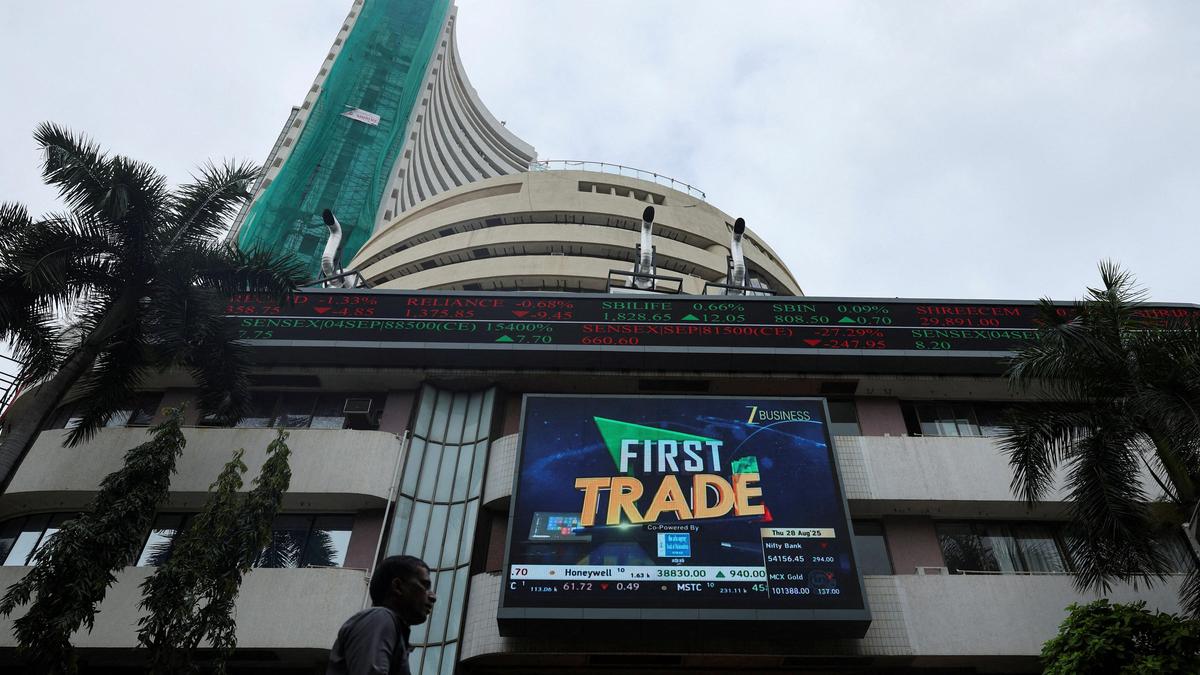
Indian stock markets opened lower in early trade as geopolitical uncertainty, elevated crude oil prices and foreign fund outflows weighed on investor sentiment. The decline came as markets remained cautious over developments in the Middle East and concerns about potential disruptions to global energy supplies.
On Friday, August 14, 2026, the BSE Sensex and Nifty 50 both traded in negative territory. The Sensex was down around 0.33% at 77,820.91, while the Nifty 50 declined 0.26% to 24,332.40 during morning trading.
The weakness highlights the sensitivity of Indian equities to developments in global energy markets, particularly because India remains heavily dependent on imported crude oil.
Geopolitical Uncertainty Pressures Indian Equities
The latest market decline was largely linked to growing uncertainty surrounding the Middle East.
Concerns intensified after the United States threatened an indefinite naval blockade of Iran, raising fears that oil supplies could face further disruption. The possibility of prolonged tension has pushed investors toward a more cautious approach.
For Indian markets, geopolitical risks are particularly important because a sustained rise in crude oil prices can increase import costs and put pressure on inflation, corporate margins and the country’s current account balance.
As a result, investors are closely monitoring developments in the region before taking aggressive positions.
Crude Oil Prices Remain a Major Concern
Oil prices have become one of the most important market indicators for Indian investors.
Brent crude was trading near $87 per barrel, having risen about 4% during the week as uncertainty surrounding Middle East peace efforts continued.
Higher crude prices can create challenges for several parts of the Indian economy.
Rising energy costs can increase transportation and manufacturing expenses, while companies that rely heavily on fuel may face pressure on profitability. At the same time, higher import costs can affect the Indian rupee.
This explains why any escalation in geopolitical tensions can quickly translate into selling pressure on Indian equities.
Sensex and Nifty Trade Lower
The decline was visible across India’s benchmark indices.
The Sensex fell 0.33% to 77,820.91, while the Nifty 50 slipped 0.26% to 24,332.40 in morning trade. Both indices were on course for a weekly decline of around 1%, potentially ending a two-week winning streak.
Friday’s weakness followed a relatively subdued session on Thursday, when the Nifty 50 closed at 24,395.85 after falling 40.10 points, or 0.16%. The Sensex declined 113.61 points, or 0.15%, to finish at 78,079.96.
The figures indicate that investors have become increasingly cautious despite some positive signals from international markets.
Metal Stocks Face Heavy Selling
Among the sectors under pressure, metal stocks were particularly weak.
The metal sector declined around 1.3% during Friday’s morning trade, while financial stocks also moved lower. Falling base-metal prices added to the pressure on metal companies.
The selling demonstrates how geopolitical uncertainty can affect different sectors in different ways.
Companies exposed to commodities, global trade and international demand can be particularly sensitive when investors become concerned about economic growth.
Foreign Fund Outflows Add to Market Pressure
Foreign investor activity is another important factor influencing Indian stock markets.
Foreign portfolio investors have remained cautious amid geopolitical tensions, elevated oil prices and broader macroeconomic uncertainty. Persistent foreign selling can create additional volatility in benchmark indices.
However, not all overseas investors have turned negative on India. Some major foreign portfolio investors continued to remain invested in Indian equities during the June quarter, with several large investors outperforming the broader Nifty and Sensex.
This suggests that while short-term sentiment remains cautious, long-term confidence in India’s economic growth story has not disappeared.
Indian Rupee Also Faces Pressure
The weakness in equities has coincided with pressure on the Indian rupee.
The currency remained around the ₹95.40 per US dollar level amid foreign fund outflows and rising crude prices. Traders also reported that the Reserve Bank of India was likely intervening in the foreign exchange market to help stabilize the rupee.
A weaker rupee can increase the domestic cost of imported commodities, particularly crude oil.
This creates another reason for investors to monitor currency movements alongside the stock market.
Global Markets Provide a Mixed Picture
Interestingly, the weakness in Indian stocks has occurred despite relatively supportive signals from global markets.
US equities remained firm, while recent US inflation data helped ease some concerns about immediate monetary-policy pressure. However, geopolitical developments and crude oil prices have remained more important for Indian investors in the current environment.
This divergence highlights the importance of local factors in determining market direction.
Indian equities can receive positive signals from Wall Street but still decline if domestic investors remain concerned about oil prices, currency movements and geopolitical risks.
Investors Adopt a Wait-and-Watch Approach
With several uncertainties still unresolved, investors appear to be adopting a wait-and-watch strategy.
Market analysts expect Indian benchmarks to remain relatively range-bound in the near term as investors assess global developments, crude prices and domestic economic conditions.
For traders, this environment could result in increased intraday volatility.
For long-term investors, however, short-term market declines may not necessarily change the broader investment outlook. The key issue will be whether geopolitical uncertainty remains temporary or develops into a prolonged disruption to energy supplies.
What Could Determine the Next Market Move?
Several factors are likely to influence the direction of the Indian stock market in the coming sessions.
1. Middle East Developments
Any escalation or de-escalation of tensions involving Iran and other regional players could have an immediate impact on crude prices and investor sentiment.
2. Crude Oil Prices
Oil remaining near or above current levels could continue to pressure inflation-sensitive sectors and the rupee.
3. Foreign Investor Flows
A return of foreign institutional buying could provide support to Indian benchmarks, while continued outflows could increase selling pressure.
4. Rupee Movement
The performance of the Indian currency against the US dollar will remain closely linked to oil prices and capital flows.
5. Global Equity Markets
Movements in US and Asian markets will continue to provide important signals for domestic investors.
Indian Stock Market Outlook
The current decline does not necessarily signal the beginning of a major market correction.
Instead, it reflects a combination of geopolitical uncertainty, elevated crude prices, foreign fund outflows and cautious investor sentiment.
The Indian economy continues to attract long-term investor interest, but global developments can create significant short-term volatility.
If Middle East tensions ease and crude prices stabilize, the Sensex and Nifty could regain momentum. Conversely, further escalation could lead to additional pressure on Indian equities.
For now, investors are likely to remain focused on global developments rather than making aggressive bets.
The Indian stock market declined in early trade amid geopolitical uncertainty, with the Sensex and Nifty 50 both moving lower as investors remained cautious.
Rising crude oil prices, concerns surrounding the Middle East, foreign investor outflows and pressure on the Indian rupee have combined to create a challenging environment for equities.
The immediate market direction will largely depend on whether geopolitical tensions ease and oil prices stabilize.
For investors, the current environment calls for careful monitoring of global developments, commodity prices and foreign fund flows.
With uncertainty still dominating sentiment, the Sensex and Nifty are likely to remain sensitive to every major development in the global geopolitical and energy markets.