

 0
 0
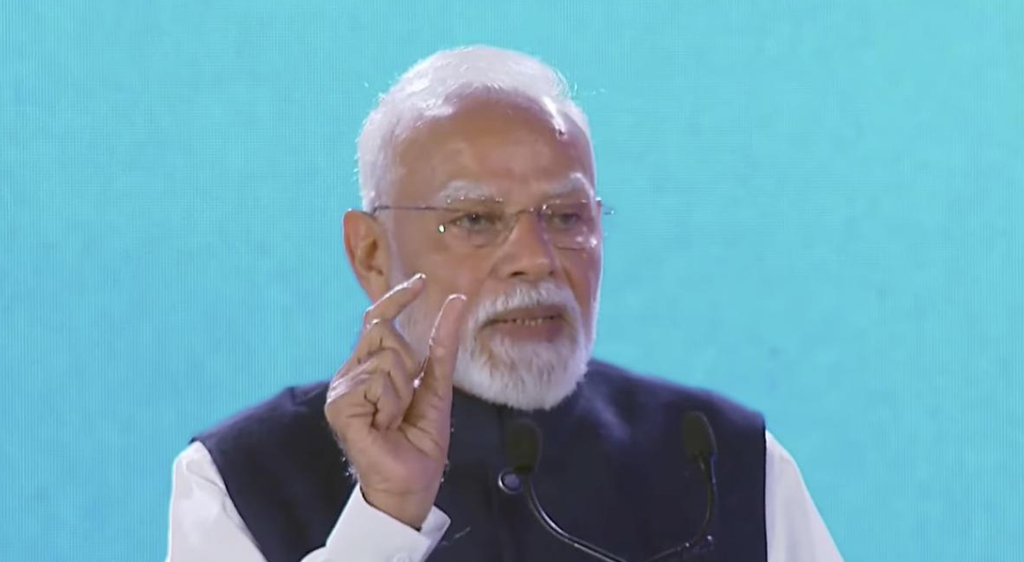
New Delhi, October 13, 2026 — Indian Prime Minister Narendra Modi has reaffirmed India’s vision of economic growth based on cooperation, shared prosperity, and global responsibility. Addressing the Bloomberg New Economy Forum in New Delhi, Modi stated that India does not grow at anybody’s cost but grows with and for the world, presenting the country as a reliable partner in an increasingly uncertain global economy. Source
India’s Economic Growth and Global Responsibility
Modi’s statement highlights India’s ambition to strengthen its position in the global economy while maintaining constructive relationships with other nations. Rather than viewing economic development as a competition in which one country’s success must come at another’s expense, the Indian government emphasizes collaboration, investment, innovation, and mutually beneficial partnerships.
According to the Prime Minister, India can serve as a stable and dependable pillar for the international community, particularly during periods of economic uncertainty. This vision positions India’s growth as an opportunity to create new markets, strengthen international trade, and support shared economic progress.
The message also reflects the growing importance of cooperation among countries as they navigate geopolitical tensions, changing supply chains, technological transformation, and financial uncertainty.
Strong Economic Fundamentals Support India’s Growth
During his address, Modi pointed to India’s economic performance and financial resilience as important foundations for future development. He cited economic growth of 7.8% in the first quarter of the current financial year, foreign exchange reserves exceeding $700 billion, and a current account deficit of 0.61%.
These indicators, as presented in his speech, underscore the government’s emphasis on macroeconomic stability and investor confidence. A resilient banking sector and a strong external financial position can also help an economy manage international shocks and maintain access to investment.
For international businesses, India’s expanding economy offers opportunities in manufacturing, digital services, infrastructure, technology, and consumer markets. However, sustaining this momentum will depend on continued productivity improvements, job creation, investment, and the ability to distribute the benefits of economic growth across different regions and income groups.
Economic Reforms as a Long-Term Commitment
Modi also stressed that reforms in India are driven by conviction rather than compulsion. He highlighted measures such as the Goods and Services Tax (GST), insolvency legislation, labour-code consolidation, and the decriminalisation of certain minor business-related offences.
These reforms form part of a broader effort to simplify regulations, improve the business environment, and strengthen economic efficiency. A more predictable regulatory framework can encourage domestic entrepreneurship, attract foreign investment, and support businesses seeking to expand their operations.
Nevertheless, the long-term success of economic reforms depends on effective implementation. Regulatory clarity, accessible financing, workforce skills, infrastructure quality, and consistent policy execution will remain important factors in determining whether businesses and workers fully benefit from these changes.
From National Progress to Global Prosperity
A central theme of Modi’s message is the principle of “Power to Empower.” The concept emphasizes using a country’s growing capabilities not only to advance its own interests but also to help other countries address shared challenges.
Modi referred to India’s international cooperation, including the provision of COVID-19 vaccines to other countries during the pandemic, as an example of this approach. He also highlighted the potential for collaboration in emerging technologies, including artificial intelligence.
This perspective is particularly relevant as countries seek solutions to challenges involving public health, climate change, digital transformation, food security, and sustainable development. International cooperation can help expand access to technology, improve knowledge-sharing, and create opportunities that extend beyond national borders.
For India, stronger international partnerships can also support exports, investment, technological development, and its broader role in global economic decision-making.
Challenges and Opportunities Ahead
Although India’s growth outlook offers significant opportunities, translating economic expansion into broad-based prosperity remains an important challenge. Policymakers must continue to address employment needs, income disparities, infrastructure gaps, and the development of a skilled workforce.
India’s ability to maintain investor confidence will also depend on its capacity to adapt to global economic changes while preserving domestic economic stability. Stronger trade relationships, innovation, and improvements in productivity will be essential to sustaining long-term competitiveness.
At the international level, the idea that India grows with and for the world will ultimately be measured by practical outcomes. These include mutually beneficial trade, sustainable investment, technology partnerships, employment opportunities, and meaningful cooperation on shared global problems.
Conclusion: India’s Vision for Shared Global Growth
Prime Minister Narendra Modi’s statement, “India does not grow at anybody’s cost; it grows with and for the world,” presents a vision of development built around cooperation rather than zero-sum competition.
The message underscores India’s intention to combine domestic economic strength with international engagement. By focusing on reforms, financial resilience, innovation, and global partnerships, India seeks to expand its economic influence while contributing to broader international progress.
The next phase of this vision will depend on how effectively economic growth translates into tangible benefits for Indian citizens and international partners alike. If supported by inclusive policies, productive investment, and sustained cooperation, India’s development could create opportunities that extend well beyond its borders.






































































































































