

 0
 0
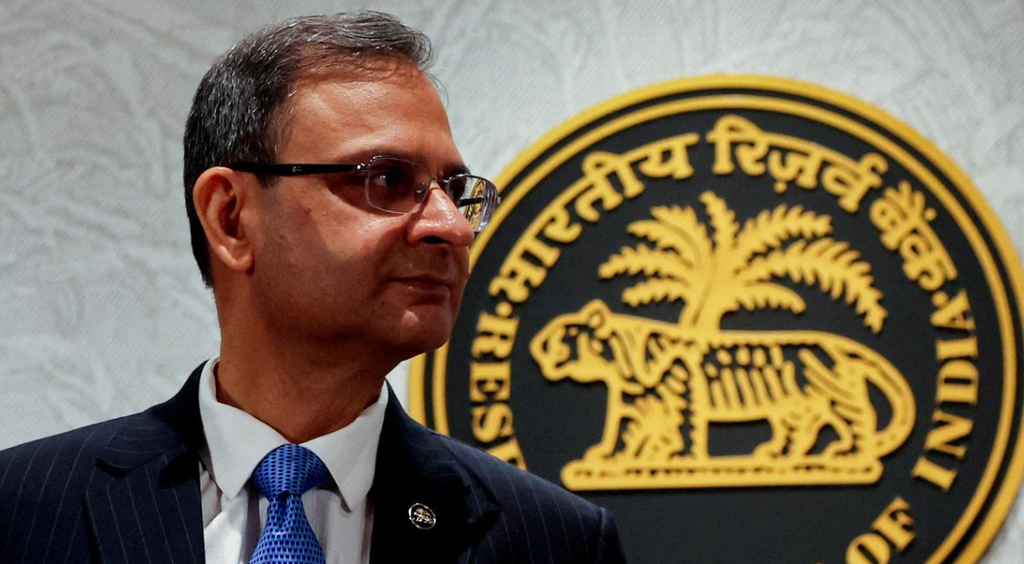
The Reserve Bank of India (RBI) has raised its policy repo rate by 25 basis points to 5.50%, marking a major shift in India’s monetary policy direction as inflation risks become more prominent.
The decision, announced on October 7, 2026, was taken unanimously by the six-member Monetary Policy Committee (MPC). More importantly, the RBI changed its policy stance from “neutral” to “calibrated tightening”, signalling that the central bank is no longer prioritising further rate cuts in the near term.
The move represents the RBI’s first repo rate increase since February 2023 and comes after the central bank had kept the repo rate unchanged at 5.25% for four consecutive policy reviews.
RBI Repo Rate Raised to 5.50%
The MPC unanimously voted to increase the repo rate by 25 basis points, or 0.25 percentage point, from 5.25% to 5.50%.
The repo rate is the interest rate at which the RBI lends short-term funds to banks. Changes in the policy rate can eventually influence lending rates across the economy, including rates on home loans, vehicle loans, personal loans and business credit.
Following the latest decision, the Standing Deposit Facility (SDF) rate stands at 5.25%, while the Marginal Standing Facility (MSF) rate and Bank Rate move to 5.75%
The size of the increase was relatively modest, but its significance lies in the change in direction.
RBI Shifts to ‘Calibrated Tightening’
The biggest message from the October policy meeting may not be the 25-basis-point rate hike itself.
It is the RBI’s decision to abandon its neutral monetary policy stance and adopt “calibrated tightening.”
The new stance signals that the central bank is prepared to keep monetary conditions tighter if inflation remains elevated.
Recent reports indicate that the RBI has effectively ruled out rate cuts in the near term, leaving future policy action centred on either another rate increase or a pause. The timing and scale of any additional moves will depend on incoming inflation and growth data.
For financial markets, this change in language could therefore prove more important than the immediate 25-basis-point increase.
Why Did the RBI Raise Interest Rates?
The central bank’s decision comes amid renewed concerns about inflation.
India’s consumer price inflation rose to 4.82% in August, while higher crude oil prices, weather-related risks and global geopolitical uncertainty have complicated the inflation outlook
Higher oil prices are particularly important for India because the country remains heavily dependent on imported crude.
An increase in global energy prices can raise transportation and production costs, putting pressure on prices across several sectors.
The RBI therefore appears increasingly concerned about the possibility that temporary supply-side pressures could develop into broader inflationary pressures.
Inflation Has Become the RBI’s Priority
The latest policy decision reflects a clear change in the balance of risks.
During the earlier easing cycle, the RBI had greater room to reduce borrowing costs to support economic activity.
That room has now narrowed.
The combination of higher commodity prices, global financial uncertainty and domestic price pressures means the RBI has to pay greater attention to inflation expectations.
If households and businesses begin expecting persistently higher prices, companies may increase prices and workers may seek higher wages, potentially creating second-round inflation effects.
That is one reason central banks tend to act before inflation becomes deeply embedded in the economy.
RBI Still Sees Strong Economic Growth
The rate hike does not mean that the RBI believes the Indian economy is weakening sharply.
In fact, the central bank has become more optimistic about economic growth.
The RBI reportedly raised its FY2027 GDP growth forecast from 6.7% to 7.1%, reflecting stronger-than-expected domestic economic activity.
This creates an important policy distinction.
The RBI is not tightening monetary policy because growth has collapsed. Instead, it is tightening while growth remains resilient because inflation risks have increased.
That gives the central bank more room to prioritise price stability without delivering an unnecessarily large shock to economic activity.
What Does the Repo Rate Hike Mean for Borrowers?
The immediate concern for borrowers is higher interest costs.
Banks may pass some or all of the increase in their funding and lending costs to customers, depending on the type of loan and the benchmark used.
Borrowers with floating-rate home loans, personal loans or vehicle loans could therefore face higher monthly payments if banks transmit the rate increase.
However, the impact will not necessarily be identical across all borrowers.
The timing and extent of transmission depend on individual loan contracts, banks’ funding costs and the benchmarks linked to the loans.
For existing borrowers, the key question will be whether the lender increases the interest rate, extends the loan tenure or adjusts the EMI.
Depositors Could Benefit
Higher interest rates are not necessarily bad news for everyone.
Savers and fixed-deposit investors may benefit if banks increase deposit rates in response to tighter monetary conditions.
This is particularly relevant for households that depend on interest income.
However, the transmission to deposit rates can be slower than the transmission to some lending rates.
Banks will assess their liquidity requirements, deposit competition and overall funding conditions before deciding how aggressively to raise deposit rates.
Impact on Banks and Financial Markets
The RBI’s policy shift is also significant for financial markets.
Government bond yields rose after the announcement, with the 10-year benchmark yield reaching its highest level of the year as investors absorbed the implications of the new tightening stance.
Bank stocks initially faced pressure but subsequently showed signs of recovery as investors assessed the implications for lending margins and the broader economy.
For banks, higher rates can have mixed consequences.
On one hand, lending rates may rise, potentially supporting interest income.
On the other hand, higher borrowing costs can weaken credit demand and increase pressure on borrowers with limited repayment capacity.
The overall impact will therefore depend on how quickly banks adjust both lending and deposit rates.
Stock Market Reaction Reflects Policy Uncertainty
Equity investors are also likely to focus on what comes next.
A single 25-basis-point hike may be manageable for markets. The bigger concern is whether the October decision represents the beginning of a longer rate-hiking cycle.
The RBI’s “calibrated tightening” language has increased that possibility.
Analysts have therefore been paying close attention to inflation, crude oil prices, global bond yields and domestic growth data to assess whether another hike could follow.
Rate-sensitive sectors such as real estate, automobiles and consumer finance could face greater pressure if borrowing costs continue to rise.
Banks and financial companies, meanwhile, could experience a more complicated impact depending on their balance sheets and ability to reprice loans.
What Does ‘Calibrated Tightening’ Actually Mean?
The phrase “calibrated tightening” does not necessarily mean that the RBI will raise rates at every upcoming meeting.
Instead, it indicates that monetary policy is moving toward tighter financial conditions and that the central bank is prepared to act if inflation risks persist.
The RBI can still pause and assess incoming data.
This gives the central bank flexibility to respond to changes in inflation, crude oil prices, global financial conditions and domestic economic growth.
In practical terms, the new stance tells markets that rate cuts are no longer the base policy direction in the near term.
The Global Economy Is Adding to the Pressure
India’s monetary policy cannot be viewed in isolation from global markets.
Higher global interest rates and rising international bond yields can influence capital flows, exchange rates and domestic financial conditions.
A stronger US dollar can also increase the rupee cost of imported commodities, particularly crude oil.
At the same time, geopolitical tensions can create sudden movements in energy and commodity prices.
These external factors make the RBI’s inflation outlook more uncertain and strengthen the case for a cautious approach to monetary policy.
What Happens to Home Loan EMIs?
For homeowners, the most immediate question is whether the RBI repo rate hike will increase EMIs.
The answer depends on the structure of the loan.
Borrowers with floating-rate loans linked to external benchmarks are generally more directly exposed to changes in policy rates. A rate increase can raise the interest rate applied to the loan, although banks may adjust the tenure rather than the EMI in some cases.
For prospective homebuyers, higher borrowing costs could also affect affordability.
A relatively small change in the interest rate can become significant over a long 15- or 20-year loan period because interest is calculated over a large outstanding principal.
Businesses May Face Higher Financing Costs
Companies could also feel the effects of tighter monetary policy.
Higher borrowing costs can increase the expense of working-capital loans, corporate credit and investment financing.
Businesses with strong balance sheets may be better positioned to absorb the change.
Smaller companies and highly leveraged businesses could face greater pressure if rates remain elevated for an extended period.
However, the RBI’s stronger growth outlook suggests that policymakers do not currently see monetary tightening as incompatible with continued economic expansion.
The Key Question: One Hike or the Start of a Cycle?
The October decision raises a larger question for India’s economy:
Is the 25-basis-point increase a one-off adjustment, or the beginning of a new rate-hiking cycle?
At this stage, the answer remains uncertain.
The RBI has left future decisions dependent on incoming data. Inflation will be particularly important.
If price pressures moderate, the central bank could pause at 5.50%.
If inflation remains persistent or global oil prices rise further, additional tightening could become necessary.
That uncertainty is precisely why the shift to “calibrated tightening” matters so much.
RBI’s Policy Pivot Sends a Clear Message
The RBI’s decision to raise the repo rate by 25 basis points to 5.50% marks a clear turning point in India’s monetary policy.
But the more significant development may be the shift from “neutral” to “calibrated tightening.”
The RBI is signalling that inflation risks now deserve greater attention, even though economic growth remains resilient.
For borrowers, the decision could mean higher financing costs. For savers, it could eventually create opportunities for better deposit returns. For investors, it introduces greater uncertainty around interest-rate-sensitive sectors and bonds.
Ultimately, the direction of India’s interest-rate cycle will depend on one central question: can inflation return to a sustainable path without forcing the RBI to tighten policy much further?
For now, the message from Mumbai is clear: the era of easy monetary policy has become more difficult, and the RBI is prepared to prioritise price stability.






































































































































