0
0
 0
0

Indian researchers have produced the first comprehensive molecular and functional profile of the venom gland of the colonial spider Stegodyphus sarasinorum, uncovering proteins and small molecules that could become valuable leads for future cancer and antimicrobial drug research.
The study, published in the peer-reviewed journal Scientific Reports, combines several advanced analytical techniques to investigate the complex molecular composition of the spider’s venom gland. Researchers identified dozens of proteins and 81 metabolites, while laboratory experiments also showed that venom gland extracts had dose-dependent cytotoxic effects against Dalton’s lymphoma ascites (DLA) cancer cells.
Scientists stress, however, that the discovery remains at an early research stage. The results demonstrate biological activity in laboratory models, but they do not establish that the venom can be used as a cancer treatment or antimicrobial medicine in humans.
A Closer Look at the Colonial Spider’s Venom Gland
Stegodyphus sarasinorum is a distinctive spider species found across the Indian subcontinent. Unlike many spiders that live and hunt alone, this species is known for living in permanent colonies and cooperating in prey capture.
That social behaviour makes the species particularly interesting to researchers studying how venom chemistry may have evolved alongside its unusual lifestyle.
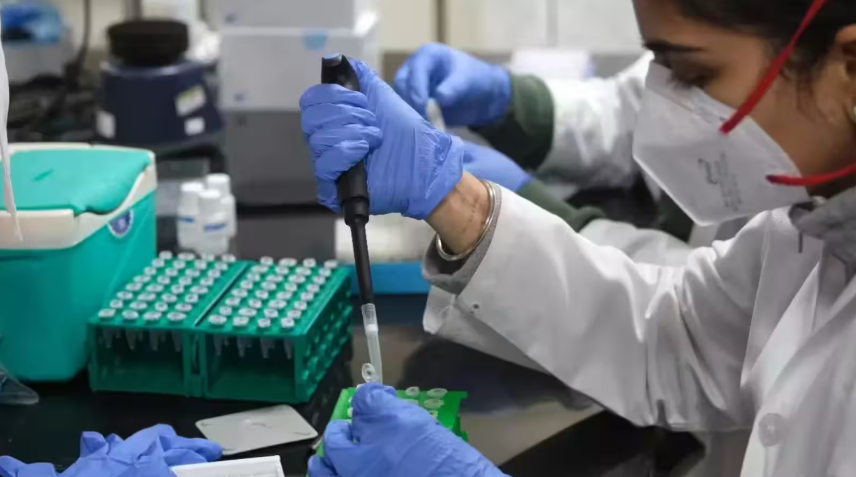
The new research provides what scientists describe as the first comprehensive molecular and functional characterisation of the venom gland of this species. The team combined transcriptomics, proteomics, metabolomics and Confocal Raman spectroscopy to examine the gland at multiple molecular levels.
Rather than focusing on a single toxin, the researchers created a broader molecular map of the venom gland and its biological components.
Researchers Identify 31 Protein Components and 81 Metabolites
Transcriptomic analysis identified 31 annotated protein components, including venom-associated and non-venom proteins. Proteomic analysis independently identified 32 proteins, providing additional information about the molecular composition of the gland.
The researchers also used ultra-high-performance liquid chromatography coupled with mass spectrometry (UHPLC-MS) to investigate smaller molecules.
The analysis detected 81 metabolites, including amino acids, biogenic amines, nucleotides, nucleosides, quaternary amines and organic acids.
This broad molecular inventory is significant because venom is not simply a collection of toxins. It can contain a complex mixture of peptides, proteins and small molecules with different biological functions.
Mapping that complexity can help researchers identify individual compounds that may eventually be investigated for pharmaceutical applications.
Venom Extract Shows Activity Against Cancer Cells
One of the most notable findings came from experiments involving Dalton’s lymphoma ascites (DLA) cells, a laboratory model used to investigate cancer-cell responses.
The researchers found that the spider venom gland extract demonstrated dose-dependent cytotoxicity, meaning that increasing concentrations of the extract produced stronger effects against the cultured cancer cells.
The finding provides an early indication that compounds within the venom gland may have biological activity relevant to cancer research.
However, the distinction between laboratory activity and a potential cancer medicine is crucial.
The experiments were conducted on cultured cells, not in human patients. Additional research would be required to determine which specific molecules are responsible for the observed effects, whether they selectively target cancer cells, how they work and whether they can be safely developed into therapeutic compounds.
Potential Antimicrobial Molecules Also Draw Attention
The research also identified protein families and peptide molecules with potential relevance to antimicrobial drug discovery.
Among the compounds highlighted are U12 and U20 lycotoxins, peptides associated with membrane-disrupting activity. Such mechanisms can be particularly interesting to researchers searching for new approaches to bacterial infections and cancer-cell targeting.
The discovery is particularly relevant at a time when antimicrobial resistance is making the search for new antimicrobial strategies increasingly important.
Natural venoms have evolved to interact with biological systems in highly specific ways. Researchers are therefore interested in whether some venom-derived peptides can be adapted or redesigned to target harmful microorganisms while limiting damage to healthy cells.
That possibility remains a research objective rather than an established medical application.
Hemocyanin Proteins Offer Another Research Lead
The study also identified hemocyanin proteins, which have attracted scientific interest because of their potential role in immune-related processes.
Hemocyanins are best known as oxygen-carrying proteins in many invertebrates. Some hemocyanin-derived molecules have also been investigated for immunological and anticancer properties.
Their presence in the S. sarasinorum venom gland therefore adds another potential avenue for future investigation, particularly in research exploring immune responses and cancer-related applications.
Researchers will need to isolate and characterise individual components before determining whether these proteins have useful therapeutic properties.
Confocal Raman Spectroscopy Reveals Molecular Distribution
The research went beyond identifying molecules and proteins.
Using two-dimensional and three-dimensional Confocal Raman mapping, the scientists investigated how different biomolecular components are spatially distributed within the venom gland.
This approach provides researchers with information about the location and distribution of chemical constituents rather than simply producing a list of compounds.
Combining spatial information with transcriptomic, proteomic and metabolomic data can provide a more complete picture of how the venom gland functions.
Such integrated approaches are becoming increasingly important in natural-product research, where complex biological mixtures may contain numerous compounds with different activities.
Why Spider Venom Matters to Drug Discovery
Animal venoms have long attracted pharmaceutical researchers because they contain biologically active molecules that have evolved to interact with specific molecular targets.
Spider venom is particularly complex and can contain peptides and other compounds capable of affecting cell membranes, ion channels, receptors and signalling pathways.
Some venom-derived molecules have therefore been investigated as potential starting points for medicines.
The new study adds S. sarasinorum to that broader field of research and provides a molecular resource that could help scientists identify specific compounds for future testing.
From Venom Molecules to Potential Medicines
The path from a promising venom molecule to an approved medicine is long.
First, researchers must identify the specific compound responsible for a biological effect. They then need to understand its molecular mechanism, establish its selectivity and determine whether it can be produced reliably.
Potential drug candidates must subsequently undergo increasingly complex laboratory and animal studies before human clinical trials can be considered.
Safety is also a major issue. A molecule capable of killing cancer cells or bacteria may also damage healthy cells if it lacks sufficient selectivity.
For that reason, the current study should be viewed as a drug-discovery starting point, rather than evidence of a new cancer or antimicrobial treatment.
A Multidisciplinary Indian Research Effort
The study involved researchers from several institutions in India, along with collaborators from Ajman University in the United Arab Emirates.
The research was led by scientists associated with the Department of Zoology at Sree Neelakanta Government Sanskrit College, Pattambi, with contributions from researchers at the University of Calicut, S.N. College, St. Joseph’s College, PSG Institute of Advanced Studies and GITAM University, among others.
The collaboration brought together expertise in zoology, molecular biology, spectroscopy, mass spectrometry and cancer research.
Such multidisciplinary cooperation was central to building the detailed molecular profile of the spider’s venom gland.
What Comes Next for Cancer and Antimicrobial Research?
The next stage will be to determine which individual compounds are responsible for the biological activities observed in the study.
Researchers will need to investigate whether specific venom peptides can selectively target cancer cells while sparing healthy cells. Similar work will be needed to establish whether potential antimicrobial molecules can effectively target pathogenic bacteria without producing unacceptable toxicity.
Additional cancer models, normal-cell studies and animal experiments will be important steps before any consideration of human clinical research.
The researchers themselves emphasise that extensive validation is necessary before the findings can have clinical implications.
Natural Biodiversity Could Become a Pharmaceutical Resource
The study also highlights the potential value of biodiversity in drug discovery.
Spiders, insects, marine organisms and other animals produce enormous chemical diversity as part of their survival strategies. Some of these molecules may interact with biological targets that are difficult to reproduce through conventional drug-discovery approaches.
Studying such natural compounds does not guarantee the discovery of new medicines, but it can provide researchers with new molecular templates for developing future drugs.
The venom gland of Stegodyphus sarasinorum now offers another such molecular resource.
Indian researchers have mapped the venom gland of the colonial spider Stegodyphus sarasinorum, identifying proteins and metabolites that could provide new leads for future cancer and antimicrobial drug research.
The study identified 31 annotated protein components, 32 proteins through proteomic analysis and 81 metabolites, while venom gland extracts demonstrated dose-dependent cytotoxicity against DLA cancer cells in laboratory experiments.
The discovery of molecules such as U12 and U20 lycotoxins and the identification of hemocyanin proteins further expand the list of potential compounds worthy of investigation.
But the findings remain preliminary. The research does not mean spider venom is currently a cancer treatment or an approved antimicrobial drug. Much more work is required to isolate individual molecules, understand their mechanisms, evaluate safety and establish whether they have genuine therapeutic value.
Nevertheless, the research provides an important molecular foundation for exploring how the venom of a unique Indian colonial spider could contribute to future drug-discovery efforts.