 0
 0
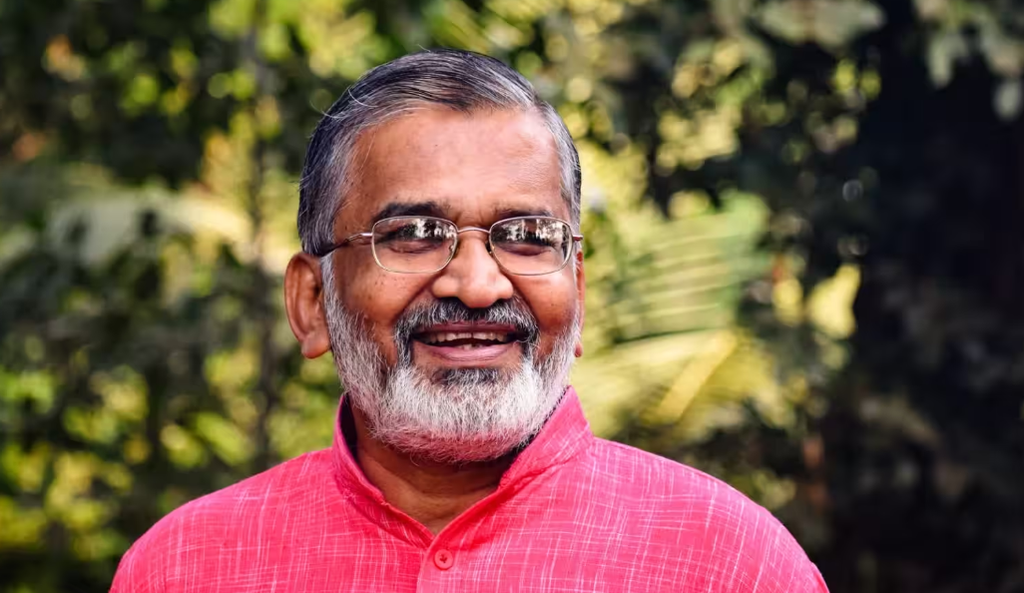
For nearly four decades, Dr Abhay Bang and Dr Rani Bang have worked to improve rural and tribal healthcare in Gadchiroli, Maharashtra. Their community-based approach has influenced newborn care in India and abroad, but Dr Abhay Bang says the country’s healthcare system still has important gaps to address.
When Dr Abhay Bang and Dr Rani Bang chose to work in Gadchiroli, Maharashtra, they entered one of India’s most challenging rural healthcare environments.
Their work, which began in the mid-1980s and formally took shape through the Society for Education, Action and Research in Community Health (SEARCH), has now spanned about four decades. During that period, the organisation has combined medical research, community healthcare and training of local health workers to address problems faced by rural and tribal communities.
The experience has produced a model of healthcare that places communities at the centre of medical intervention. It has also provided lessons for India’s broader rural healthcare system, particularly in maternal and child health.
Dr Abhay Bang’s Four-Decade Journey in Gadchiroli
The Bangs returned to India after studying public health at Johns Hopkins University and decided to work in Gadchiroli, a predominantly rural and tribal district in Maharashtra.
SEARCH was established in 1985, and the Bangs moved to Gadchiroli in 1986. Their approach was based on identifying health problems with local communities rather than imposing programmes from outside.
According to a recent interview marking SEARCH’s upcoming 40th anniversary, the organisation has remained rooted in the villages of Gadchiroli while conducting research and providing healthcare services. Its work has covered maternal and child health, malaria, reproductive health, chronic diseases and other community health concerns.
This community-focused philosophy has become one of the defining features of the Gadchiroli model.
The Home-Based Newborn Care Revolution
One of the most significant contributions associated with Dr Abhay and Dr Rani Bang is Home-Based Newborn Care (HBNC).
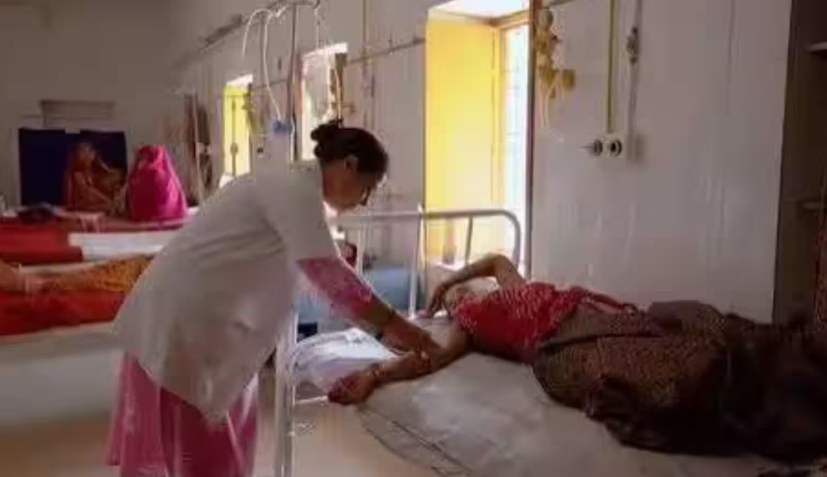
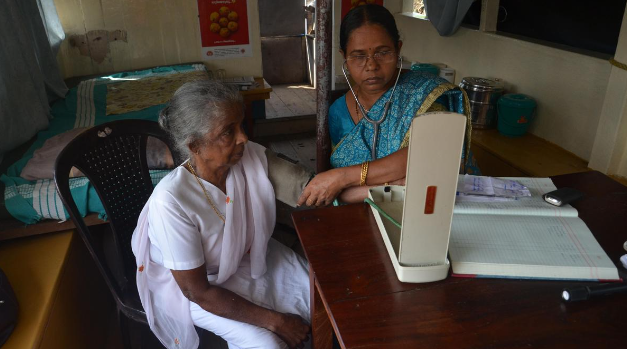
When the Bangs began their work, many families in rural Gadchiroli had limited access to doctors and hospitals. Rather than relying exclusively on distant medical facilities, SEARCH trained village-based health workers to identify and manage common newborn and childhood illnesses.
The approach included training local women to provide essential newborn care, recognise danger signs and support families at home.
Research on the Gadchiroli experience found that community-based neonatal care could significantly improve outcomes in settings where conventional hospital-based care was difficult to access. The model subsequently influenced public-health policy beyond Gadchiroli. India’s National Health Mission adopted home-based newborn care as a national strategy in 2011, while the approach has also been used as a model in other developing countries.
The lesson was relatively simple: healthcare does not always have to begin inside a hospital.
In remote communities, trained local workers can provide an important first layer of care, particularly when transportation, distance and shortages of medical professionals make hospital access difficult.
From Infant Mortality to Broader Rural Health
The Gadchiroli experience initially focused heavily on infant and maternal health, but the health needs of rural communities have changed.
The work of SEARCH has expanded into areas including malaria, women’s health, alcohol dependence, mental health, chronic pain and non-communicable diseases.
This transition reflects a broader change in rural India’s disease profile.
A study based on deaths recorded in 86 villages in Gadchiroli between 2011 and 2013 found that non-communicable diseases accounted for 38.5% of deaths, while infectious and perinatal conditions together accounted for 28.3%. Stroke alone was the leading recorded cause of death, accounting for 14.3% of deaths in the study population.
The findings suggest that rural healthcare can no longer focus exclusively on infectious diseases, maternal health and childhood mortality.
India increasingly has to manage a combination of communicable diseases, non-communicable diseases and injuries, including in poorer rural regions.
Why Community Healthcare Matters
One of the central ideas behind the Gadchiroli model is that healthcare should be designed around the realities of the people who use it.
Remote communities can face multiple barriers to medical care, including distance, transportation problems, limited household resources and shortages of trained healthcare professionals.
Community health workers can help bridge part of this gap.
The Bangs’ work demonstrated that local people can be trained to deliver specific healthcare interventions under appropriate supervision. This approach can extend the reach of a healthcare system without requiring every patient to travel to a large hospital.
Academic reviews of community-based primary healthcare have identified the SEARCH programme in Gadchiroli as an example of a long-running community health intervention associated with improvements in maternal, neonatal and child health.
What India Still Gets Wrong in Rural Healthcare
The Gadchiroli story also highlights problems that cannot be solved simply by building more hospitals.
India’s rural healthcare challenge involves access, workforce, prevention, continuity of care and community trust.
A hospital may provide advanced treatment, but a family living in a remote village still needs a practical way to reach that facility. Similarly, detecting a disease is of limited value if patients cannot obtain follow-up treatment.
The experience of SEARCH therefore points toward a healthcare system that combines community-level prevention and early treatment with functioning referral hospitals.
Another challenge is that India’s rural health needs are changing. The country has made progress in addressing infectious diseases and maternal and child mortality, but rural communities are increasingly affected by hypertension, stroke, diabetes and other chronic conditions.
The evidence from Gadchiroli shows why rural healthcare policy needs to evolve alongside the disease burden.
The Importance of Women’s Health
Dr Rani Bang’s work has also played an important role in demonstrating that women’s health problems in rural India can remain hidden when healthcare systems focus primarily on childbirth.
Her research in Gadchiroli documented a substantial burden of gynaecological conditions among rural women and helped establish reproductive health as an important component of community healthcare.
SEARCH subsequently developed programmes involving village-level health workers and local women.
The broader lesson is that rural healthcare cannot be reduced to maternal care during pregnancy and childbirth. Reproductive health, chronic conditions, mental health and other concerns also require accessible services.
From Gadchiroli to National and Global Health Policy
The significance of the Bangs’ work extends beyond one district.
SEARCH’s research and community-based interventions have attracted international attention because they demonstrate how relatively simple, locally delivered healthcare interventions can be adapted to resource-constrained environments.
The home-based newborn care approach is particularly notable. The programme was later adopted in India and became a reference point for community-based newborn care in other developing countries.
This has made Gadchiroli an important case study in global public health.
Rather than viewing rural healthcare as a scaled-down version of urban hospital medicine, the model treats local communities as active participants in healthcare delivery.
The Idea of “Aarogya Swaraj”
Dr Abhay Bang has described his broader healthcare philosophy using the term “Aarogya Swaraj,” meaning an approach in which individuals and communities are empowered to take greater responsibility for their own health.
The concept draws inspiration from Mahatma Gandhi’s idea of village self-reliance.
In practical terms, it means that healthcare should not be entirely dependent on distant institutions or specialists. Communities should have the knowledge, skills and local resources necessary to address at least some of their most common health problems.
That does not mean replacing doctors or hospitals.
Instead, it suggests building a layered healthcare system in which community workers, primary-care providers and hospitals perform complementary roles.
Rural India Needs Both Technology and Human Connection
India is rapidly expanding digital healthcare, telemedicine and technology-enabled medical services.
These developments can help connect remote communities with specialists and medical information. However, technology alone cannot eliminate problems involving transport, poverty, health literacy or trust.
The Gadchiroli experience offers a different but complementary lesson: healthcare technology needs to be connected to local people who understand the community.
A trained village health worker may be able to recognise a newborn’s danger signs, encourage a mother to seek treatment or help a patient navigate the health system.
This human connection remains particularly important in communities where healthcare access has historically been limited.
What the Gadchiroli Model Can Teach India
The experience of Dr Abhay Bang and Dr Rani Bang does not provide a single solution to India’s rural healthcare challenges.
Instead, it offers several practical lessons.
First, healthcare programmes need to understand local needs. SEARCH has historically used community discussions and research to identify health priorities.
Second, local health workers can extend the reach of formal healthcare systems, particularly for preventive care and basic treatment.
Third, research and implementation need to work together. The Gadchiroli model combined field intervention with systematic study, allowing healthcare approaches to be evaluated and adapted.
Finally, rural healthcare must evolve. The priorities of a community facing high infant mortality are different from those of a community increasingly affected by stroke, hypertension and other chronic diseases.
Forty Years Later, the Challenge Continues
After almost 40 years in Gadchiroli, the Bangs’ work illustrates both the potential and the limits of community-based healthcare.
There have been important gains in maternal, newborn and child health, and the home-based care model has influenced national and international public-health practice.
But India’s rural healthcare challenge is changing rather than disappearing.
The country now has to address a more complex combination of infectious diseases, maternal and child health needs, non-communicable diseases, injuries and mental-health concerns.
The experience of Gadchiroli suggests that solving these problems will require more than expanding hospitals. It will require stronger primary healthcare, trained community workers, reliable referral systems, better health data and sustained engagement with rural communities.
Dr Abhay Bang’s nearly four decades of work in Gadchiroli offer an important case study in rural healthcare in India.
Through SEARCH, the Bangs demonstrated that community-based healthcare can play a major role in improving access to essential services, particularly for mothers and newborns. Their Home-Based Newborn Care model went on to influence India’s national health strategy and community health programmes internationally.
Yet the Gadchiroli experience also shows that India’s rural health challenge is far from over.
As the disease burden changes, healthcare systems must adapt. Infectious diseases and maternal-child health remain important, but conditions such as stroke and other non-communicable diseases increasingly require attention.
The central lesson from 40 years in Gadchiroli is therefore not simply that rural healthcare can improve. It is that effective healthcare must reach people where they live, respond to the problems they identify and evolve as those problems change.