0
0
 0
0
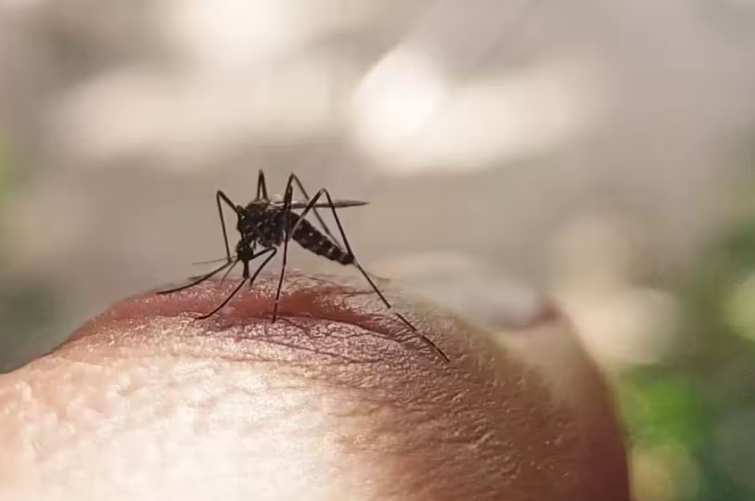
A study by the Indian Council of Medical Research-National Institute of Virology (ICMR-NIV) has detected insecticide resistance in dengue vector mosquitoes in several parts of Pune, raising concerns over the effectiveness of conventional mosquito-control measures.
The study found that populations of Aedes aegypti, the mosquito responsible for transmitting dengue as well as chikungunya and Zika, showed resistance to permethrin in several areas of Pune. Researchers also identified genetic mutations associated with the mosquitoes’ ability to survive insecticide exposure.
The findings highlight the need for continued surveillance of insecticide resistance and a more targeted approach to mosquito-control strategies in urban areas.
Study Examined Aedes Aegypti Mosquitoes Across Nine Pune Wards
Researchers examined Aedes aegypti mosquitoes collected from nine wards under the Pune Municipal Corporation between February and May 2024.
The areas included Pashan, Susgaon, Khadki, Yerawada, Warje, Hadapsar, Kondhwa, Kothrud and Dhankawdi.
Adult mosquitoes were exposed to the standard 0.75% permethrin dose used in World Health Organization susceptibility testing. Researchers then monitored mosquito survival to determine the level of insecticide susceptibility or resistance in different populations.
The results showed considerable variation between different parts of the city, suggesting that insecticide resistance is not evenly distributed across Pune.
Six Pune Areas Show Clear Permethrin Resistance
Mosquitoes collected from Khadki, Pashan, Susgaon, Warje, Hadapsar and Kondhwa showed clear resistance to permethrin.
In these locations, a significant proportion of mosquitoes survived exposure to an insecticide dose that would normally be expected to kill susceptible mosquitoes.
Mosquitoes from Yerawada demonstrated an intermediate level of resistance, while populations from Kothrud and Dhankawdi remained susceptible, with most mosquitoes dying after exposure.
The differences between wards underline the importance of local surveillance when planning mosquito-control programmes.
Genetic Mutations Linked to Insecticide Resistance
The researchers also investigated genetic changes that could explain why some mosquitoes were able to survive permethrin exposure.
The study identified several knockdown resistance (kdr) mutations in the mosquito gene targeted by pyrethroid insecticides.
The F1534C mutation was found across multiple areas, including Khadki, Susgaon, Warje, Yerawada and Hadapsar. Other mutations, including S989P and V1016G, were detected together in mosquitoes from Pashan and Kondhwa, while the T1520I mutation was identified in Hadapsar.
These genetic changes can affect the way pyrethroid insecticides act on mosquitoes, allowing resistant populations to survive chemical exposure.
Why Insecticide Resistance Matters for Dengue Control
Insecticide resistance is an important challenge for public health authorities because chemical mosquito-control measures are commonly used to reduce vector populations.
Permethrin itself is not routinely used in India’s current vector-control programme. However, it belongs to the synthetic pyrethroid family, which includes other insecticides used for mosquito control.
Because pyrethroids share similar modes of action, resistance detected against one compound can have implications for the effectiveness of related insecticides. The study therefore emphasizes the importance of continued monitoring.
A broader review of insecticide resistance in Aedes aegypti in India has also highlighted the importance of understanding geographic and temporal patterns of resistance to commonly used mosquito-control chemicals.
More Spraying May Be a Possible Factor
Researchers suggested that areas experiencing higher numbers of dengue cases may have undergone more frequent insecticide spraying, potentially contributing to stronger resistance.
However, the study did not directly measure insecticide use in the individual areas and therefore did not establish a direct cause-and-effect relationship between spraying and resistance.
This distinction is important because mosquito resistance can develop through multiple factors, including genetic selection, insecticide exposure and local environmental conditions.
Experts Call for Regular Resistance Monitoring
The findings have prompted calls for stronger surveillance and more flexible mosquito-control strategies.
Experts cited in the report warned that repeatedly relying on the same insecticide could gradually reduce its effectiveness if resistant mosquito populations continue to expand.
Regular testing of local mosquito populations can help authorities determine which insecticides remain effective and where control strategies need to be adjusted. Rotation of insecticides and integrated vector-management approaches may also help reduce dependence on a single chemical method.
Pune Steps Up Mosquito-Control Measures
The Pune Municipal Corporation has also strengthened mosquito-control efforts as environmental conditions remain favourable for mosquito breeding.
According to the civic body, authorities have reviewed dengue, chikungunya and malaria cases over the previous three years and conducted a map-based analysis across all 41 wards.
Officials have been instructed to identify and eliminate mosquito-breeding sites, including stagnant water around construction sites, roads, drains, parks and other public areas.
The city is also using Gambusia fish, which feed on mosquito larvae, in fountains and selected public spaces as part of biological mosquito control.
Source Reduction Remains Important
The detection of insecticide-resistant mosquitoes also reinforces the importance of preventing mosquito breeding at its source.
Aedes aegypti commonly breeds in small collections of stagnant water. Eliminating containers and other sites where water can accumulate can reduce opportunities for mosquitoes to reproduce.
Combining source reduction, biological control, surveillance and appropriately selected chemical interventions can provide a broader approach to dengue prevention.
What the Findings Mean for Pune
The ICMR-NIV study does not mean that insecticides are no longer useful across Pune. Instead, it demonstrates that mosquito-control strategies need to account for local resistance patterns.
The fact that resistance levels differed between wards suggests that a uniform approach may not be equally effective everywhere.
Continued entomological surveillance could help public-health authorities identify emerging resistance earlier and adjust their vector-control programmes accordingly.
The detection of insecticide resistance in Aedes aegypti mosquitoes across several parts of Pune is an important warning for dengue-control programmes.
The ICMR-NIV study found clear permethrin resistance in mosquitoes from six wards and identified several genetic mutations associated with resistance. While the research did not establish that insecticide spraying directly caused the resistance, the findings demonstrate the need for continuous monitoring.
For Pune, a combination of resistance surveillance, source reduction, biological control, targeted insecticide use and integrated mosquito management could become increasingly important in efforts to control dengue and other mosquito-borne diseases.