0
0
 0
0
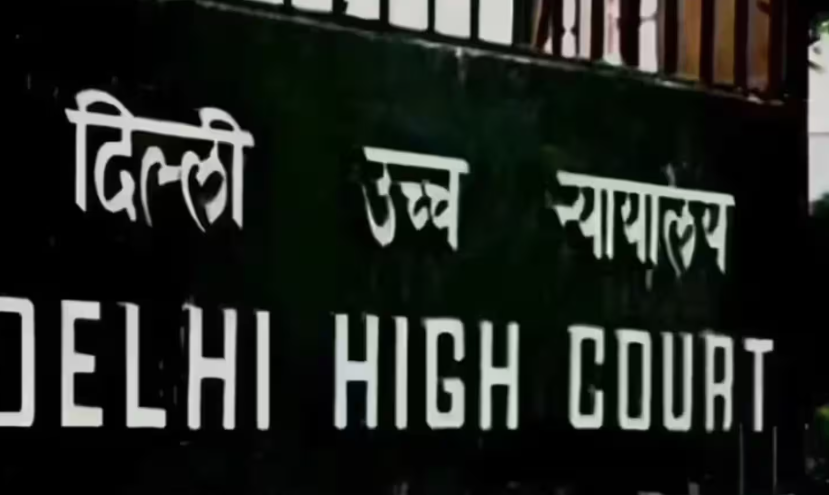
The Delhi High Court has refused to entertain, in its present form, a petition seeking the scrapping of the National Testing Agency (NTA) and an investigation into alleged irregularities surrounding the NEET-UG 2026 re-examination.
A Division Bench comprising Chief Justice Devendra Kumar Upadhyaya and Justice Tejas Karia heard the matter on Wednesday, August 19. The court observed that the petition combined individual grievances with broader demands concerning all candidates who appeared for the re-examination.
The decision does not amount to a judicial finding that the alleged irregularities occurred. Instead, the court declined to consider the petition in the form in which it was presented.
Petition Sought Scrapping of the National Testing Agency
The petitioners had sought directions to scrap the NTA from conducting future examinations of national importance.
They also sought the creation of an autonomous institution to conduct such examinations, along with relief relating to the NEET-UG 2026 re-examination and its results.
The petition was filed by two NEET aspirants, Rishi Kailash and Fatima Kounser. Their case raised concerns over the examination process and sought wider institutional changes involving the agency responsible for conducting the national entrance test.
However, the court found that the petition attempted to address different categories of grievances within a single proceeding.
Court Flags ‘Mixed’ Prayers
A key issue identified by the Delhi High Court was the combination of individual and public-interest reliefs.
According to the court, the petition contained requests concerning the individual petitioners as well as demands affecting all candidates who appeared in the NEET-UG re-examination.
The Bench therefore concluded that the petition, in its existing form, could not be entertained.
The petitioners subsequently sought permission to withdraw the case and approach the court again with more appropriate reliefs.
Allegations Include OMR Sheet Concerns
The case also raised allegations regarding the handling and evaluation of examination records.
One petitioner, Rishi Kailash, alleged discrepancies involving his OMR sheet and the examination process. The allegations included claims of tampering with examination records.
However, Solicitor General Tushar Mehta, representing the Centre and the NTA, rejected the allegations of malpractice and discrepancies. He told the court that there had been no tampering with the OMR sheets.
These claims and counterclaims remain important because the integrity of examination records is central to disputes over competitive entrance examinations.
NEET-UG 2026 Re-Exam Was Held in June
The legal dispute comes after a major controversy surrounding the NEET-UG 2026 examination.
The original examination was cancelled following allegations of a question-paper leak, leading the authorities to conduct a nationwide re-examination on June 21.
The re-examination involved candidates affected by the cancellation and became the subject of further complaints and legal challenges.
The latest Delhi High Court proceedings therefore form part of a wider series of legal disputes surrounding the conduct and administration of NEET-UG 2026.
Separate NEET-UG Cases Remain Before Courts
The Delhi High Court’s latest decision does not end all litigation surrounding the examination.
Other petitions concerning NEET-UG 2026, examination integrity, NTA accountability and possible reforms remain part of ongoing legal proceedings.
The Supreme Court has also been dealing with matters connected to the examination and wider questions surrounding the NTA’s role. In July, a related case concerning the re-examination challenge was described as having become infructuous in its immediate form, while broader issues involving institutional reforms and accountability remained open.
This means the debate over how national-level entrance examinations should be conducted is likely to continue.
Why the NTA Debate Matters
The National Testing Agency conducts major national-level entrance examinations, making its role particularly important for millions of students.
NEET-UG is especially significant because it serves as the principal entrance examination for undergraduate medical education in India.
Any allegation involving examination papers, OMR sheets, results or evaluation can therefore have major consequences for students competing for a limited number of medical seats.
The controversy has also renewed discussions about examination security, transparency and accountability.
Students Seek Greater Transparency
For NEET aspirants, the issue extends beyond the legal dispute involving the NTA.
Students depend on examination authorities to ensure that question papers are secure, answer sheets are accurately evaluated and results are published without discrepancies.
When allegations arise, candidates often seek access to examination records and clear explanations from the authorities.
Recent litigation involving a NEET-UG 2026 candidate who alleged that his score changed multiple times on the NTA portal also illustrates the level of concern surrounding examination records and result transparency.
Fresh Petition Could Be Filed
The Delhi High Court’s decision leaves the petitioners with the option of returning to court with appropriately framed reliefs.
Because the court’s objection focused on the way the prayers were combined, a future petition could potentially separate individual grievances from broader public-interest demands.
That could allow the court to consider specific claims within a more narrowly defined legal framework.
However, any fresh proceedings would depend on the petitioners’ next legal steps.
What Happens Next?
The immediate outcome is that the Delhi High Court has not ordered the scrapping of the NTA and has not directed the requested investigation through the petition in its present form.
The petitioners may seek to file a fresh case with clearer and more specific reliefs.
Meanwhile, other proceedings related to NEET-UG 2026 and examination reforms continue before the courts.
The broader question of how India can strengthen the credibility and security of large-scale national entrance examinations therefore remains unresolved.
The Delhi High Court has refused to entertain a plea seeking the scrapping of the NTA and an investigation into alleged NEET-UG 2026 re-examination irregularities in its current form.
The court’s primary concern was that the petition combined individual complaints with wider demands affecting all candidates who appeared for the re-examination. The petitioners were allowed to withdraw and pursue appropriate relief through a fresh legal proceeding.
The NTA and Centre have rejected allegations of malpractice, including claims concerning OMR sheet tampering. As separate NEET-related proceedings remain pending, questions over examination transparency, accountability and institutional reform are likely to remain an important issue for students and policymakers.