 0
 0
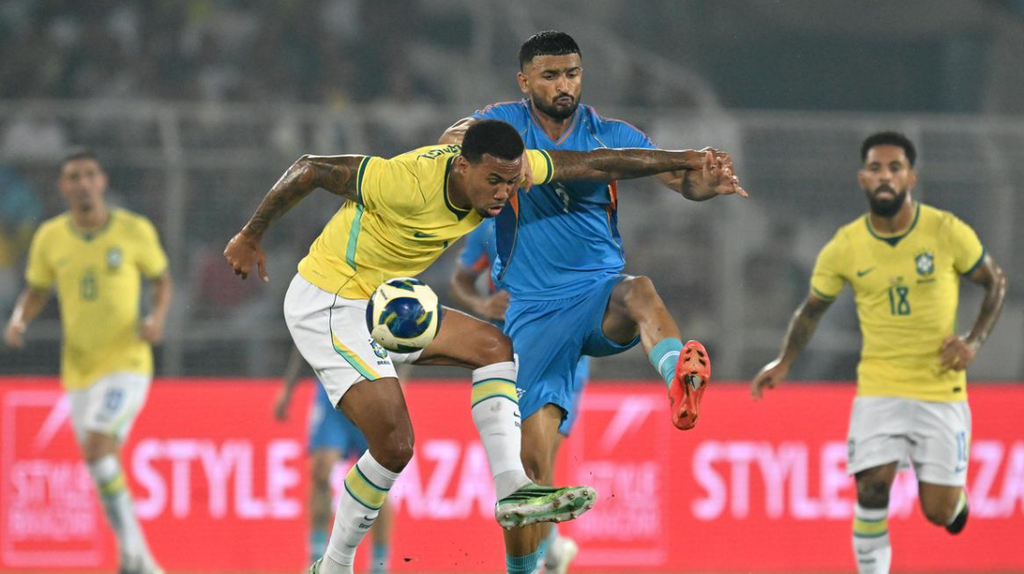
India Learn From Brazil Defeat
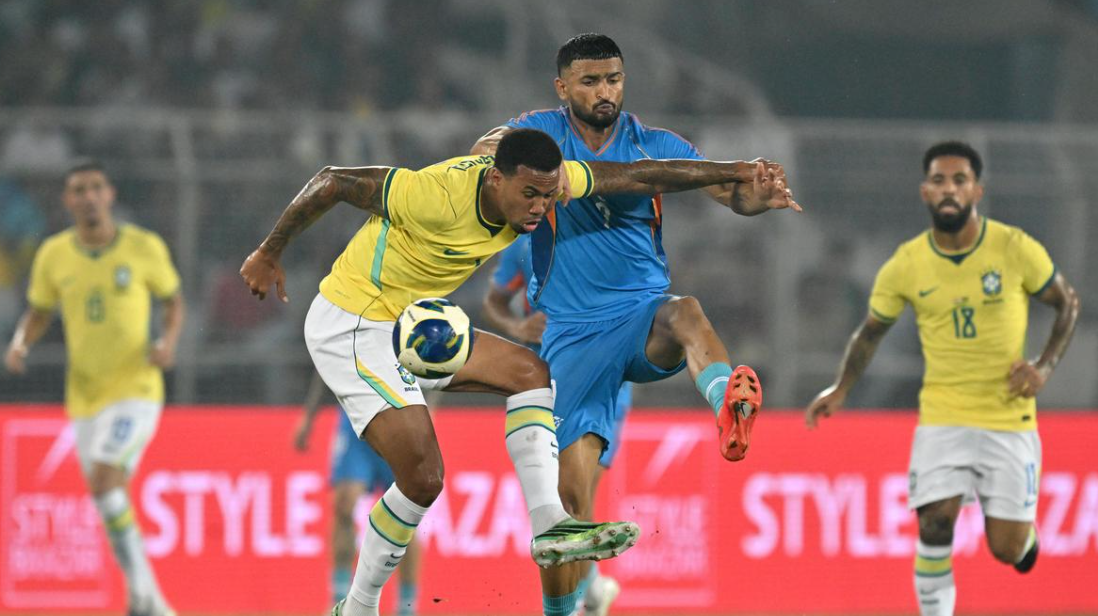
India entered the match knowing they faced a significant challenge against five-time FIFA World Cup champions Brazil.
The Indian side initially managed to frustrate Brazil with a compact defensive setup and an effective offside trap. India also created opportunities of their own during the opening stages of the game.
However, Brazil’s quality eventually proved decisive. Estevao opened the scoring in the 28th minute before setting up Pedro for the second goal. Samuel Lino then scored twice in the second half to complete Brazil’s 4-0 victory.
The result extended India’s winless run to six matches.
Jamil Highlights Concentration and Mistakes
Jamil acknowledged that India’s defensive lapses played a major role in the defeat.
Against a team with Brazil’s attacking quality, mistakes can quickly turn into goals. The India coach stressed that his players must remain focused throughout every phase of the game.
“If you play with a good team, you make one mistake, and they will finish,” Jamil said after the match.
The comments underline the difference between competing against regional opponents and facing a team filled with players accustomed to playing at the highest level.
Brazil Showed the Difference in Quality
India’s defensive organisation worked reasonably well during the early stages, but Brazil gradually found ways to exploit gaps.
The Brazilian players were able to move the ball quickly, make decisive runs and punish mistakes in the final third.
Brazil coach Carlo Ancelotti also acknowledged that India made life difficult for his team before the opening goal.
The breakthrough from Estevao changed the match, allowing Brazil to gain greater control and create more opportunities.
India Showed Positive Signs
Despite the 4-0 scoreline, Jamil saw positive elements in India’s performance.
The Indian team competed strongly during parts of the first half and managed to create several opportunities. The defence also used an organised structure to limit Brazil’s attacking options.
India earned four corners in the first half and came close to scoring through Apuia Ralte, while Manvir Singh and Ryan Williams also had opportunities later in the match
Those moments offered encouragement despite the final result.
High-Profile Matches Can Help India Improve
Jamil believes India needs more opportunities to face teams of Brazil’s calibre.
Playing against elite opposition exposes players to a level of speed, decision-making and pressure that is difficult to reproduce in ordinary training sessions.
The India coach has therefore called for more high-profile international matches as part of the team’s development.
He believes regular exposure can help players become more comfortable against stronger opponents and develop greater confidence on the international stage.
Pressure Was a Major Factor
Facing Brazil also created a psychological challenge for the Indian players.
Jamil acknowledged that his squad felt the pressure of playing against one of the most famous football teams in the world.
Such pressure can affect decision-making, particularly when players are confronted with opponents who can punish mistakes almost instantly.
Learning how to manage that pressure could be one of the most important lessons India takes from the match.
India Must Become Stronger Defensively
While Jamil praised several individual performances, he also identified defence as an area that needs improvement.
He highlighted midfielders Lalengmawia Apuia and Anirudh Thapa, while also praising Ryan Williams, Sahal Abdul Samad and Manvir Singh. At the same time, he admitted that India needed to become stronger defensively.
Against top-level opponents, defensive organisation must be maintained for the entire 90 minutes.
A brief loss of concentration can completely change the momentum of a match.
Brazil Game Provides a Reality Check
The defeat also offered a realistic assessment of India’s current position in international football.
Brazil entered the match ranked sixth in the FIFA Men’s World Ranking, while India were ranked 138th. The difference in ranking reflected the enormous gap in international experience and squad quality.
However, the value of such a match cannot be measured solely by the final score.
For a developing football nation, playing against an elite team can reveal precisely which areas need improvement.
Jamil Wants More Matches Against Elite Opponents
Jamil’s message following the defeat was clear: India needs more matches against strong international teams.
Rather than avoiding difficult opponents, the coach believes India can use these experiences to accelerate the development of its players.
Repeated exposure could help the squad improve its concentration, tactical discipline and confidence.
The objective is not simply to avoid heavy defeats but to gradually become more capable of competing with stronger teams.
Brazil Defeat Could Become a Learning Experience
The 4-0 defeat to Brazil was undoubtedly a difficult result for India, but Jamil believes the match can still contribute to the team’s long-term development.
India showed flashes of organisation and attacking intent, but Brazil demonstrated how quickly world-class players can turn small mistakes into decisive moments.
For Jamil and his players, the next step is to turn those lessons into improvements on the pitch.
The Brazil defeat may have exposed India’s current gap with the world’s elite, but it also gave the team a valuable lesson: to compete against world-class opponents, India must improve its concentration, defensive strength and belief while gaining more experience at the highest level.