0
0
 0
0
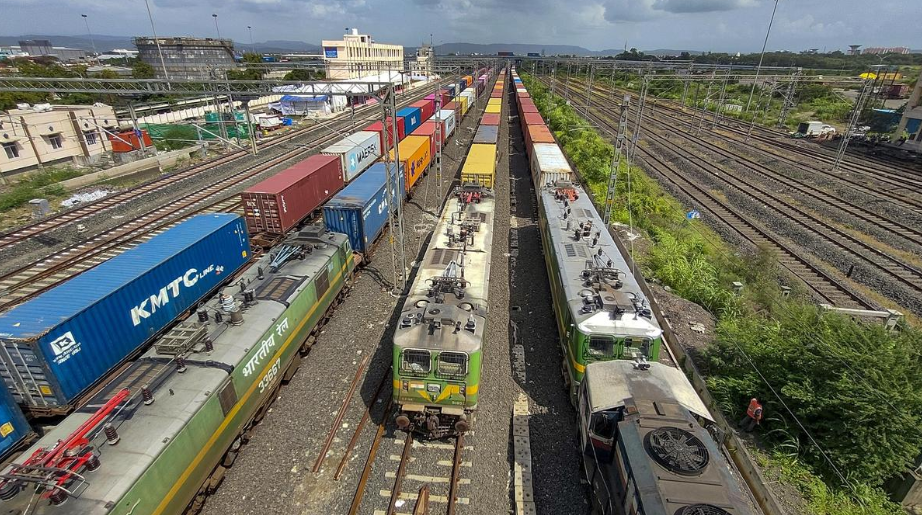
India’s Dedicated Freight Corridors (DFCs) are emerging as the backbone of the country’s logistics transformation, creating a faster, higher-capacity rail network designed to move goods more efficiently across major industrial and commercial centres.
The completion of India’s existing Eastern and Western Dedicated Freight Corridors marks a major milestone in the country’s efforts to modernise freight transportation. Together, the two corridors span around 2,843 kilometres, providing dedicated rail infrastructure for cargo movement and reducing dependence on conventional railway routes shared with passenger services.
As India seeks to strengthen manufacturing, exports and domestic supply chains, DFCs are expected to play an increasingly important role in reducing transit times, improving freight reliability and connecting production centres with ports and logistics hubs.
What Are Dedicated Freight Corridors?
Dedicated Freight Corridors are specialised railway routes built primarily for freight trains.
Unlike conventional railway lines, where passenger and freight trains compete for track capacity, DFCs allow cargo trains to operate on dedicated infrastructure. This enables heavier trains, higher speeds and more predictable freight schedules.
India currently has two major operational corridors: the Eastern Dedicated Freight Corridor (EDFC) and the Western Dedicated Freight Corridor (WDFC).
The EDFC covers approximately 1,337 kilometres between Ludhiana and Sonnagar, while the WDFC stretches about 1,506 kilometres from Dadri to Jawaharlal Nehru Port in Maharashtra.
DFCs Strengthen India’s Logistics Network
One of the biggest advantages of DFCs is their ability to increase freight capacity while freeing up conventional railway routes.
With freight trains shifting to dedicated corridors, passenger trains and other services can gain additional capacity on existing railway networks.
The corridors also improve connectivity between industrial regions, manufacturing centres, consumption markets and ports.
This is particularly important for India as the country seeks to expand manufacturing and become more competitive in global supply chains.
Freight Movement on DFCs Continues to Rise
The utilisation of DFC infrastructure has increased rapidly.
According to recent data, combined freight traffic on the Eastern and Western corridors reached around 438 trains per day in August 2026, representing an increase of nearly 15% from the previous year. The two corridors were operating at more than 91% of their stated combined capacity of 480 trains per day.
The figures highlight the growing importance of DFCs within India’s freight transportation system.
Although the corridors account for only a small portion of the country’s railway network, they are carrying a significant share of rail freight, demonstrating their strategic value for India’s logistics infrastructure.
Faster Freight Movement Can Reduce Logistics Costs
Speed and reliability are central to the DFC model.
KPMG noted that freight trains on DFCs have been operating at around 60–70 km per hour, compared with approximately 25 km per hour on conventional routes. The consultancy also highlighted the example of coal transportation, where a 100-kilometre journey that previously took around 7 hours and 40 minutes could be completed in about four hours on the DFC.
Faster turnaround times mean wagons can be used more efficiently, while businesses can benefit from greater predictability in supply chains.
For industries that depend heavily on bulk transportation, these improvements can have a direct impact on logistics efficiency.
Connecting Ports With Industrial Centres
The Western Dedicated Freight Corridor is particularly important for India’s international trade because it links the northern hinterland with the country’s major western port infrastructure.
The corridor connects Dadri in Uttar Pradesh with Jawaharlal Nehru Port in Maharashtra, passing through major industrial regions across northern and western India.
The network also supports the movement of double-stack container trains, allowing larger volumes of cargo to be transported efficiently between inland production centres and ports.
This could strengthen India’s export infrastructure while making rail-based freight more competitive for long-distance cargo.
DFCs Can Support Multimodal Logistics
The success of DFCs will not depend on railway infrastructure alone.
Cargo still needs to reach factories, warehouses, ports and distribution centres before and after travelling on the dedicated railway network.
This makes multimodal logistics parks, terminals and first- and last-mile connectivity critical components of the broader strategy.
KPMG has highlighted the need to upgrade feeder routes and sidings while developing logistics parks that integrate rail, road and port connectivity.
The government has also been expanding modern freight terminals and improving first- and last-mile connectivity as part of its wider freight strategy.
The Next Phase of India’s Freight Network
The completion of the current DFC network is unlikely to be the end of India’s freight corridor ambitions.
The Union Budget 2026 announced a new proposed Dedicated Freight Corridor connecting Dankuni in West Bengal with Surat in Gujarat. The corridor is expected to strengthen east-west freight connectivity and expand the dedicated rail network.
The expansion reflects India’s broader objective of creating a more integrated national freight network rather than relying on a limited number of corridors.
Technology Could Make DFCs More Efficient
Infrastructure is only one part of the logistics transformation.
Digital systems, artificial intelligence, real-time cargo tracking and data-driven railway operations could further improve the performance of DFCs.
As freight volumes increase, technology can help operators manage train movements, optimise capacity and improve coordination between railways, ports, warehouses and logistics providers.
A fully integrated digital freight ecosystem could eventually allow India to move beyond individual freight corridors toward a connected national logistics grid.
Challenges Remain Despite DFC Progress
Despite the significant progress, several challenges remain.
The efficiency of a freight journey depends not only on the main railway corridor but also on feeder routes, terminals, warehouses and road connections.
If cargo spends considerable time waiting before reaching or leaving a DFC, some of the benefits of faster rail transportation can be lost.
The high utilisation levels recorded on existing corridors also underline the need for careful capacity planning and future expansion.
DFCs and India’s Long-Term Economic Ambitions
Efficient logistics infrastructure is increasingly important as India seeks to expand manufacturing, increase exports and strengthen domestic supply chains.
By providing dedicated capacity for freight trains, DFCs can help reduce pressure on conventional railway lines while improving the speed and predictability of cargo movement.
The broader impact could extend beyond railways, supporting industrial development, port connectivity and the growth of logistics-related businesses.
Dedicated Freight Corridors are becoming a critical backbone of India’s logistics push.
The completion of the 2,843-kilometre Eastern and Western DFC network represents a major step toward creating a faster and more reliable freight transportation system.
With freight traffic continuing to grow, the next challenge will be to integrate DFCs with logistics parks, ports, road networks, terminals and digital technologies.
If that integration is achieved effectively, India’s DFC network could become more than a railway infrastructure project—it could form the foundation of a modern, multimodal logistics system capable of supporting the country’s next phase of economic and industrial growth.