0
0
 0
0

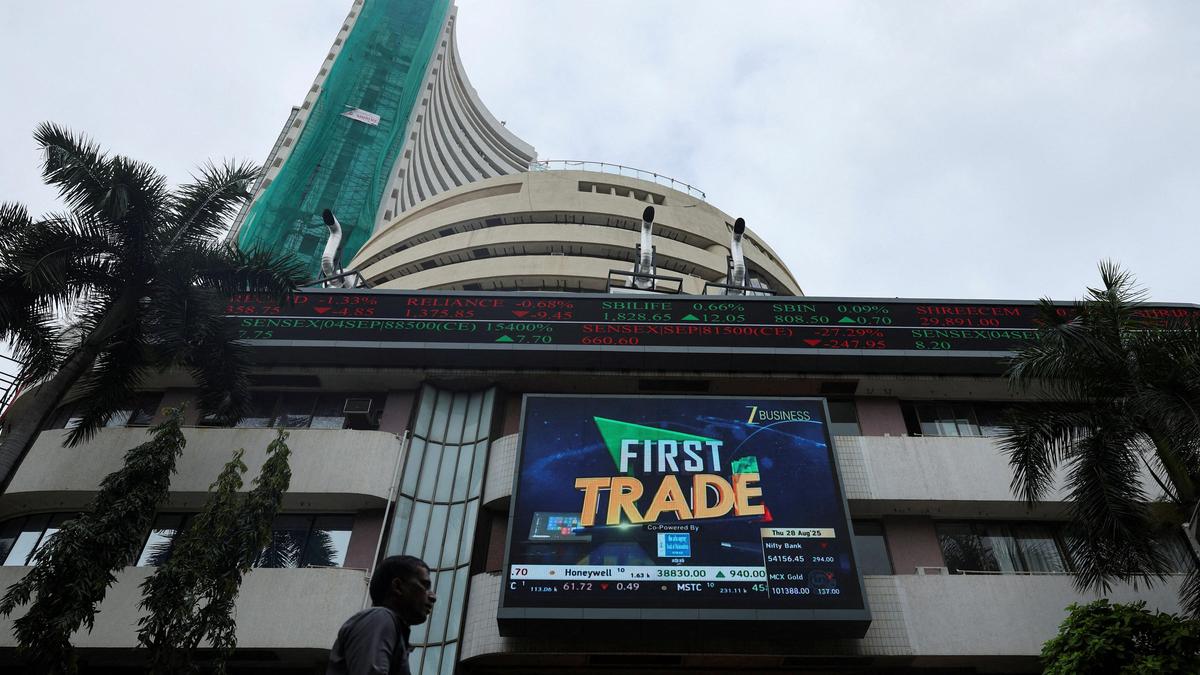
India’s primary capital market is entering one of its busiest phases of 2026, with a fresh wave of initial public offerings (IPOs) and large offer-for-sale (OFS) transactions lining up for investors.
The September rush is particularly notable. Eleven mainboard companies are scheduled to raise about ₹7,055 crore through IPOs during the week beginning September 7, while the much-anticipated National Stock Exchange (NSE) IPO is also moving closer to the market.
At the same time, the growing role of OFS means existing shareholders are increasingly using public markets to unlock value. This makes India’s current IPO cycle different from a simple story of companies raising fresh capital: it is also becoming a major liquidity window for early investors, promoters and other shareholders.
Why India’s IPO Market Is Heating Up
India’s IPO market experienced a relatively slower first half of 2026, but activity has accelerated significantly in the second half.
Improved market conditions, resilient domestic investor participation, economic growth and greater confidence in equities have helped companies return to the primary market.
The scale of the upcoming pipeline underlines that confidence.
According to data reported by Financial Express, 238 companies have a potential IPO pipeline worth around ₹4.66 lakh crore, including companies that have already received approval from the Securities and Exchange Board of India (SEBI) and those still awaiting regulatory clearance.
This pipeline includes several high-profile names, making the coming months particularly important for India’s capital markets.
September Brings a Wave of IPOs
The IPO calendar is becoming increasingly crowded in September.
Several mainboard offerings are either open or scheduled to open, including Pranav Constructions, Kanohar Electricals, Prasol Chemicals, Glass Wall Systems, Asset Reconstruction Company, Steamhouse India, Karamtara Engineering, LCC Projects, Manipal Payment and Identity Solutions and Rentomojo.
September 9 is particularly striking because six mainboard IPOs are scheduled to open on the same day, highlighting the intensity of the current primary-market activity.
For investors, however, a crowded IPO calendar also means that capital is competing across multiple offerings.
A strong subscription number does not automatically mean an attractive investment. Investors still need to examine valuation, earnings, debt, cash flows, business prospects and the intended use of IPO proceeds.
What Is an OFS and Why Is It Becoming More Important?
An Offer for Sale, or OFS, allows existing shareholders to sell their shares to the public as part of an IPO.
Unlike a fresh issue, an OFS generally does not bring new capital into the company. Instead, the money raised goes to the selling shareholders.
This distinction is important.
A fresh issue can strengthen a company’s balance sheet or finance expansion, debt repayment and other corporate purposes. An OFS, by contrast, primarily creates an exit or partial liquidity opportunity for existing investors.
India’s IPO market is increasingly seeing issues that combine both structures.
For example, Rentomojo’s planned offering includes both fresh equity and an OFS, while ARCIL’s issue is structured as a full OFS.
NSE IPO Could Become a Landmark OFS
The most closely watched example of the expanding OFS market could be the upcoming NSE IPO.
The National Stock Exchange has received regulatory clearance for its long-awaited public offering after years of delays. Reuters reported that the IPO could be launched in the week beginning September 21, with existing shareholders selling shares through an OFS rather than the exchange raising fresh capital for itself.
The issue could raise around ₹30,000 crore, potentially making it India’s largest IPO.
The expected NSE listing is significant for another reason: it could provide a major liquidity event for existing shareholders while giving public-market investors direct exposure to one of the world’s most important derivatives exchanges.
OFS Gives Early Investors an Exit Route
The expansion of OFS transactions is closely linked to the evolution of India’s startup and private-equity ecosystem.
As companies remain private for longer periods, early investors, venture capital funds and private-equity investors eventually need opportunities to monetize their holdings.
An IPO provides that opportunity.
Rather than waiting for a complete acquisition or secondary transaction, shareholders can sell a portion of their holdings to public investors through an OFS.
This can also improve public-market liquidity by increasing the available shareholding after listing.
Startup IPOs Add Another Layer to the Listing Boom
India’s new-age technology sector is also contributing to the growing IPO pipeline.
According to Inc42’s latest 2026 startup IPO tracker, 29 startups had already filed DRHPs with SEBI, while more than 25 others were at different stages of preparing their IPO plans.
This shows that the IPO story is not limited to traditional industrial or financial companies.
Technology, consumer businesses, fintech, healthcare and other new-economy companies are increasingly looking toward public markets as a source of capital and liquidity.
Why Companies Want to Enter the Market Now
Several factors can influence the timing of an IPO.
First, companies want to take advantage of favorable investor sentiment and strong domestic liquidity. Second, private investors may see an opportunity to monetize holdings at attractive valuations.
Third, listing provides companies with a public-market currency that can potentially support future acquisitions, employee stock programs and expansion.
For established companies, an IPO can also increase visibility and strengthen corporate credibility.
But timing remains critical.
If too many companies enter the market simultaneously, investors may become selective, particularly when valuations are high.
A Crowded IPO Market Can Be a Double-Edged Sword
The current listing boom is positive for India’s capital markets, but it also creates challenges.
When several IPOs launch simultaneously, investors must decide where to allocate limited capital. Strong demand for one issue can potentially reduce liquidity available for another.
There is also a risk that investors focus too heavily on short-term listing gains.
Recent market commentary shows how strong IPO debut performance has been: Economic Times reported that average listing-day returns improved substantially during 2026, with many recent issues delivering positive debut performances. But it also cautioned investors against treating first-day gains as proof of long-term investment quality.
That distinction is essential.
A successful IPO is not necessarily a successful long-term investment.
What Investors Should Check Before an IPO
Investors evaluating India’s IPO boom should look beyond subscription figures and grey-market premiums.
1. Valuation
The IPO price should be compared with the company’s earnings, growth prospects and valuations of listed competitors.
2. Fresh Issue vs OFS
Investors should understand how much of the issue represents fresh capital and how much comes from existing shareholders selling their shares.
3. Use of Proceeds
For a fresh issue, investors should examine whether the money will fund expansion, debt repayment, acquisitions or general corporate purposes.
4. Financial Performance
Revenue growth, profitability, margins, cash flows and debt levels remain fundamental indicators.
5. Promoter and Investor Selling
A large OFS does not automatically mean a company is unattractive, but investors should understand who is selling and why.
6. Long-Term Business Prospects
Ultimately, the company’s ability to grow earnings and generate sustainable cash flows matters more than the first day’s share-price movement.
India’s IPO Boom Could Reshape the Capital Market
The combination of fresh IPOs and expanding OFS activity demonstrates the increasing depth of India’s capital markets.
Companies are gaining access to public capital, while private investors are receiving more opportunities to monetize holdings. At the same time, retail and institutional investors are gaining access to a broader range of businesses.
The upcoming NSE IPO could become a defining moment in this cycle.
Alongside the huge pipeline involving companies such as Jio Platforms and other major businesses, the listing market could remain exceptionally active if equity-market conditions stay supportive.
India’s “listing feast” is gathering momentum as the IPO window opens wider and the role of OFS becomes increasingly prominent.
The September 2026 pipeline illustrates the scale of the opportunity, with multiple mainboard companies entering the market and the highly anticipated NSE IPO moving closer to launch.
For companies, the environment provides an opportunity to raise capital and establish a public-market presence. For existing shareholders, OFS offers an important route to unlock value.
For investors, however, the message is simple: a busy IPO market creates more choices, not necessarily more good investments.
Understanding the difference between a fresh issue and an OFS, evaluating valuations and studying business fundamentals will be crucial as India’s primary market enters what could become one of its most active periods in years.