0
0
 0
0
NEW DELHI/MUMBAI – India’s current account deficit (CAD) widened to $4.2 billion in the first quarter of FY27, equivalent to 0.5% of gross domestic product (GDP), as a larger merchandise trade gap outweighed stronger services exports and rising remittance inflows.
According to preliminary balance of payments data released by the Reserve Bank of India (RBI), the deficit increased from a revised $3.4 billion, or 0.4% of GDP, in the same quarter a year earlier. The latest figure also marked a sharp reversal from the $6.5 billion current account surplus recorded in the previous quarter.
The latest data highlight the pressure that higher commodity prices and India’s substantial import bill continue to place on the country’s external sector.
Merchandise Trade Deficit Emerges as Key Pressure Point
The main factor behind the widening India current account deficit was the merchandise trade gap.
India’s merchandise trade deficit increased to $86.1 billion in Q1 FY27, compared with $68.9 billion in the corresponding period a year earlier. Higher commodity prices contributed to the increase in the value of imports, putting additional pressure on the country’s trade balance.
The wider goods deficit was significant enough to offset improvements in other components of the current account.
For an import-dependent economy such as India, movements in crude oil, energy products, gold and other commodities can have a substantial impact on the overall external balance.
Services Exports Provide a Cushion
Despite the larger merchandise deficit, India continued to benefit from a strong services sector.
India’s services exports have remained an important source of foreign exchange earnings, particularly through software, business and professional services. Strong services receipts help offset part of the deficit generated by merchandise imports.
The RBI has previously highlighted the importance of services exports and inward remittances in supporting India’s current account position during FY27.
The resilience of India’s services sector therefore remains an important buffer against external trade pressures.
Remittances Rise to $42.9 Billion
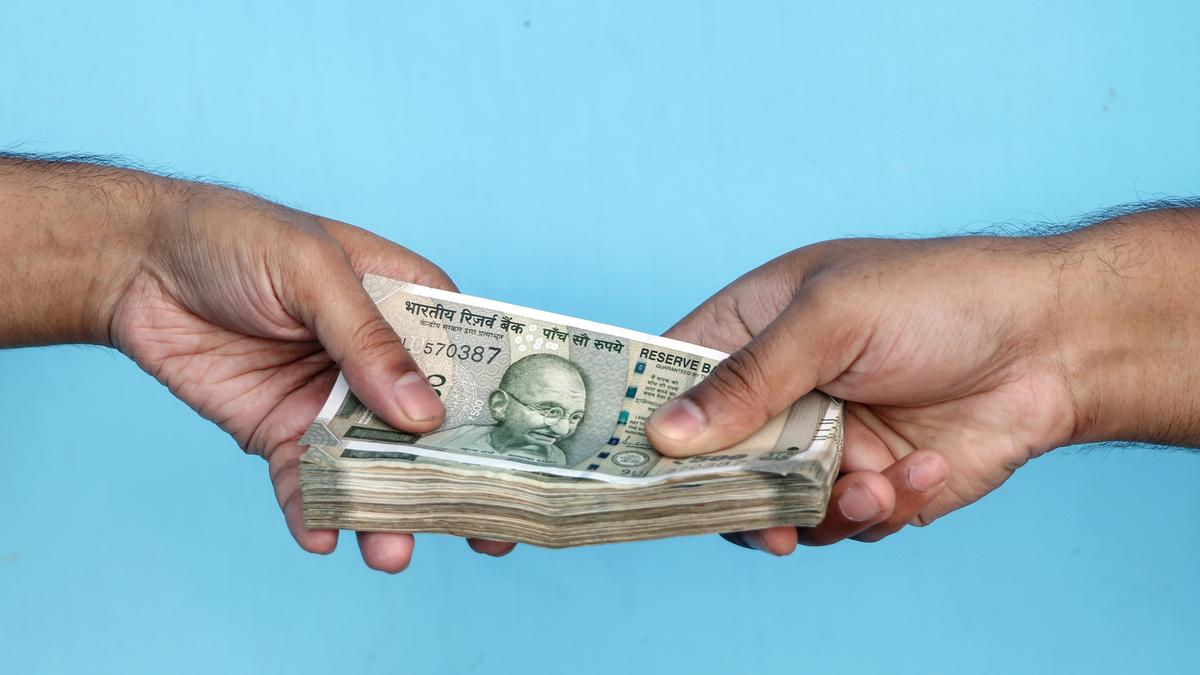
Another positive factor was the continued strength of private transfer receipts, which are largely driven by remittances from Indians working overseas.
According to RBI data, private transfer receipts rose to $42.9 billion in Q1 FY27, up from a revised $33.2 billion in the same quarter a year earlier.
The increase demonstrates the important role of overseas Indian workers in supporting the country’s external accounts.
Strong remittance inflows provide foreign currency to households and the broader economy, helping to cushion the impact of the merchandise trade deficit.
Current Account Moves From Surplus to Deficit
The latest figure represents a notable quarter-on-quarter shift.
India recorded a $6.5 billion current account surplus in the previous quarter, but moved back into deficit in April-June 2026. The reversal was largely associated with the widening merchandise trade deficit and higher commodity costs.
The movement between quarterly surplus and deficit is not unusual for India, where the trade balance can vary significantly depending on import demand, commodity prices and seasonal factors.
What matters for policymakers is whether the deficit remains manageable relative to the size and growth of the Indian economy.
Balance of Payments Also Turns Negative
India’s broader external position faced additional pressure during the quarter.
The country’s overall balance of payments recorded a deficit of $8.1 billion in Q1 FY27, compared with a surplus of $4.5 billion in the same period a year earlier.
The balance of payments incorporates the current account as well as financial and capital flows. Therefore, the deterioration indicates that external financing flows were not sufficient to fully offset the current account gap during the quarter.
This development will remain an important consideration for investors monitoring India’s external stability.
Strong Economic Growth Offers Some Support
The widening current account deficit comes despite robust economic growth.
India’s economy expanded by 7.8% year-on-year in the April-June quarter of FY27, beating economists’ expectations and the RBI’s earlier 7% projection. Growth was supported by domestic consumption, investment and strong activity across several sectors.
Strong domestic economic activity can increase demand for imported goods, machinery, energy and other inputs. As a result, rapid economic expansion can sometimes coincide with a wider merchandise trade deficit.
For India, the challenge is to ensure that stronger growth increasingly translates into higher export capacity and domestic production.
Services and Remittances Remain Crucial for India
India’s external-sector resilience continues to depend heavily on two major sources of foreign exchange: services exports and remittances.
The country’s technology and business-services industries have established a strong position in global markets, while millions of Indians working overseas continue to send substantial amounts of money back home.
These flows help reduce the impact of India’s structural merchandise trade deficit.
If services exports and remittances continue to grow, they could provide an important cushion against higher commodity prices and periods of elevated import demand.
Oil Prices Remain a Key Risk
Energy prices remain one of the most important variables for India’s current account outlook.
India imports a large share of its crude oil requirements, meaning a sustained rise in global oil prices can quickly increase the country’s import bill.
Higher energy costs can widen the merchandise trade deficit and, in turn, put pressure on the current account and the Indian rupee.
This makes global commodity markets, geopolitical developments and shipping conditions particularly important for India’s external-sector outlook.
Outlook for India’s Current Account Deficit
The $4.2 billion current account deficit in Q1 FY27 is relatively modest at 0.5% of GDP, but the widening merchandise trade gap remains a factor to watch.
India’s strong services exports and record-high remittance receipts provide important support, while robust economic growth could continue to sustain import demand.
The direction of commodity prices, particularly crude oil, will likely remain crucial in determining whether the current account deficit widens further or stabilises in the coming quarters.
For policymakers, maintaining adequate foreign exchange buffers and attracting stable capital inflows will remain important as India navigates global economic uncertainty.
India’s External Sector Faces a Manageable Challenge
India’s current account deficit has widened, but the latest data do not point to an immediate external-sector crisis. At 0.5% of GDP, the Q1 FY27 deficit remains relatively contained.
The bigger story is the changing balance between India’s merchandise imports and its powerful services and remittance engines.
As India continues to grow rapidly, sustaining export competitiveness while reducing excessive import dependence will be critical. If services exports and remittances remain strong, they can continue to provide a valuable cushion.
For now, the $4.2 billion current account deficit in Q1 FY27 serves as a reminder that India’s strong growth story is accompanied by external-sector challenges that policymakers and investors will need to monitor closely.