0
0
 0
0
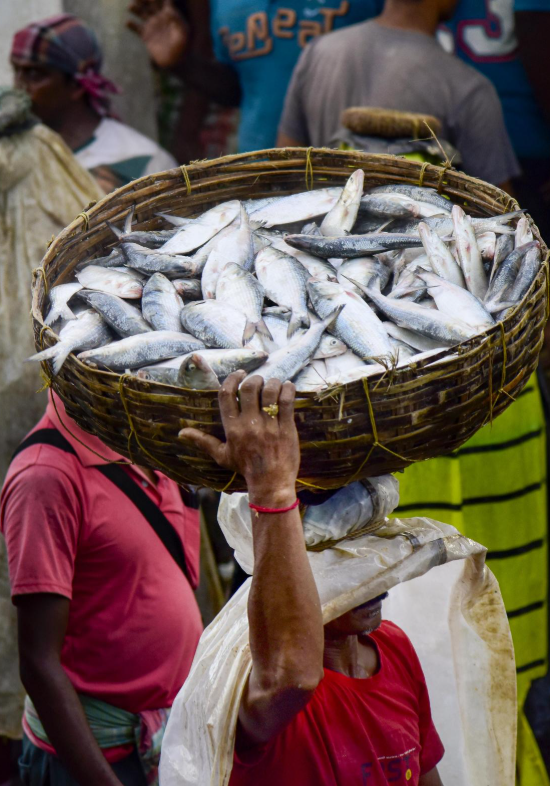
India is moving towards a new way of measuring the economic value and sustainability of its blue economy by developing natural-capital accounts for marine resources and integrating environmental risks into economic decision-making. The initiative could give policymakers a clearer picture of how ocean resources contribute to national wealth—and how climate change and resource depletion could affect that wealth.
The Ministry of Statistics and Programme Implementation (MoSPI) has been expanding India’s environmental-economic accounting framework under the United Nations System of Environmental-Economic Accounting (SEEA). In its latest step, the government is examining methods to assign monetary values to marine fish resources and strengthen the statistical foundation for measuring the country’s natural capital.
The move is significant for India, where fisheries, coastal industries, shipping, tourism and other ocean-based activities form an important part of the wider blue economy.
What Is Natural-Capital Accounting?
Natural-capital accounting is an approach that treats resources such as forests, water, minerals, land and marine ecosystems as economic assets.
Traditional economic statistics generally focus on production and income flows. Natural-capital accounting adds another dimension by examining the underlying assets that generate those economic benefits.
For example, fish caught during a year represent an economic flow. But the fish population in the sea represents a natural asset that can generate economic benefits over many years.
The distinction is important because a rise in fishing output does not necessarily mean that the underlying resource is becoming healthier.
India has already been developing environmental-economic accounts for several years. Its first official environmental-economic accounts, released in 2018, included physical asset accounts for forests, land, minerals and water.
Why Is India Focusing on the Blue Economy?
India has a vast coastline, a large Exclusive Economic Zone and a substantial marine-resource base.
The country’s fisheries sector alone supports millions of livelihoods and contributes to exports and domestic economic activity. Marine resources also interact with other parts of the economy, including ports, tourism, offshore energy and coastal infrastructure.
This makes the blue economy more than a fisheries story.
A stronger accounting framework could help India understand the economic value of its oceans while also tracking whether those natural assets are being depleted, maintained or restored.
Recent work by MoSPI is focused on developing experimental monetary asset accounts for marine fish resources, using the SEEA framework to connect environmental information with economic statistics.
How Would Marine Fish Be Valued?
The proposed approach goes beyond simply calculating the value of fish landed by fishermen.
Instead, the accounting framework attempts to estimate the value of the marine fish stock itself as a natural asset.
One method involves estimating the future economic benefits that the resource can generate and calculating their present value.
This requires information about the size and condition of fish stocks, expected catches, prices, costs and the future economic returns associated with the resource.
The approach is particularly useful because it can help distinguish between short-term economic gains and the long-term sustainability of the underlying natural resource.
Why Climate Risk Matters
Climate change is adding another layer of complexity to the management of ocean resources.
Changes in sea temperature, ocean chemistry, extreme weather events and marine ecosystems can affect fish distribution, productivity and coastal livelihoods.
For India, this means climate risks can potentially influence the value of natural assets as well as the economic activities that depend on them.
A natural-capital accounting framework can provide policymakers with a more integrated way to consider these risks.
Rather than treating environmental degradation and climate impacts as separate issues, they can increasingly be incorporated into assessments of economic wealth and sustainability.
India Already Has an Environmental Accounting Framework
India’s latest initiative builds on work that has been underway for years.
MoSPI has been publishing environmental statistics and accounts through its EnviStats India programme. The 2026 edition highlights environmental-economic accounting, natural capital and ecosystem services while aligning the framework with updated international statistical standards.
The framework covers areas including biodiversity, forests, minerals and energy, water, fish, oceans and other environmental resources.
India’s environmental accounting strategy for 2022–2026 was also designed to improve the quality, coverage and standards of environmental accounts and strengthen their use in policy planning.
What Does This Mean for the Blue Economy?
The biggest potential benefit is better decision-making.
The blue economy involves multiple competing demands for limited marine space and resources.
Fishing areas may overlap with shipping routes, ports, tourism projects, offshore renewable-energy installations and conservation zones.
Without an integrated economic and environmental database, policymakers may find it difficult to assess the long-term trade-offs between these activities.
Natural-capital accounting could provide a common framework for comparing economic benefits with changes in environmental assets.
For example, a policy that increases short-term fishing income but significantly reduces fish stocks could look different when the depletion of natural capital is included in the economic assessment.
Could It Improve Fisheries Policy?
One of the most important applications could be fisheries management.
If policymakers have better information about the value and condition of fish stocks, they can potentially make more informed decisions about sustainable harvesting, conservation measures and investment.
The objective is not necessarily to put a price tag on every part of nature.
Instead, monetary valuation can complement physical and ecological indicators by showing how environmental changes could affect economic wealth and future income.
This could be particularly important for communities whose livelihoods depend directly on marine resources.
Challenges in Measuring Natural Capital
Despite its potential, natural-capital accounting is technically difficult.
Marine ecosystems are complex, and reliable data on fish stocks, ecological conditions and future resource productivity can be limited.
India’s experimental marine-fish accounts therefore rely partly on proxy methods because of existing data constraints.
Another challenge is valuation.
Unlike financial assets, natural resources do not always have observable market prices. Their economic value can also include ecological services that are difficult to measure.
This means the resulting accounts should be interpreted as statistical tools rather than precise market valuations.
From GDP to Broader Measures of Wealth
India’s move towards natural-capital accounting reflects a broader international shift in thinking about economic development.
GDP measures economic activity, but it does not fully show whether a country’s underlying natural assets are being strengthened or depleted.
Natural-capital accounting attempts to fill part of that gap.
By incorporating environmental assets into economic statistics, governments can develop a broader understanding of national wealth and long-term economic sustainability.
The United Nations’ SEEA framework provides an internationally recognised structure for connecting environmental and economic information. India has already used the framework in developing ecosystem and natural-resource accounts.
Why This Matters for India’s Climate Strategy
The initiative also has implications for climate resilience.
India’s economy is increasingly exposed to climate-related risks, including changes affecting agriculture, water resources and coastal areas.
The country’s marine economy is particularly sensitive because ocean and coastal systems can be affected simultaneously by climate change, pollution, habitat degradation and overexploitation.
Better natural-capital accounts could therefore help policymakers understand how environmental changes translate into economic risks.
This becomes increasingly relevant as India seeks to balance economic growth with environmental sustainability.
The Road Ahead
The current marine-fish accounting exercise should be viewed as an important statistical experiment rather than the final version of India’s blue-economy accounting system.
The quality of future accounts will depend on improvements in data collection, scientific assessments, ecosystem monitoring and coordination between government agencies.
Over time, the approach could potentially expand beyond marine fish to cover a wider range of ocean assets and ecosystem services.
That would give India a more comprehensive statistical picture of its blue economy.
India’s plan to develop natural-capital and climate-risk accounting for its blue economy represents a significant evolution in the way the country measures economic wealth and environmental sustainability.
By treating marine resources such as fish stocks as natural assets, policymakers can look beyond annual production and examine whether the resource base supporting future economic activity is being maintained or depleted.
The approach also creates an opportunity to integrate climate and environmental risks into economic planning.