0
0
 0
0

The global economy is facing a delicate tug-of-war between the negative impact of an oil shock and the powerful growth potential of the artificial intelligence boom, according to IMF Managing Director Kristalina Georgieva. Her assessment comes as rising geopolitical risks around key energy routes put renewed pressure on oil markets, while massive investment in AI continues to support economic activity and technology spending.
The competing forces create an uncertain outlook for policymakers and businesses. Higher energy prices can increase inflation and weaken consumer demand, while strong investment in AI infrastructure, semiconductors and digital technologies could boost productivity and economic growth.
Oil Shock Creates Fresh Risks for the Global Economy
Oil remains one of the most important variables in the global economic outlook.
A sharp increase in crude prices can quickly affect transportation, manufacturing, electricity generation and household expenses. Companies facing higher energy costs may also pass those expenses on to consumers, increasing inflationary pressure.
The current geopolitical situation has added to those concerns, particularly because disruptions around the Strait of Hormuz could affect global energy supplies and international trade. The waterway is one of the world’s most important routes for oil shipments.
For oil-importing economies, prolonged disruptions could therefore create significant economic challenges.
AI Boom Provides a Powerful Counterweight
While the oil shock represents a downside risk, the rapid expansion of artificial intelligence is creating an important source of economic momentum.
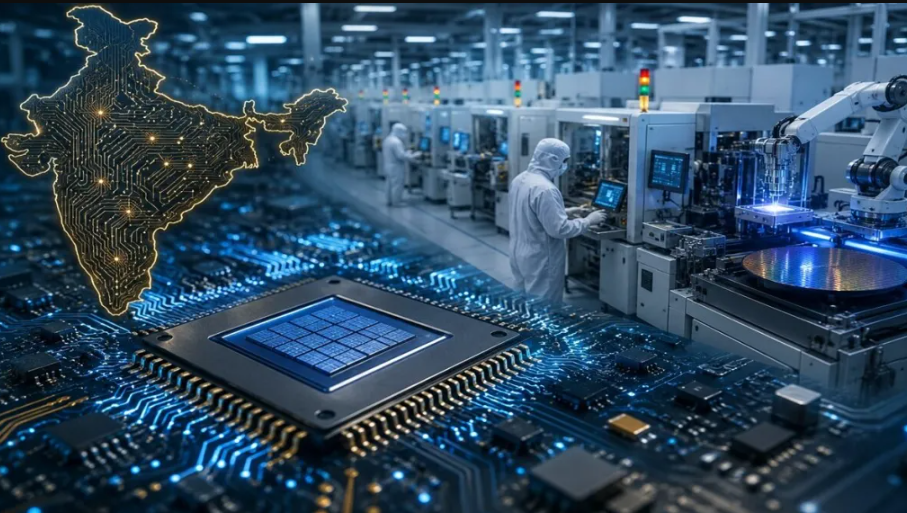
AI investment has expanded across data centres, advanced computing, semiconductors, cloud infrastructure and software. Companies are increasingly spending on AI systems in an effort to improve productivity and develop new products and services.
This investment boom could support economic growth even as other parts of the global economy face pressure.
The IMF’s assessment therefore highlights an unusual economic environment in which a major negative shock and a technology-driven investment boom are occurring simultaneously.
AI Investment Could Boost Productivity
One of the biggest long-term arguments in favour of the AI boom is productivity.
If businesses successfully integrate artificial intelligence into their operations, workers could potentially complete certain tasks faster and organizations could automate repetitive processes.
AI could also help companies analyze large datasets, improve decision-making and develop new products.
Higher productivity can ultimately support stronger economic growth without requiring a proportional increase in labour or physical resources.
However, the economic benefits of AI will depend on how quickly businesses can adopt the technology and translate investment into real productivity gains.
Energy Prices Could Complicate AI Expansion
The relationship between the two trends is particularly interesting because the AI boom itself requires significant amounts of energy.
Large data centres consume substantial quantities of electricity, while the construction of AI infrastructure requires chips, cooling systems, power networks and other resources.
If energy prices remain elevated for an extended period, the cost of operating and expanding AI infrastructure could increase.
This means the oil shock and AI boom are not entirely independent forces. Higher energy costs could affect the very technology infrastructure that is driving investment.
Inflation Remains a Key Concern
For central banks, an oil shock can create a difficult policy dilemma.
Higher crude prices can push inflation upward even when economic activity is slowing. If policymakers respond by maintaining tighter monetary conditions, borrowing costs could remain elevated for households and businesses.
That could weaken investment and consumption.
At the same time, policymakers may be reluctant to ignore an inflationary energy shock.
The result could be a more complicated environment for central banks as they attempt to balance price stability with economic growth.
Global Growth Faces an Uncertain Path
The global economy has already demonstrated considerable resilience in the face of multiple shocks.
However, the combination of geopolitical tensions, energy-market uncertainty and rapid technological change makes the current environment particularly complex.
The AI boom could provide an important growth engine, but it may not be enough to fully offset a prolonged and severe energy shock.
Much will depend on the duration and intensity of oil-market disruptions.
Emerging Markets Could Face Greater Pressure
Oil-importing emerging markets could be especially vulnerable to higher energy prices.
When crude becomes more expensive, countries may face larger import bills and greater pressure on their currencies. Governments could also face increased costs for fuel subsidies and other measures designed to protect consumers.
Higher energy prices can therefore affect both inflation and fiscal conditions.
At the same time, countries with growing technology sectors may benefit from increased AI investment and digital transformation.
This creates different economic outcomes across regions depending on their energy dependence, technological capabilities and policy flexibility.
The AI Boom Is Not Without Risks
Although AI investment has generated considerable optimism, the technology boom also carries risks.
Large-scale investment must eventually produce sustainable economic returns. If expectations about AI productivity become disconnected from actual business performance, financial markets could face volatility.
There are also concerns about employment disruption, inequality and the concentration of AI capabilities among a relatively small number of companies.
For policymakers, the challenge is therefore not simply to encourage AI investment but to ensure that its benefits are broadly distributed.
Businesses Must Prepare for Two Opposing Forces
For companies, the current environment requires careful planning.
Higher energy costs could increase operating expenses, while AI investment could create opportunities to improve efficiency.
Businesses may therefore need to accelerate digital transformation while simultaneously managing energy exposure.
Companies that successfully combine AI adoption with efficient energy management could gain a competitive advantage.
Why the Global Economy Is at a Crossroads
The contrast between an oil shock and an AI boom illustrates how quickly the global economic landscape is changing.
Traditional economic forces such as energy prices and geopolitical tensions remain extremely powerful. At the same time, technologies such as artificial intelligence are beginning to reshape investment, productivity and business models.
The result is an economy being pulled in different directions.
One force threatens to increase costs and weaken demand, while the other has the potential to increase productivity and create new sources of growth.
What Happens Next?
The outlook will depend heavily on developments in energy markets and the sustainability of AI investment.
If oil prices stabilize and AI investment continues generating productivity gains, the global economy could benefit from a relatively positive combination of lower energy pressure and stronger technological growth.
But if energy disruptions persist while AI investment fails to deliver expected returns, the economic outlook could become considerably more challenging.
For policymakers, businesses and investors, monitoring both trends will be essential.
The global economy is increasingly caught between two powerful forces: the economic damage caused by an oil shock and the growth potential created by the AI boom. IMF Managing Director Kristalina Georgieva’s assessment highlights the uncertainty facing the world economy as geopolitical risks threaten energy supplies while artificial intelligence drives unprecedented investment in technology and infrastructure.
An extended oil shock could raise inflation, increase business costs and weaken consumer demand. Meanwhile, continued AI investment could boost productivity, innovation and economic growth.
The ultimate direction of the global economy may depend on which force proves stronger: the drag from energy disruption or the momentum generated by artificial intelligence.