 0
0
 0
0
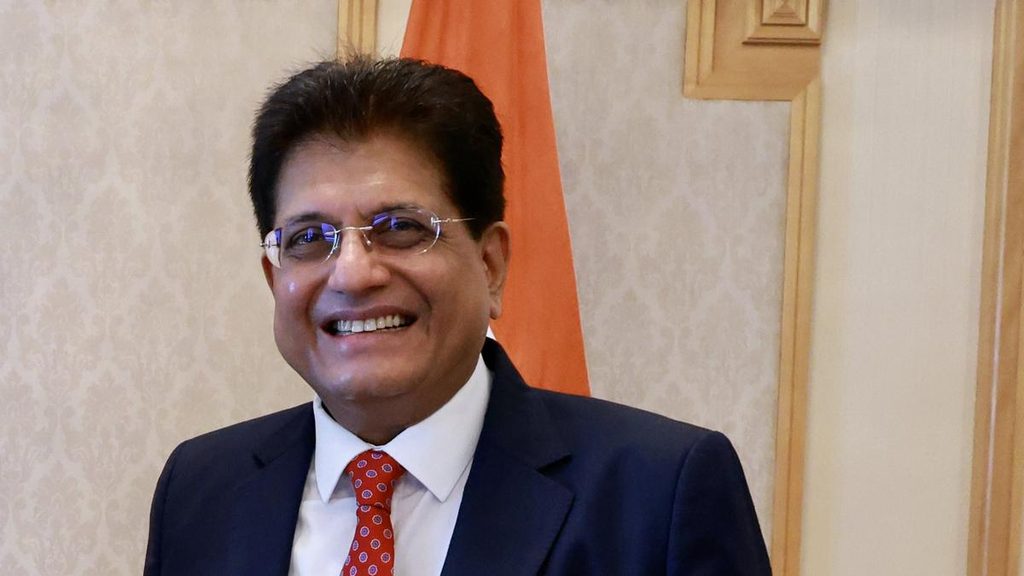
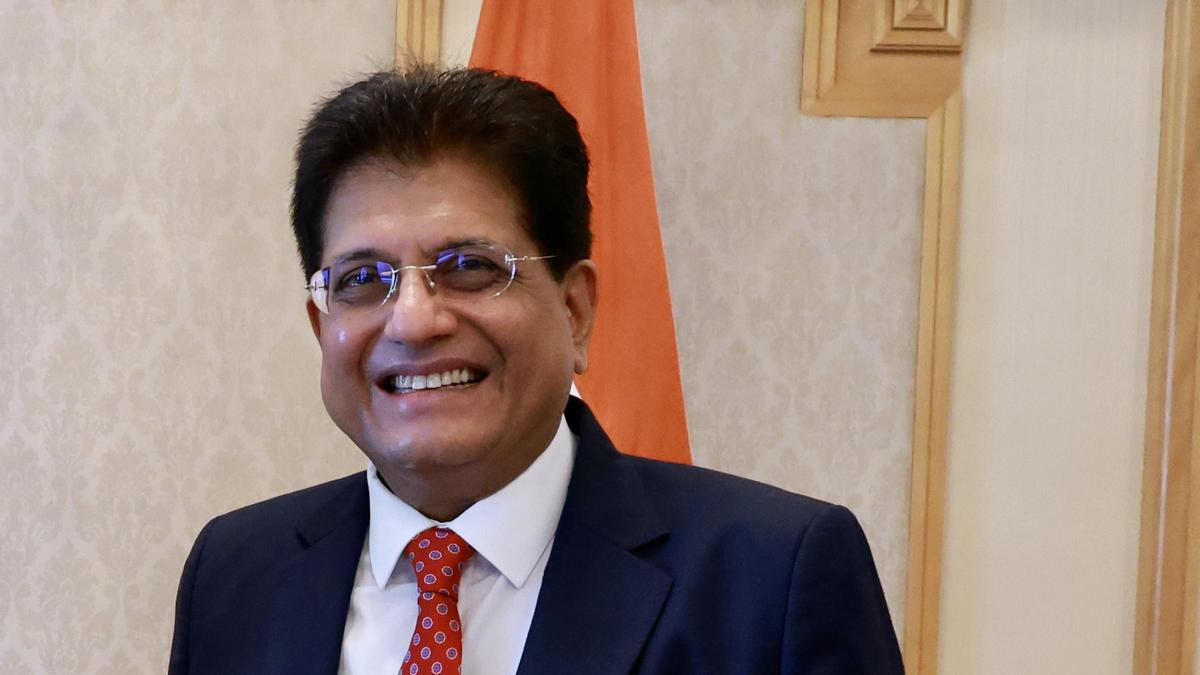
India is expanding its free trade agreement (FTA) strategy, with Commerce and Industry Minister Piyush Goyal revealing that the country is negotiating with eight to nine additional groups of countries and individual nations. The government’s broader objective is to build an FTA network that could eventually provide India preferential access covering around 75% of global trade.
Goyal made the remarks on Monday while addressing business representatives from India and Japan. He said the additional negotiations involve economies representing approximately $15 trillion in combined GDP, potentially giving Indian businesses access to significantly larger overseas markets.
The announcement underlines New Delhi’s growing focus on trade diplomacy as a tool to boost exports, attract investment and integrate Indian companies more deeply into global value chains.
India Expands Its Free Trade Agreement Network
India has accelerated its FTA negotiations in recent years as the government seeks to strengthen the country’s position in global commerce.
According to Goyal, India has signed nine free trade agreements over the past four years, covering economies with a combined GDP of approximately $60 trillion and 38 developed countries. Existing agreements with countries such as Japan and South Korea, as well as the ASEAN region, provide access to another $10 trillion of economic activity.
Combined, Goyal said India now has preferential market access to economies representing around $70 trillion.
The next phase could add another $15 trillion through negotiations with eight to nine additional groups or countries.
India Targets 75% Global Trade Coverage
The most significant part of Goyal’s announcement is India’s ambition to have its FTAs eventually cover around 75% of global trade.
Such a broad network could significantly change the way Indian businesses participate in international commerce.
Rather than relying primarily on domestic demand, Indian manufacturers and exporters could gain preferential access to a much larger pool of international consumers.
More FTAs could mean lower trade barriers, wider market access and greater opportunities for Indian exporters.
However, the actual benefits will depend on how effectively Indian businesses use the agreements and whether they can meet international standards, pricing requirements and rules of origin.
Why FTAs Matter to India’s Export Strategy
A free trade agreement can reduce tariffs and establish preferential market access between participating economies. Depending on the agreement, it can also address services, investment, intellectual property, digital commerce and other trade-related issues.
For India, the objective goes beyond simply increasing the volume of exports.
The government wants FTAs to help Indian companies become more deeply integrated into global value chains.
That could encourage multinational companies to use India as a manufacturing and export base, particularly in sectors where the country is seeking to expand its global footprint.
$15 Trillion in Additional Economic Opportunities
The eight to nine negotiations highlighted by Goyal represent economies with a combined GDP of approximately $15 trillion.
That figure illustrates the potential scale of India’s trade ambitions.
Access to these markets could create opportunities for Indian companies across manufacturing, pharmaceuticals, textiles, engineering, automobiles, electronics, food processing and services.
Nevertheless, GDP alone does not determine the commercial value of a trade agreement. Trade volumes, consumer demand, tariff structures, regulatory requirements and existing supply-chain relationships will also determine how valuable each FTA becomes.
India Wants to Become a Trusted Global Supply-Chain Partner
Goyal linked the expansion of India’s FTA network to the country’s ambition to become a trusted partner in global value chains.
This is particularly important as companies around the world continue to diversify their manufacturing and sourcing networks.
India has a large domestic market, a growing manufacturing base and an expanding services sector. Wider preferential market access could make the country more attractive to businesses looking to establish production facilities that can serve both Indian consumers and international markets.
The government therefore views FTAs as part of a broader strategy involving trade, investment and manufacturing.
Japan-India Trade and Investment Ties
Goyal made his latest comments while addressing business representatives from India and Japan.
He was leading a business delegation of more than 200 representatives in Japan with the objective of strengthening bilateral trade and investment ties.
The minister highlighted opportunities for investment in India, including areas such as data centres, manufacturing and artificial intelligence.
He also emphasized the importance of ensuring that growing economic ties between India and Japan move toward more balanced trade.
The comments demonstrate that India’s FTA strategy is being pursued alongside efforts to deepen individual bilateral economic relationships.
FTAs Could Boost Indian Manufacturing
Manufacturing is expected to be one of the major beneficiaries if India succeeds in expanding preferential market access.
When tariffs are reduced in overseas markets, Indian products can become more competitive compared with products from countries without similar trade agreements.
This could encourage companies to increase production in India.
For multinational corporations, a combination of India’s large domestic market and preferential access to overseas markets could make the country more attractive as an export hub.
Potential Impact of Expanded FTAs
| Area | Potential Benefit |
|---|---|
| Exports | Greater access to overseas consumers |
| Manufacturing | More opportunities for export-oriented production |
| Investment | Stronger incentives for multinational companies |
| Employment | Potential growth in manufacturing and services |
| Supply chains | Deeper integration with global production networks |
| MSMEs | New opportunities to enter international markets |
| Services | Greater access to foreign markets |
The scale of these benefits will ultimately depend on how effectively the agreements are implemented.
Indian Exporters Face a Major Opportunity
India’s exporters could be among the biggest beneficiaries of the government’s expanding FTA strategy.
Industries such as textiles, pharmaceuticals, automobiles, engineering goods, electronics and processed foods could potentially gain from lower tariffs and improved access to foreign markets.
Services could also play an important role.
India already has strong capabilities in information technology, business services and professional services. Better access to international markets could help Indian service providers expand their global customer base.
MSMEs Will Need Support
While large corporations may have the resources to understand and utilize complex trade agreements, small and medium-sized enterprises could face greater challenges.
MSMEs may need assistance with rules of origin, international certifications, customs procedures and overseas market research.
For India’s FTA strategy to have a broad economic impact, smaller businesses will need to be able to take advantage of the opportunities created by new agreements.
This means trade promotion, export financing, certification support and market intelligence could become increasingly important.
More FTAs Also Mean More Competition
The expansion of FTAs is not without challenges.
Opening markets creates opportunities for Indian exporters, but it can also increase competition from foreign companies in the Indian market.
Domestic manufacturers that are less competitive could face pressure from cheaper or higher-quality imported products.
For this reason, India has generally emphasized protecting sensitive sectors while negotiating market access.
The government must balance two objectives: opening international markets for Indian businesses while protecting vulnerable domestic industries.
Signing an FTA Is Only the First Step
Another important challenge is FTA utilization.
A trade agreement may provide preferential tariffs, but businesses still need to know how to use those benefits.
Exporters must understand eligibility requirements, rules of origin, documentation and technical standards in destination markets.
Without effective utilization, an FTA may not deliver its full economic potential.
India’s next challenge, therefore, is not simply negotiating more agreements but ensuring that Indian businesses actually convert preferential access into higher exports.
India’s Broader Global Trade Ambition
Goyal’s latest remarks are part of a broader shift in India’s approach to international trade.
The government has increasingly sought agreements with developed economies and major trading partners while attempting to protect sensitive domestic sectors.
Earlier in 2026, Goyal said India’s recent FTAs had already provided preferential access to nearly two-thirds of global trade, according to government-linked reporting.
The latest 75% target would represent another significant expansion.
If achieved, it would give Indian exporters preferential access to an exceptionally large share of the world economy.
What the 75% Target Means for India
The proposed 75% coverage is strategically important because it could reduce India’s dependence on a smaller group of export destinations.
A wider network of trade partners could help Indian companies diversify their markets and reduce exposure to economic downturns or trade disruptions in individual countries.
It could also make India more attractive to foreign investors.
A company considering where to establish a production facility may place greater value on a country that offers both a large domestic market and preferential access to major international markets.
The Road Ahead for India’s FTA Strategy
India’s negotiations with eight to nine additional groups and countries represent another step in the country’s effort to strengthen its global economic integration.
Goyal said the additional markets could represent around $15 trillion in GDP, while India’s overall FTA network could eventually cover around 75% of global trade.
The challenge now is turning those ambitions into measurable economic outcomes.
India will need to ensure that agreements provide meaningful market access, exporters understand how to use them, and domestic industries become competitive enough to benefit from greater international integration.
If successful, the strategy could support India’s ambitions to increase exports, attract investment and establish itself as a major global manufacturing and services hub.
Piyush Goyal’s latest announcement highlights India’s increasingly ambitious free trade strategy. With negotiations underway with eight to nine additional groups or countries representing approximately $15 trillion in GDP, India is seeking to expand preferential market access and eventually cover around 75% of global trade through its FTAs.
The strategy could create major opportunities for Indian exporters, manufacturers, services companies and investors. It could also strengthen India’s role in global value chains and make the country a more attractive destination for international production.
But the success of the strategy will depend on more than the number of agreements signed.
India will need to turn market access into actual exports, investment and jobs. If businesses can effectively utilize the new FTAs while improving competitiveness and meeting global standards, the 75% global trade coverage target could become an important milestone in India’s rise as a major trading economy.