0
0
 0
0
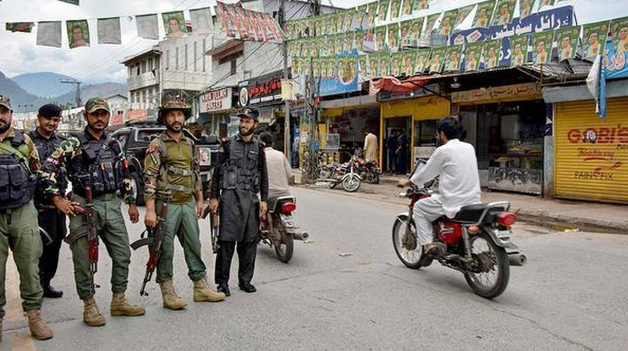
The politics of Pakistan-occupied Kashmir (PoK) is increasingly shaped not only by public grievances but also by the ability of political groups to mobilise people around economic, social and governance concerns. Rising demands over prices, taxation, electricity, employment, public services and political representation have transformed local discontent into a broader debate about accountability and the distribution of resources.
The political significance of mobilisation lies in its ability to convert individual frustrations into collective action. When communities organize around shared concerns, their demands can become difficult for governments to ignore.
At the same time, understanding mobilisation in PoK requires looking beyond individual protests. The deeper issue is how economic pressures, institutional structures, political representation and public expectations interact to shape the region’s political landscape.
From Public Grievance to Collective Mobilisation
Grievances alone do not automatically produce political movements.
People may experience rising living costs, unemployment or dissatisfaction with public services without taking to the streets. Mobilisation occurs when those individual concerns become organized around shared demands and when groups develop mechanisms for collective action.
In PoK, public campaigns have increasingly demonstrated this transition.
Issues that may initially appear economic—such as electricity prices, taxation or shortages—can quickly become political because they raise broader questions about governance and accountability.
The result is a political environment in which everyday economic concerns can become symbols of wider dissatisfaction.
Economic Pressure at the Centre of Politics
Economic concerns remain among the strongest drivers of political mobilisation.
Households facing higher prices and limited employment opportunities are likely to pay greater attention to government policies affecting their daily lives.
Electricity has become particularly significant because it connects household finances with questions about infrastructure, resource allocation and regional development.
When people believe that the cost of essential services is disproportionate to their incomes or local economic conditions, the issue can quickly become politically sensitive.
This is why economic demands often form the starting point for wider mobilisation.
The Politics of Representation
Another important dimension is political representation.
Citizens want to know whether institutions responsible for governing the region are sufficiently responsive to their concerns.
Questions surrounding representation can become particularly important when economic grievances persist for extended periods.
If people feel that formal political channels are not producing meaningful solutions, alternative forms of mobilisation can gain strength.
Public demonstrations, community organizations and civil society groups can then become important mechanisms for expressing political demands.
Why Mobilisation Matters
Mobilisation gives political grievances visibility.
A single complaint may have limited influence, but thousands of people expressing the same concern can create significant political pressure.
Mobilisation can also force authorities to address issues that might otherwise remain low on the political agenda.
However, mobilisation is not simply about numbers. Leadership, organization, communication and the ability to maintain public participation all influence whether a movement can achieve meaningful outcomes.
A movement may attract large crowds but struggle to translate public anger into policy changes if it lacks a clear strategy.
Social Media Has Changed Political Mobilisation
Digital communication has transformed how political movements organize and spread information.
Social media platforms allow activists and community groups to share updates rapidly, coordinate demonstrations and communicate directly with audiences outside their immediate geographic areas.
In politically sensitive environments, digital networks can also help connect local grievances with broader national and international discussions.
However, social media creates challenges as well.
Information can spread faster than it can be verified, while emotionally charged content can deepen polarization. For political movements, maintaining credibility therefore requires careful attention to facts and responsible communication.
Youth and the Changing Political Landscape
Young people are increasingly important to political mobilisation.
A younger generation tends to be highly connected through digital platforms and more exposed to political developments beyond their immediate communities.
Employment opportunities, education, economic mobility and access to technology can therefore become important political issues.
Young activists may also approach political participation differently from previous generations. Instead of relying exclusively on established political institutions, they may use social media, community networks and issue-based campaigns to express their concerns.
This can make political mobilisation more decentralized and harder for traditional political structures to control.
The Role of Civil Society
Civil society organizations can provide another important layer of political organization.
Community groups, professional associations and advocacy organizations can help convert individual grievances into structured demands.
They may also play a role in negotiating with authorities, documenting problems and communicating policy proposals.
This creates a bridge between street-level mobilisation and formal political processes.
For movements seeking lasting change, such institutional links can be crucial.
Government Response Can Shape Mobilisation
The response of authorities can significantly influence the future direction of political mobilisation.
A government that responds through dialogue, policy adjustments and transparent communication may reduce tensions.
Conversely, if communities believe their concerns are being dismissed, mobilisation can become stronger and more confrontational.
The relationship between protest movements and authorities is therefore dynamic. Each response can influence the next stage of political activity.
From Protest to Policy
The biggest challenge for any mobilisation movement is translating public pressure into concrete policy outcomes.
Protests can highlight problems, but lasting change requires negotiation, institutional reforms and implementation.
This is where political leadership becomes important.
Movements need clearly defined priorities and realistic policy demands if they want to move beyond expressing dissatisfaction.
For example, demands concerning electricity, taxation or public spending can eventually lead to discussions about pricing mechanisms, subsidies, budget allocations and governance reforms.
The political journey therefore does not end when a protest succeeds in attracting attention. It begins a more difficult phase of negotiating solutions.
The Risk of Fragmentation
Political mobilisation can also face internal divisions.
Different groups may share dissatisfaction while disagreeing over priorities, leadership or long-term objectives.
Some may focus primarily on economic reforms, while others may emphasize political autonomy, representation or broader constitutional questions.
Without mechanisms for resolving these differences, movements can lose momentum.
Maintaining unity around clearly defined objectives is therefore one of the most important challenges facing any mass political campaign.
Beyond Grievance
The politics of PoK cannot be understood solely through the lens of public dissatisfaction.
Grievances provide the initial energy, but mobilisation determines whether that energy becomes a sustained political force.
Economic pressures, institutional expectations, youth participation, civil society and digital communication all contribute to this process.
The more important question is therefore not simply why people are unhappy, but how their concerns are organized, articulated and converted into political demands.
That distinction helps explain why some grievances disappear after short-term concessions while others develop into sustained movements.
What Comes Next for PoK Politics?
The future political trajectory of PoK will depend partly on how authorities respond to growing demands for economic relief, better governance and political accountability.
If institutions can provide credible channels for dialogue and policy reform, mobilisation may increasingly move toward structured political participation.
If grievances remain unresolved, however, public pressure could continue to produce new waves of collective action.
The region’s political landscape will therefore be shaped not only by the existence of grievances but by the capacity of citizens, political organizations and institutions to negotiate competing interests.
The politics of mobilisation in PoK represents a shift from isolated grievances toward organized collective demands. Economic pressures may provide the immediate trigger, but questions of representation, accountability and governance give those demands broader political significance.
Mobilisation can bring communities together, influence political agendas and pressure institutions to respond. Yet turning protest into lasting change requires organization, credible leadership and a willingness to engage with policy solutions.
Ultimately, the political importance of PoK’s mobilisation lies in what happens beyond the streets: whether collective demands can be translated into meaningful dialogue, institutional accountability and sustainable reforms.