0
0
 0
0
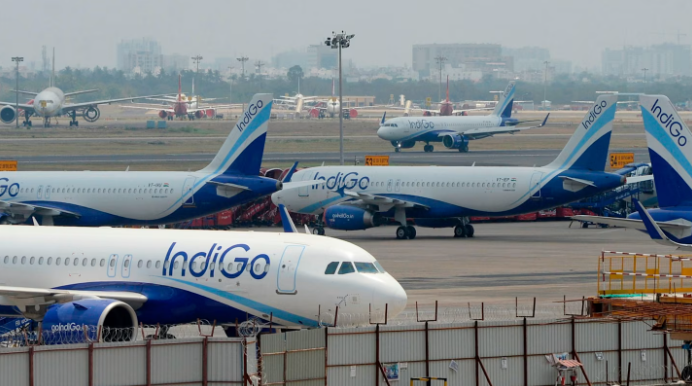
IndiGo’s difficulties became particularly visible during the major operational disruption of December 2025, when the airline faced widespread flight cancellations and scheduling problems.
The disruption highlighted the challenges associated with crew planning, regulatory changes and the airline’s highly efficient but tightly managed operating model.
The impact continued into early 2026 as the carrier worked to restore network stability and operational discipline.
According to an equity research report, IndiGo’s FY2026 performance was affected by several external disruptions throughout the year. These included geopolitical developments, capacity adjustments, the December 2025 operational crisis and renewed Middle East tensions that affected airspace availability and fuel prices.
Despite these challenges, IndiGo carried a record 123 million passengers in FY2026, demonstrating the strength of demand for air travel in India.
Leadership Change Adds to IndiGo’s Transformation
One of the biggest developments for IndiGo in 2026 is the arrival of Willie Walsh as chief executive.
Walsh is a veteran of the global aviation industry and previously served as director general of the International Air Transport Association. His appointment comes after a period of management transition at IndiGo.
The new CEO faces a very different challenge from simply maintaining the airline’s domestic leadership.
IndiGo now needs to improve operational reliability while transforming itself from a predominantly domestic carrier into a stronger international airline.
That means balancing rapid expansion with the operational discipline that helped build its low-cost model.
From Domestic Dominance to Global Expansion
For years, IndiGo’s competitive advantage has been its dominance of India’s domestic aviation market.
Its large network, extensive fleet and low-cost operating model have enabled the airline to capture a significant share of India’s rapidly growing passenger market.
However, the company’s international ambitions are becoming increasingly important.
IndiGo has been expanding its long-haul network and has introduced wide-body aircraft as part of its strategy to connect India with major global destinations.
The airline has also been building partnerships and expanding its international footprint as it seeks to capture a greater share of India’s growing demand for overseas travel.
But international expansion brings greater complexity.
Long-haul routes require more aircraft utilisation, crew planning, airport coordination and exposure to international fuel prices and geopolitical developments.
Geopolitical Risks Are Creating New Pressure
One of IndiGo’s biggest challenges in 2026 has been the changing geopolitical environment.
Conflict and airspace restrictions in parts of the Middle East have affected international routes and increased flying times for some services.
Longer routes mean higher fuel consumption and increased operating costs.
The aviation sector is particularly sensitive to geopolitical developments because airlines cannot always pass higher costs directly to passengers without affecting demand.
A research report noted that Middle East tensions affected IndiGo’s airspace availability, international routes, aircraft utilisation and travel demand while also contributing to higher jet fuel prices.
Fuel Costs Remain a Major Challenge
Aviation turbine fuel, or ATF, remains one of the largest costs for Indian airlines.
When fuel prices rise, airlines face immediate pressure on margins.
IndiGo’s large scale provides some protection because its network and passenger volumes allow it to spread fixed costs across a large number of flights. However, sustained fuel inflation can still affect profitability.
The airline therefore needs to maintain strong aircraft utilisation and pricing discipline while controlling costs.
This becomes more difficult when geopolitical developments force aircraft to take longer routes.
The December Crisis Exposed Operational Weaknesses
The December 2025 disruption remains one of the most important lessons for IndiGo.
The airline’s highly efficient business model depends on careful coordination between aircraft, pilots, cabin crew, airport slots and schedules.
When one component becomes constrained, the effects can quickly spread across the network.
The crisis therefore raised questions about whether IndiGo’s rapid expansion had outpaced aspects of its operational planning.
For the new management team, restoring confidence in operational reliability will be essential.
Passengers may tolerate occasional delays, but repeated cancellations and major disruptions can damage customer trust.
IndiGo Still Has Major Strengths
Despite the turbulence, IndiGo’s fundamental position remains strong.
The airline continues to benefit from India’s expanding aviation market, a large domestic customer base and strong demand for air travel.
India is one of the world’s fastest-growing major aviation markets, with rising incomes, increasing urbanisation and growing demand for both domestic and international travel.
IndiGo’s scale also gives it advantages in areas such as fleet purchasing, network density, airport presence and operational infrastructure.
Its record passenger volume in FY2026 demonstrates that demand for the airline’s services remains substantial even amid operational challenges.
Can IndiGo Maintain Its Low-Cost Advantage?
The central strategic question is whether IndiGo can continue offering competitive fares while managing significantly higher operating complexity.
International expansion, wide-body aircraft and long-haul routes can potentially increase revenue opportunities, but they also introduce costs that are not as prominent in a traditional short-haul low-cost model.
The airline must therefore avoid allowing expansion to undermine the cost discipline that made its domestic business successful.
Operational efficiency will remain crucial.
Competition Is Becoming More Intense
IndiGo is also operating in a changing competitive environment.
The restructuring of Air India under the Tata Group is creating a stronger full-service competitor, while other Indian carriers are seeking to capture opportunities in the rapidly expanding domestic market.
A stronger Air India could challenge IndiGo on premium international routes, while emerging airlines may compete aggressively for domestic passengers.
This means IndiGo can no longer rely solely on its domestic scale.
It must continue improving its customer proposition while maintaining its cost advantage.
International Growth Could Become IndiGo’s Next Engine
If successfully executed, international expansion could become an important long-term growth driver.
India’s expanding middle class and rising demand for international travel provide a significant opportunity.
IndiGo can potentially use its extensive domestic network to feed passengers into international routes, creating a broader network effect.
However, the strategy will require careful route selection and disciplined capacity deployment.
The airline’s temporary suspension of Manchester services amid airspace restrictions and rising operating costs illustrates how external conditions can quickly affect international route economics.
IndiGo Needs to Restore Passenger Confidence
Operational reliability will likely be one of the most important priorities for the new management.
Passengers choose airlines not only based on ticket prices but also on reliability, schedule convenience and confidence that flights will operate as planned.
After the disruptions of 2025, IndiGo has an opportunity to demonstrate that it has strengthened its systems.
Better workforce planning, stronger contingency capacity and improved communication with passengers could help restore confidence.
A Critical Period for India’s Largest Airline
IndiGo enters its third decade with significant opportunities but also greater complexity.
The airline has the scale to benefit from India’s long-term aviation growth, but its next phase will require a different form of management.
The challenge is no longer simply to add more aircraft and routes.
IndiGo must build an organisation capable of managing a much larger international network while maintaining the reliability and cost efficiency that underpin its business model.
Willie Walsh’s experience in global aviation could prove valuable as the airline navigates this transition.
India’s IndiGo is still one of the strongest airlines in the country’s aviation sector, but emerging from its recent turbulence will require more than simply restoring normal operations.
The airline must address the lessons from its 2025 operational disruption, manage rising fuel and geopolitical risks, strengthen workforce planning and execute its international expansion carefully.
Its record passenger numbers demonstrate that demand remains strong, while its scale provides a significant competitive advantage.