 0
0
 0
0
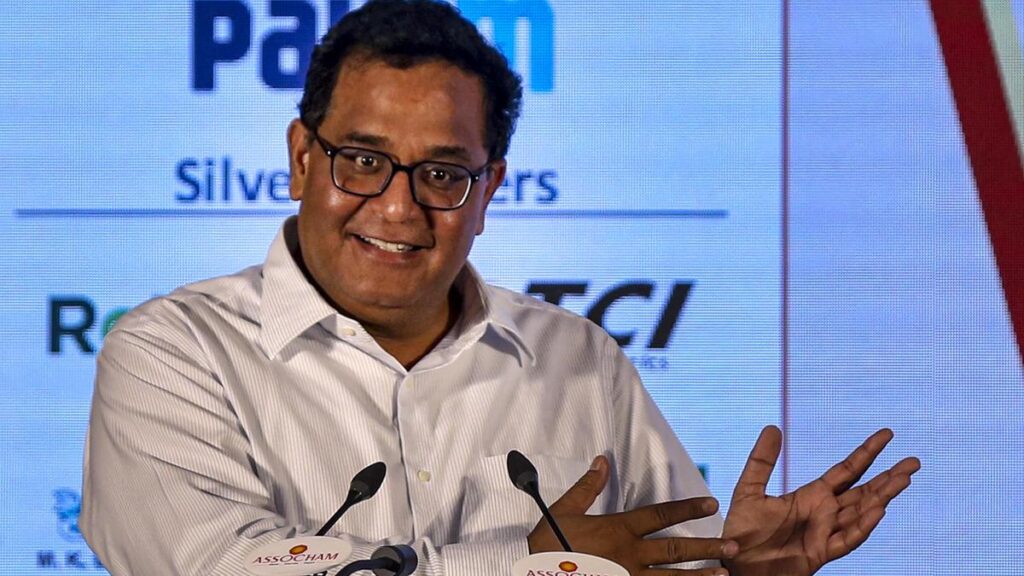
Paytm founder and CEO Vijay Shekhar Sharma is not personally selling his direct stake in the fintech company, despite a proposed sale of up to 4.98% of Paytm by Resilient Asset Management BV, an entity wholly owned by him. The economic value generated from the transaction, however, will be retained by Antfin under an existing Optionally Convertible Debenture (OCD) agreement.
The development has attracted significant attention because Resilient’s proposed block trade could be worth nearly ₹5,000 crore, while Sharma’s direct 9.03% holding in Paytm remains unchanged.
Resilient Asset Management Plans Paytm Stake Sale
Resilient Asset Management BV has proposed selling up to 4.98% of One97 Communications, Paytm’s parent company, through a block market transaction.
Based on Paytm’s recent share price, the entire 4.98% stake was valued at approximately ₹5,040 crore, although the final transaction value depends on the price at which the shares are sold. The proposed floor price was set at ₹1,535.10 per share, representing a discount to the previous closing price.
The transaction has therefore created a headline that could initially be interpreted as Sharma reducing his personal Paytm holding. However, the structure is more complicated.
Sharma’s direct shareholding is not being sold through this transaction.
Vijay Shekhar Sharma’s Direct Stake Remains Unchanged
One of the most important details is the distinction between Sharma’s personal holding and the shares held through Resilient Asset Management.
Reuters reported that Sharma’s direct stake of approximately 9.03% in Paytm remains unchanged despite the proposed sale. Resilient, which is fully owned by Sharma, is the entity executing the transaction.
This distinction matters because the shares involved are linked to a financing arrangement between Resilient and Antfin.
As a result, the transaction should not simply be viewed as Sharma personally exiting Paytm or abandoning his investment in the company.
Why Will Antfin Receive the Economic Value?
The key to understanding the transaction goes back to a deal completed in 2023.
At that time, Resilient acquired a 10.30% stake in Paytm from Antfin. Instead of paying Antfin cash for the shares, Resilient issued Optionally Convertible Debentures to Antfin.
The structure allowed Resilient to obtain ownership and voting rights over the shares while Antfin retained the economic value associated with the stake. Paytm’s own 2023 disclosure explicitly described the arrangement and stated that the OCDs allowed Antfin to retain the economic value of the shares.
That arrangement is now important because the proposed 2026 sale is being conducted under the same OCD agreement.
Antfin to Retain Proceeds from the Transaction
According to Paytm’s regulatory disclosure, the economic value received by Resilient from the proposed share sale will be retained by Antfin under the existing OCD agreement.
In practical terms, Resilient will execute the share sale, but the economic proceeds will ultimately benefit Antfin according to the contractual arrangement.
This means the transaction is fundamentally different from a conventional promoter stake sale in which the seller receives the proceeds and uses them for its own purposes.
The arrangement reflects the financial structure established when Antfin transferred the shares to Resilient in 2023.
The 2023 Deal Explains the Current Transaction
The background of the 2023 transaction is crucial to understanding why Antfin remains economically connected to these shares.
In August 2023, Resilient agreed to acquire a 10.30% Paytm stake from Antfin. At the time, Paytm said the shares were transferred to Sharma’s wholly owned overseas entity, while Resilient issued OCDs to Antfin in exchange.
The transaction gave Sharma greater ownership and voting rights while allowing Antfin to preserve economic exposure through the debentures. Paytm said there would be no cash payment for the acquisition and no pledge or guarantee from Sharma.
The arrangement was also presented as a change in the ownership structure without changing Paytm’s management or control. Sharma continued as Managing Director and CEO.
What the Share Sale Means for Paytm
The proposed transaction could have several implications for Paytm and its shareholders.
First, the sale increases the amount of Paytm stock available in the market. A block transaction of up to 4.98% represents a significant number of shares and could influence short-term trading sentiment.
Paytm shares closed lower after news of the proposed sale emerged, reflecting investor reaction to the additional supply of shares. Reuters reported that the stock closed at ₹1,580.20 on Monday, down 1.4%.
However, the transaction itself does not necessarily indicate a change in Paytm’s management strategy.
Is Vijay Shekhar Sharma Reducing His Paytm Ownership?
The answer requires some nuance.
Sharma is not selling his direct 9.03% Paytm stake through this transaction. The seller is Resilient Asset Management, his wholly owned Netherlands-based entity.
Nevertheless, because Resilient is controlled by Sharma, the transaction represents a reduction in the shares held through that vehicle.
The economic value is another separate issue because of the OCD arrangement with Antfin.
Therefore, three different concepts should be separated:
- Direct ownership: Sharma’s direct 9.03% stake remains unchanged.
- Resilient’s shareholding: Resilient is proposing to sell up to 4.98% of Paytm.
- Economic value: Proceeds from the sale will be retained by Antfin under the existing OCD agreement.
This distinction is essential for accurately understanding the transaction.
Why Investors Are Watching the Deal Closely
Investors are likely to focus on both the size of the transaction and its potential impact on Paytm’s stock.
A block sale of nearly 5% can create additional supply and potentially put pressure on the share price in the short term, particularly if the transaction is priced at a discount.
At the same time, the deal does not by itself signal that Sharma is stepping away from Paytm’s management.
Sharma remains the company’s founder and CEO, while Paytm continues to operate as a major player in India’s digital payments and financial-services ecosystem.
A Complex Ownership Structure Comes Into Focus
The proposed transaction highlights how corporate ownership structures can sometimes be more complicated than headline shareholding figures suggest.
In 2023, Sharma’s Resilient entity received the Paytm shares and voting rights, while Antfin retained economic value through OCDs. The latest block trade is now monetising part of that economic interest.
For investors, understanding these contractual arrangements is important when interpreting changes in shareholding.
A simple statement such as “Vijay Shekhar Sharma sells Paytm shares” would therefore fail to capture the actual structure of the deal.
What Happens Next?
The immediate focus will be on the completion of the proposed block transaction and the final number of shares sold.
Resilient has proposed selling up to 4.98%, meaning the final amount could be lower depending on demand and transaction conditions.
Investors will also monitor Paytm’s share price reaction, subsequent regulatory disclosures and any changes in the ownership structure.
For Sharma, the transaction does not currently represent a direct sale of his 9.03% personal holding.
Paytm’s latest stake-sale development is more complicated than a simple exit by Vijay Shekhar Sharma. Resilient Asset Management, his wholly owned Netherlands entity, has proposed selling up to 4.98% of Paytm through a block trade, potentially generating proceeds worth close to ₹5,000 crore.
However, Sharma’s direct 9.03% stake remains unchanged, while the economic value generated from the Resilient transaction will be retained by Antfin under the existing OCD arrangement.
The deal therefore represents the monetisation of part of Antfin’s residual economic interest rather than a straightforward personal stake sale by Paytm’s founder.
For investors, the development is a reminder that ownership, voting rights and economic interests can follow different paths in complex corporate transactions.