 0
0
 0
0
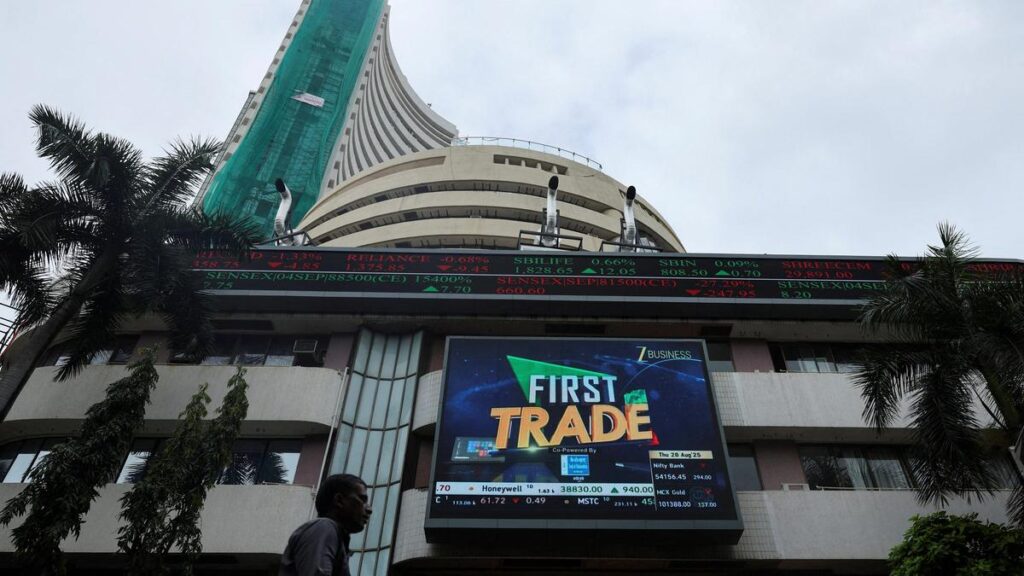
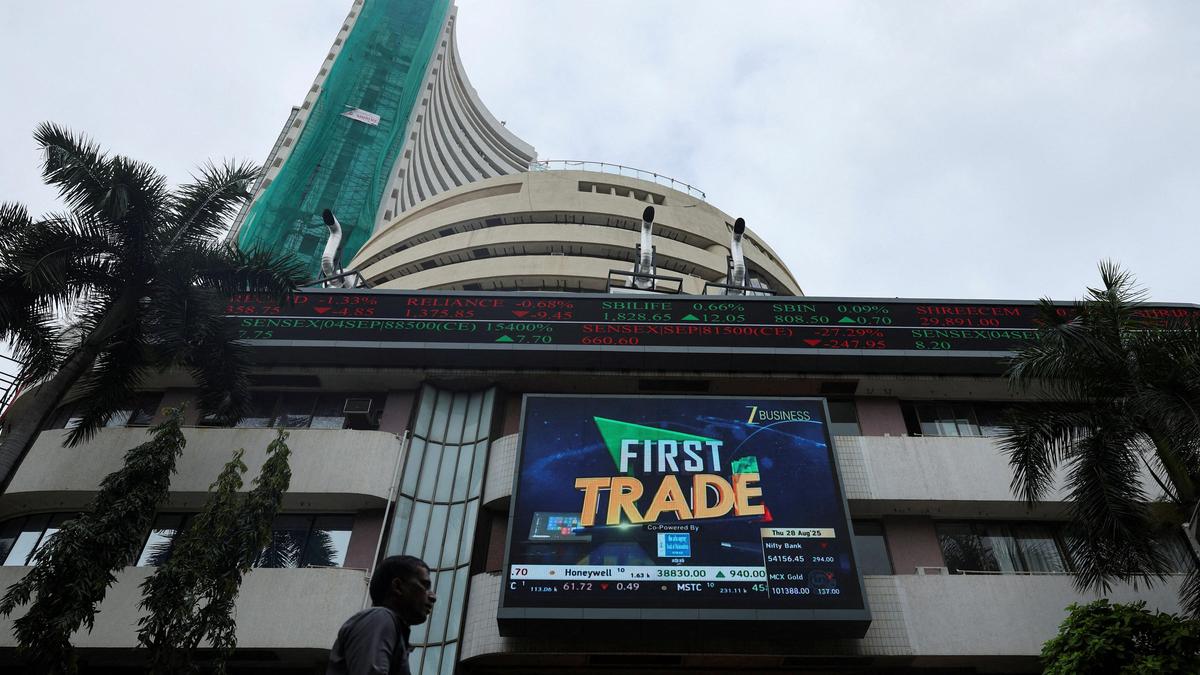
Indian stock markets opened lower on Friday, August 14, 2026, as investor sentiment came under pressure from renewed geopolitical concerns surrounding the United States and Iran and rising crude oil prices.
The BSE Sensex fell nearly 300 points in early trade, while the Nifty 50 also slipped below the 24,350 level. The decline reflected growing caution among investors as uncertainty over the Middle East continued to weigh on risk appetite.
At the opening phase of trading, the 30-share Sensex was down 298.75 points, or around 0.38%, at 77,760.21. Meanwhile, the 50-share Nifty declined 74.20 points to 24,321.90.
Geopolitical Tensions Weigh on Investor Sentiment
The primary factor behind Friday’s market weakness was the prolonged US-Iran standoff.
Concerns increased after the United States threatened an indefinite naval blockade of Iran, raising fears of further disruption to crude oil supplies from the Middle East. For an oil-importing economy such as India, a sustained increase in crude prices can raise concerns over inflation, corporate costs and the country’s trade balance.
The geopolitical uncertainty has therefore become an important factor for Indian equities, particularly as investors assess the potential impact of higher energy costs on economic growth and corporate profitability.
Brent crude was trading around $87 per barrel, with prices having risen about 4% during the week amid stalled Middle East peace talks.
Nifty 50 Slips Below 24,350
The weakness was not limited to the Sensex.
The Nifty 50 fell more than 70 points during early trading, moving below the 24,350 level. Another market report showed the index trading around 24,320, reflecting moderate selling pressure across several sectors.
Market participants remained cautious after Indian equities had struggled to maintain strong momentum in recent sessions.
Thursday’s session had already produced mixed signals, with the Sensex ending modestly higher while the Nifty closed lower. The divergence highlighted the uncertainty facing investors ahead of Friday’s session.
Metal and Auto Stocks Among the Weakest
Several stocks from the Sensex pack came under selling pressure during early trade.
Tata Steel, Axis Bank, InterGlobe Aviation, Tech Mahindra, Power Grid and ITC were among the major laggards. Meanwhile, Eternal, Titan, Adani Ports and Bajaj Finance were among the stocks showing gains.
Metal stocks were particularly weak, with the sector falling around 1.3%, while financial stocks also declined. The weakness reflected broader caution rather than a single company-specific development.
Higher Crude Oil Prices Remain a Concern for India
Oil prices remain one of the biggest variables for the Indian stock market.
India relies heavily on imported crude oil, meaning a sustained increase in global oil prices can put pressure on inflation and corporate margins.
Higher fuel and transportation costs can also affect businesses across multiple industries. If energy prices remain elevated for an extended period, investors may begin reassessing earnings expectations.
This explains why geopolitical developments in the Middle East can have an immediate impact on Indian equities even when domestic economic fundamentals remain relatively stable.
Foreign Investor Outflows Add to Market Pressure
Another factor affecting market sentiment is the continued caution among foreign investors.
Recent market activity has shown that foreign portfolio investors have remained sensitive to geopolitical developments, crude prices and broader macroeconomic conditions. At the same time, some major foreign investors continue to maintain confidence in Indian equities despite the volatility.
This creates a mixed environment for the market.
Domestic investors may continue to provide support, but sustained foreign selling can increase volatility in benchmark indices and large-cap stocks.
Global Markets Offer Mixed Signals
The decline in Indian equities also came despite relatively positive signals from Wall Street.
Major US indices ended higher on Thursday, with the S&P 500 reaching a record high. US wholesale inflation also showed an annual increase of 4.7% in July, down from 5.5% in June, easing some concerns about immediate Federal Reserve rate pressures.
However, stronger US markets were not enough to offset concerns surrounding the Middle East and crude oil prices in India.
This demonstrates how local markets can react differently to global cues depending on the dominant domestic and regional risks.
Investors Remain in a Wait-and-Watch Mode
The current market environment suggests that investors are likely to remain cautious.
Geopolitical developments, crude oil movements, foreign fund flows, currency fluctuations and upcoming economic data will remain important factors for the direction of the Sensex and Nifty.
Analysts cited by Economic Times expect the market to remain relatively range-bound, reflecting uncertainty and a lack of strong directional momentum.
For traders, this could mean increased volatility during the session. For longer-term investors, however, short-term movements may need to be viewed within the broader trajectory of India’s economic and earnings outlook.
What Investors Should Watch Next
The biggest question for Indian markets is whether the geopolitical pressure will remain temporary or develop into a prolonged energy-market problem.
If crude prices stabilize and tensions surrounding Iran ease, some of the current risk premium could disappear.
On the other hand, further escalation could push oil prices higher and create additional pressure on inflation-sensitive sectors.
Investors will therefore be watching several developments closely:
- US-Iran geopolitical developments
- Brent crude oil prices
- Foreign portfolio investor flows
- Rupee movement against the US dollar
- Indian inflation and economic data
- Corporate earnings
- Global equity-market trends
These factors could determine whether the Sensex and Nifty stabilize after the early decline or face further selling pressure.
The Indian stock market declined in early trade on August 14, 2026, with the Sensex falling nearly 300 points and the Nifty 50 also moving lower. The prolonged US-Iran standoff and higher crude oil prices were among the key factors weighing on investor sentiment.
While global markets have offered some positive signals, geopolitical uncertainty remains the dominant concern for Indian investors.
For now, the market appears to be in a cautious phase. The next direction for the Sensex and Nifty 50 will depend heavily on developments in crude oil prices, foreign fund flows and the broader geopolitical situation.
With uncertainty still high, investors are likely to keep a close eye on global developments before making aggressive moves.