0
0
 0
0
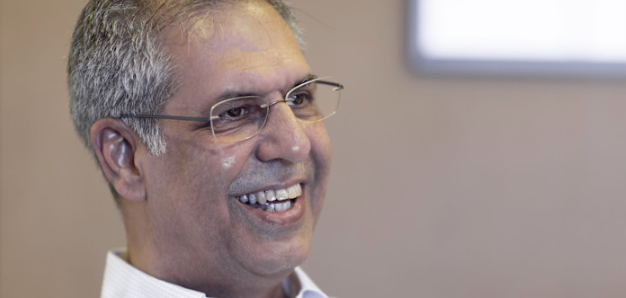
Unlike many traditional conglomerates, Tata Group has a distinctive ownership model.
A substantial portion of the group is ultimately controlled through charitable trusts associated with the Tata organisation. This structure means that the question of succession is not simply about identifying a new chief executive.
It is also about protecting the group’s long-term philosophy while balancing the interests of shareholders, operating companies, trustees and the wider Tata ecosystem.
The group’s businesses include major names such as Tata Consultancy Services, Tata Motors, Tata Steel, Tata Consumer Products and Tata Electronics.
That diversification gives Tata an enormous economic footprint.
It also makes leadership decisions significantly more complicated.
Ratan Tata’s Legacy Remains Central
Any discussion about the future of Tata Group inevitably returns to Ratan Tata, who transformed the conglomerate into a global business powerhouse during his tenure.
Under his leadership, Tata expanded aggressively beyond India and completed several high-profile international acquisitions.
The purchases of Jaguar Land Rover and Tetley became symbols of Tata’s global ambitions, while Tata Consultancy Services developed into one of India’s largest technology companies.
Ratan Tata died in October 2024 at the age of 86, leaving behind an extraordinarily powerful legacy.
His death also brought succession and governance issues into sharper focus.
Although Tata Group had already established a leadership structure before his passing, Ratan Tata’s influence over the organisation’s identity remained difficult to separate from its formal corporate hierarchy.
N. Chandrasekaran Leads the Operating Businesses
The day-to-day leadership of Tata Group rests largely with N. Chandrasekaran, who became chairman of Tata Sons in 2017.
Chandrasekaran has overseen a period of significant investment and transformation.
Under his leadership, Tata has pursued major opportunities in areas including electronics manufacturing, semiconductors, electric vehicles, renewable energy and aviation.
The group’s decision to build a larger manufacturing presence in India reflects the broader shift in global supply chains.
Tata Electronics has emerged as a particularly important part of this strategy, including major investments in semiconductor and electronics manufacturing.
The strategy requires enormous capital and a long-term commitment.
That makes stable governance particularly important.
Tata Sons: The Key to the Power Structure
To understand the battle for control of Tata Group, it is necessary to understand Tata Sons.
Tata Sons functions as the principal holding company of the Tata Group.
Its ownership structure is unusual because charitable organisations associated with the Tata legacy hold a controlling interest.
The Tata Trusts therefore occupy a unique position in the group’s governance ecosystem.
This arrangement was designed to ensure that a significant portion of the wealth generated by Tata companies supports philanthropic activities.
It also means that questions about the future of Tata Sons can have implications for both business strategy and charitable institutions.
The Tata Trusts Hold Enormous Influence
The Tata Trusts are not simply another shareholder.
They represent the philanthropic foundation of the Tata legacy and have historically played an important role in the group’s ownership structure.
The trusts include several major philanthropic institutions, including the Sir Ratan Tata Trust and the Sir Dorabji Tata Trust.
Their influence means that any major change to Tata Sons requires careful consideration of governance, ownership and the long-term interests of the Tata ecosystem.
This is one reason why succession discussions around Tata Group attract so much attention.
The stakes are not limited to corporate profits.
They also involve the future of one of India’s most prominent philanthropic institutions.
A New Generation and the Succession Question
The most sensitive aspect of the debate concerns the next generation of leadership.
Ratan Tata did not leave behind a direct heir who could simply inherit control of the group.
That places greater importance on institutional succession rather than traditional family succession.
Among the younger generation associated with the Tata legacy, Noel Tata’s family has attracted significant attention.
Noel Tata, Ratan Tata’s half-brother, became chairman of Tata Trusts in 2024 following Ratan Tata’s death.
His children, including Leah Tata, Maya Tata and Neville Tata, have subsequently received greater attention as potential future figures within the broader Tata ecosystem.
However, speculation about their future roles should not be confused with a confirmed succession plan.
The Tata Group’s governance system is considerably more complex than simply passing the conglomerate from one family member to another.
Why the Stakes Are Higher Than Ever
The Tata Group is entering a period in which the scale of investment is increasing rapidly.
The group is committing billions of dollars to new businesses, manufacturing facilities and strategic industries.
Semiconductors are particularly important.
India is attempting to establish itself as a major global electronics and semiconductor manufacturing hub, and Tata is seeking to become one of the country’s most important domestic players.
The group is also reshaping its aviation operations following the consolidation of Air India and Vistara.
Meanwhile, Tata Motors continues to navigate the rapidly changing global automotive industry.
These businesses require long-term capital allocation decisions.
A change in leadership or governance could therefore influence the group’s strategic priorities for years.
The Challenge of Balancing Tradition and Growth
The Tata Group has always attempted to combine commercial ambitions with the philanthropic values associated with its founders.
That balance is one of the organisation’s defining characteristics.
However, maintaining that model becomes more challenging as Tata becomes increasingly global.
International investors and minority shareholders expect competitive financial performance.
At the same time, the Tata Trusts have an interest in preserving the group’s long-term philanthropic purpose.
The leadership challenge is therefore not simply about generating higher profits.
It is about finding a structure that can accommodate commercial growth, shareholder interests, philanthropy and the Tata legacy simultaneously.
Tata’s Global Ambitions Add Another Layer
The Tata Group is no longer primarily an Indian business story.
Its companies have substantial international operations.
Jaguar Land Rover is a major global automotive business. Tata Consultancy Services has a huge international customer base. Tata Steel operates across multiple markets, while Tata Consumer Products continues to expand its international footprint.
This global presence means that Tata’s leadership decisions can affect employees, investors and customers around the world.
The group must also navigate geopolitical tensions, changing trade policies, technology competition and shifting consumer demand.
A strong and predictable governance system is therefore essential.
What Could the Future Look Like?
The immediate future of Tata Group is unlikely to be determined by a single dramatic transfer of power.
Instead, the organisation’s evolution will probably be shaped through a combination of board decisions, trust governance, executive succession and strategic investment.
The most important question may not be who owns Tata Group, but rather who can preserve its unique ownership model while successfully managing the next phase of growth.
That will require leaders capable of understanding both the commercial and philanthropic sides of the organisation.
The Tata Group’s enormous size gives it the financial resources to pursue ambitious projects.
But its complex ownership structure means that governance must remain equally strong.
A Defining Moment for India’s Corporate Landscape
The debate surrounding control of Tata Group is ultimately about more than one company.
Tata is deeply connected to India’s economic history.
Its businesses have played important roles in industrialisation, technology, transportation, steel, automobiles and consumer markets.
The group has also become one of India’s most recognisable global corporate brands.
As the organisation moves beyond the Ratan Tata era, the challenge will be preserving that legacy without becoming trapped by it.
The next generation of Tata leadership will have to determine how the group can remain competitive in industries that are changing faster than ever.
Who controls Tata Group will matter. But how that control is exercised may matter even more.
For investors, employees and millions of consumers associated with Tata brands, the succession and governance debate could ultimately shape one of India’s most important corporate stories for decades to come.